

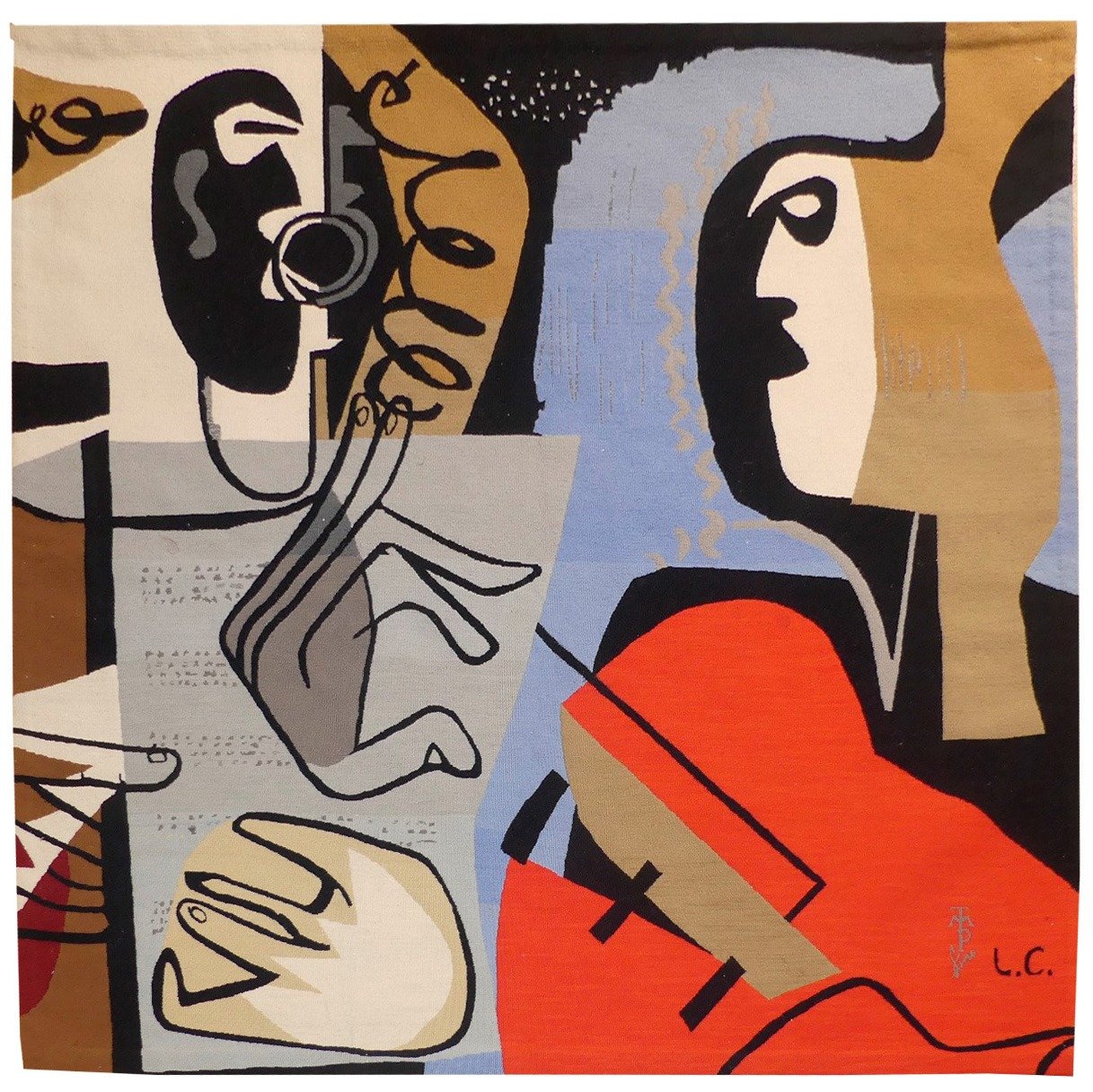
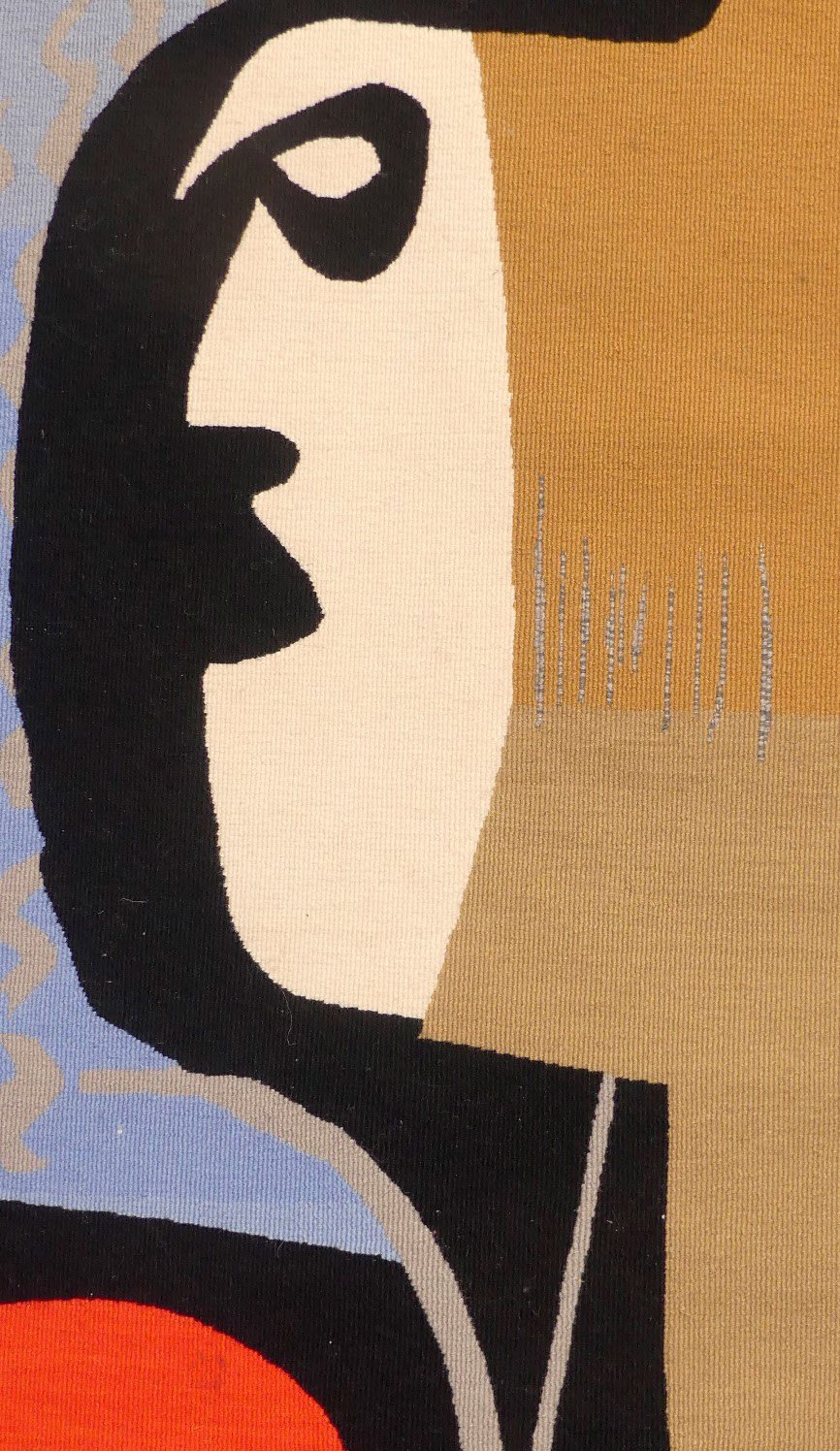
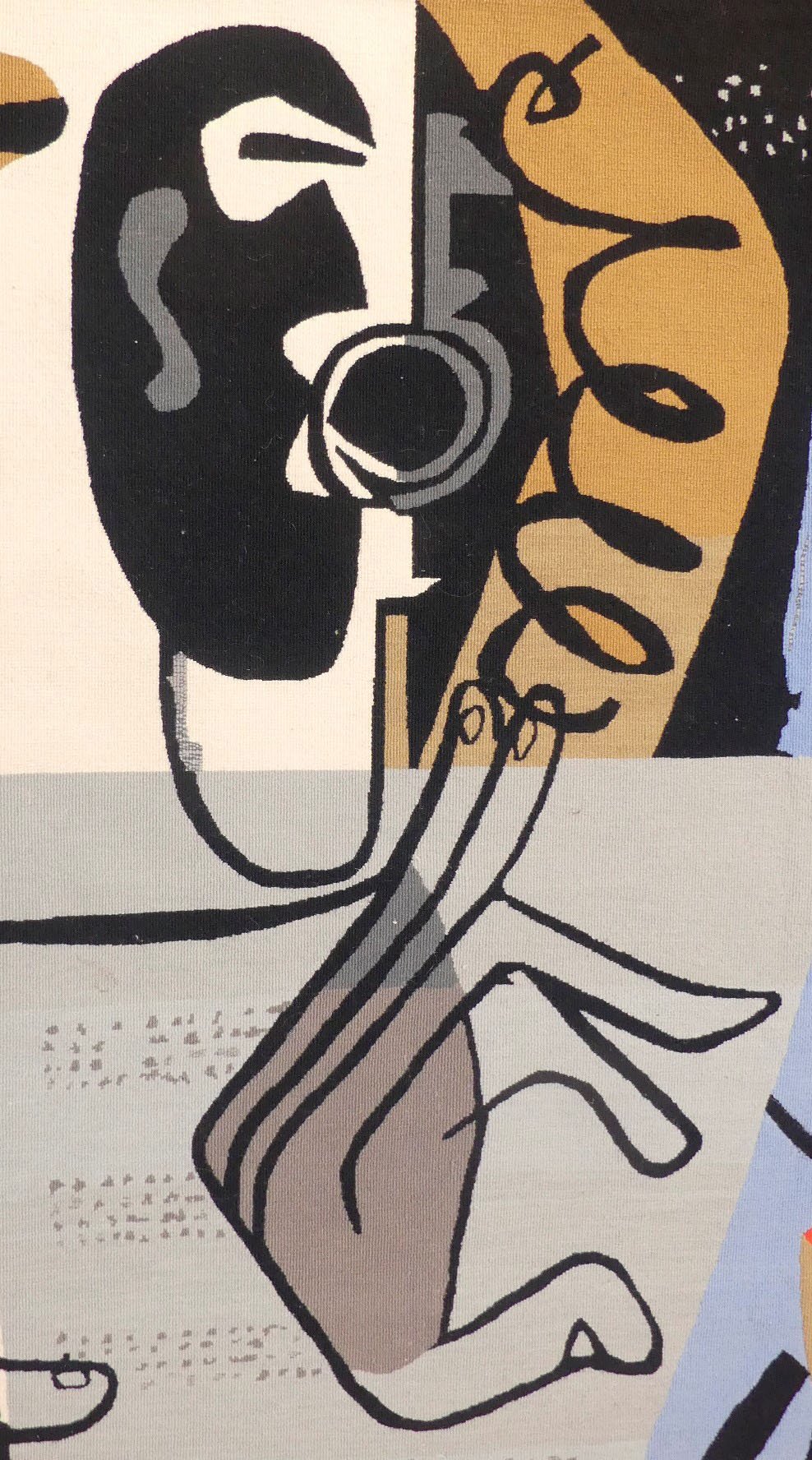
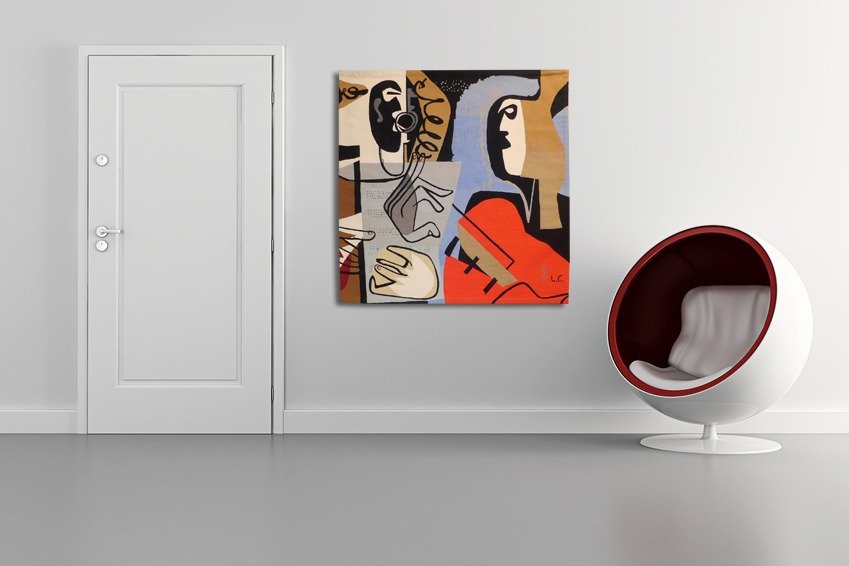
The Musicians 2 (detail)
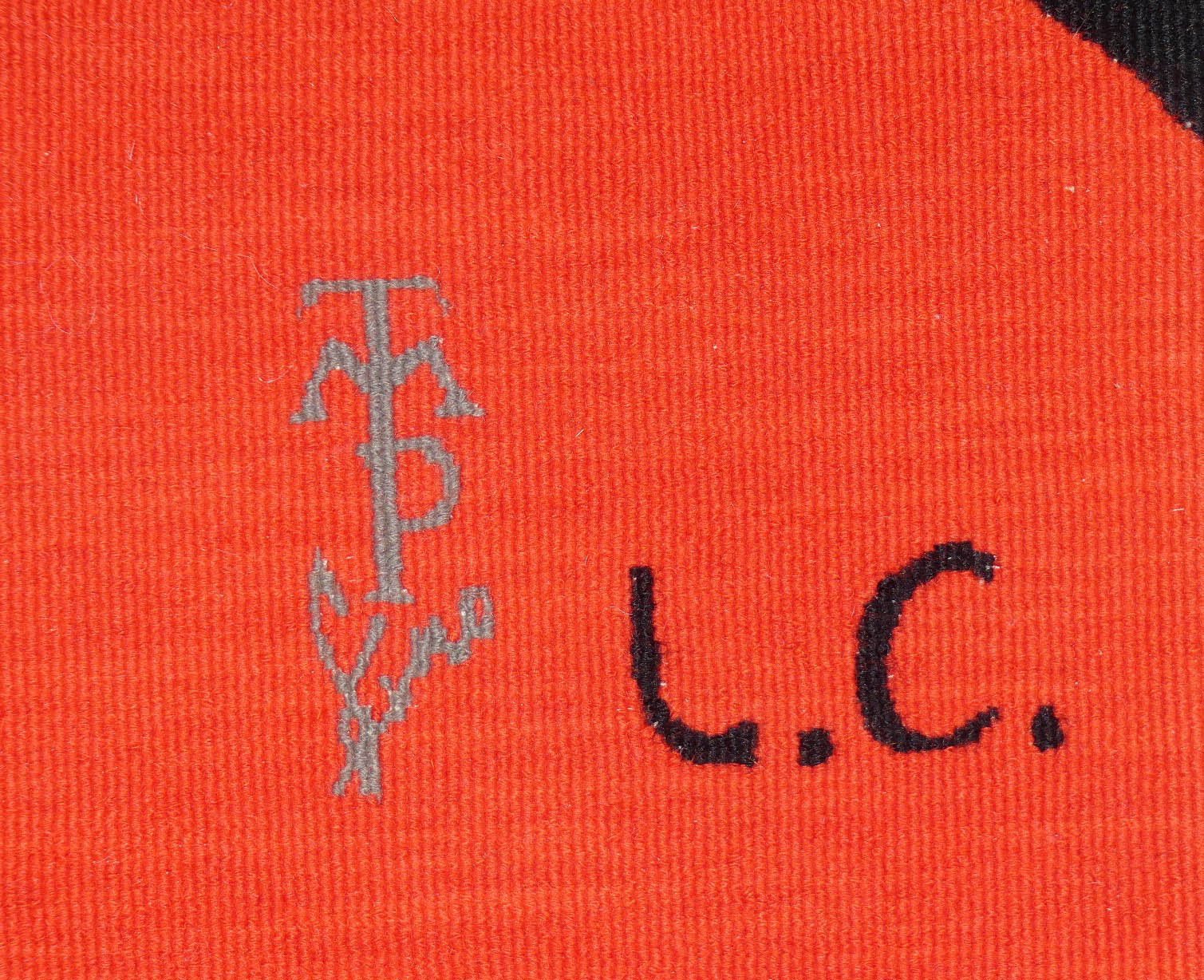
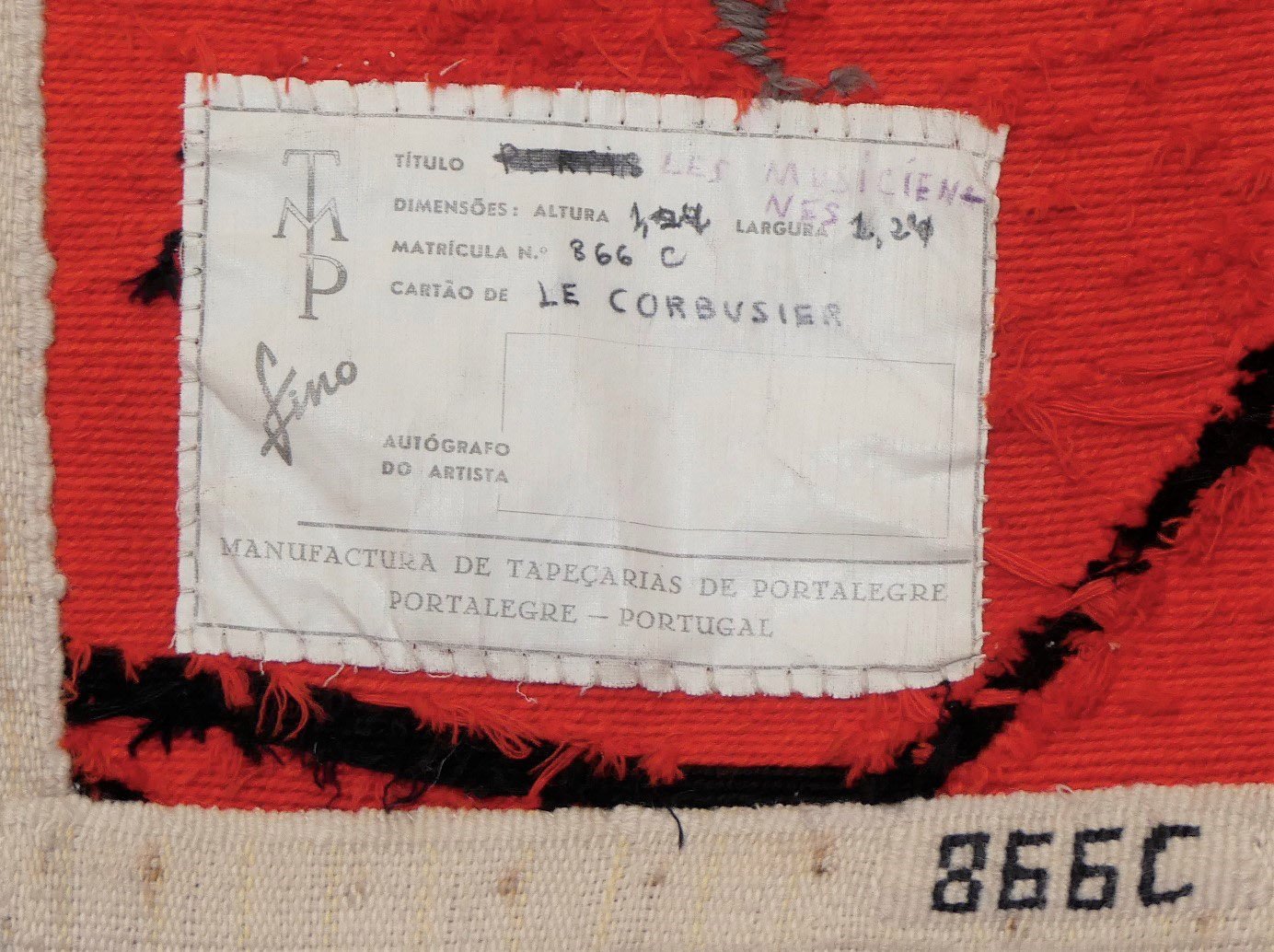
Tapestry woven by the Fino workshop in Portalegre.
With its label.
1953-1964.
If he is especially known as one of the main representatives, with radical theoretical conceptions, of the modern movement in architecture, Le Corbusier also practiced (like Picasso for example) almost all the plastic and decorative arts. Thus, he was interested in tapestry, particularly in view of his architectural theories. He envisions tapestry as 'the Mural of modern times', hence a neologism of his creation, 'Muralnomad': tapestry becomes the woolen wall that his contemporaries take with them as they move, and constitutes, not just a simple decorative element, but participates in the spatial arrangement of interiors, while contributing to their visual (and acoustic) harmonies. These theoretical reflections are materialized by the design, notably with the collaboration of Pierre Baudouin (who, in a role of technical director, serves as an interface with the weavers), of about thirty cartoons, from 1948 until his death (after a first cartoon in 1936, for Marie Cuttoli): if they take up certain motifs from his paintings (feminine figures, objects from Purism, mythological themes,…), these cartoons are intended to be distinct, and specifically designed for tapestry: sharpness of line, black, flat areas of pure color,….
» The Musicians » is a cartoon from 1953, of large dimensions, woven in 2 distinct versions. Our tapestry takes up a detail of » The Musicians » 2nd version, and testifies to the architect's desire, in 1964, to collaborate with the Fino workshop in Portalegre, Portugal (where Lurçat, Matégot, Julio Pomar… were also woven); this was ultimately their only collaboration, as Le Corbusier died in 1965. The chosen detail emphasizes the faces and hands (a recurring motif, which also gives its title to a cartoon from 1951), in a sort of imaginary dialogue between 2 facing characters.
Bibliography :
Cat. Expo. Le Corbusier's Tapestries, Paris, Museum of Decorative Arts, 1975
Cat. Expo. Le Corbusier woven work, Aubusson, Departmental Tapestry Museum, 1987
Cat. Expo. Tapestries of Portugal, Bordeaux, Museum of Decorative Arts, 1994, reproduced p.39


