


Instruments of lunar music
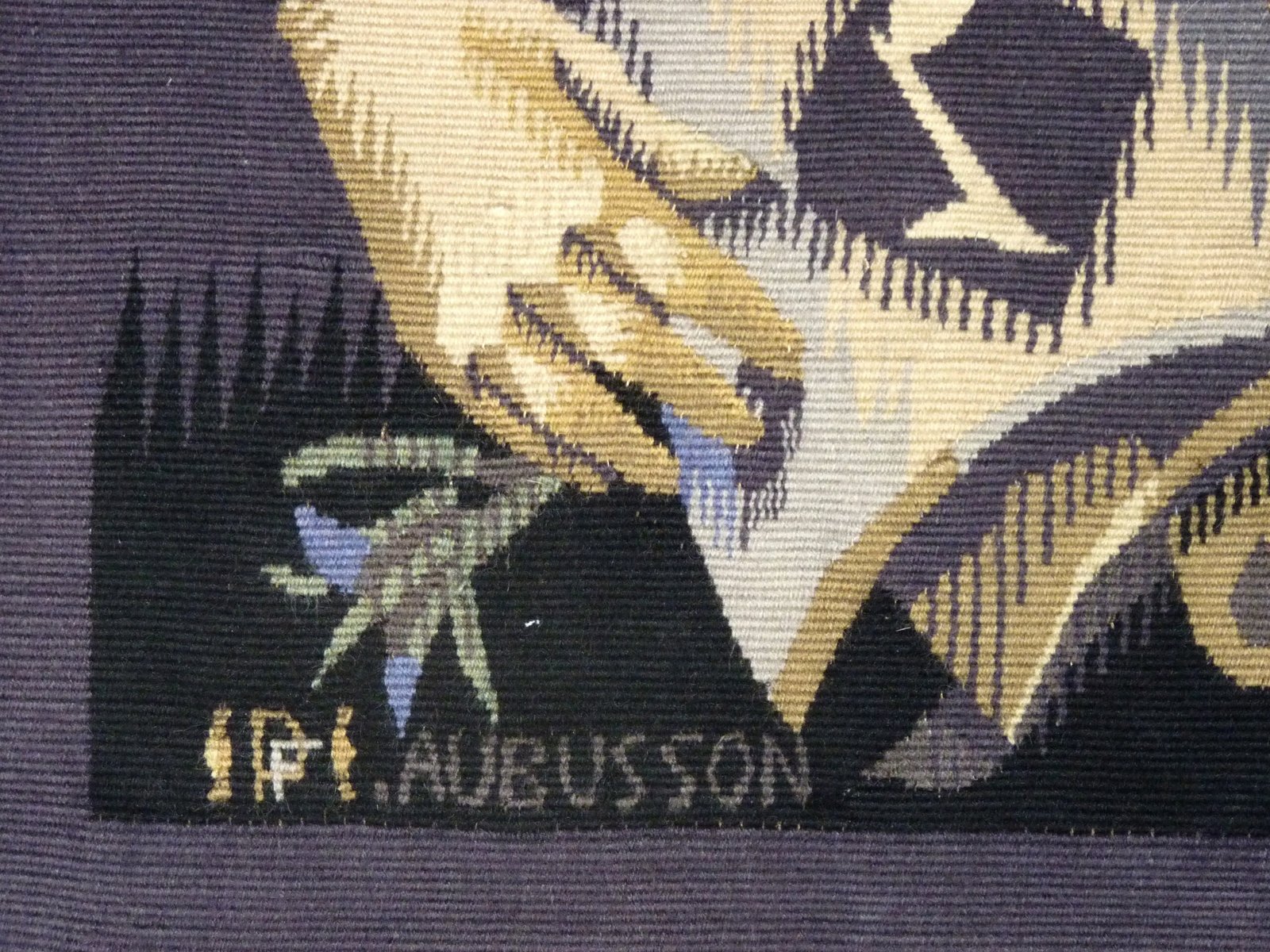
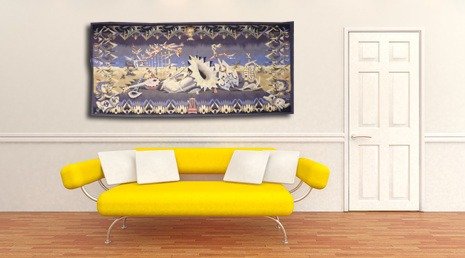
Aubusson tapestry woven by Pinton workshop.
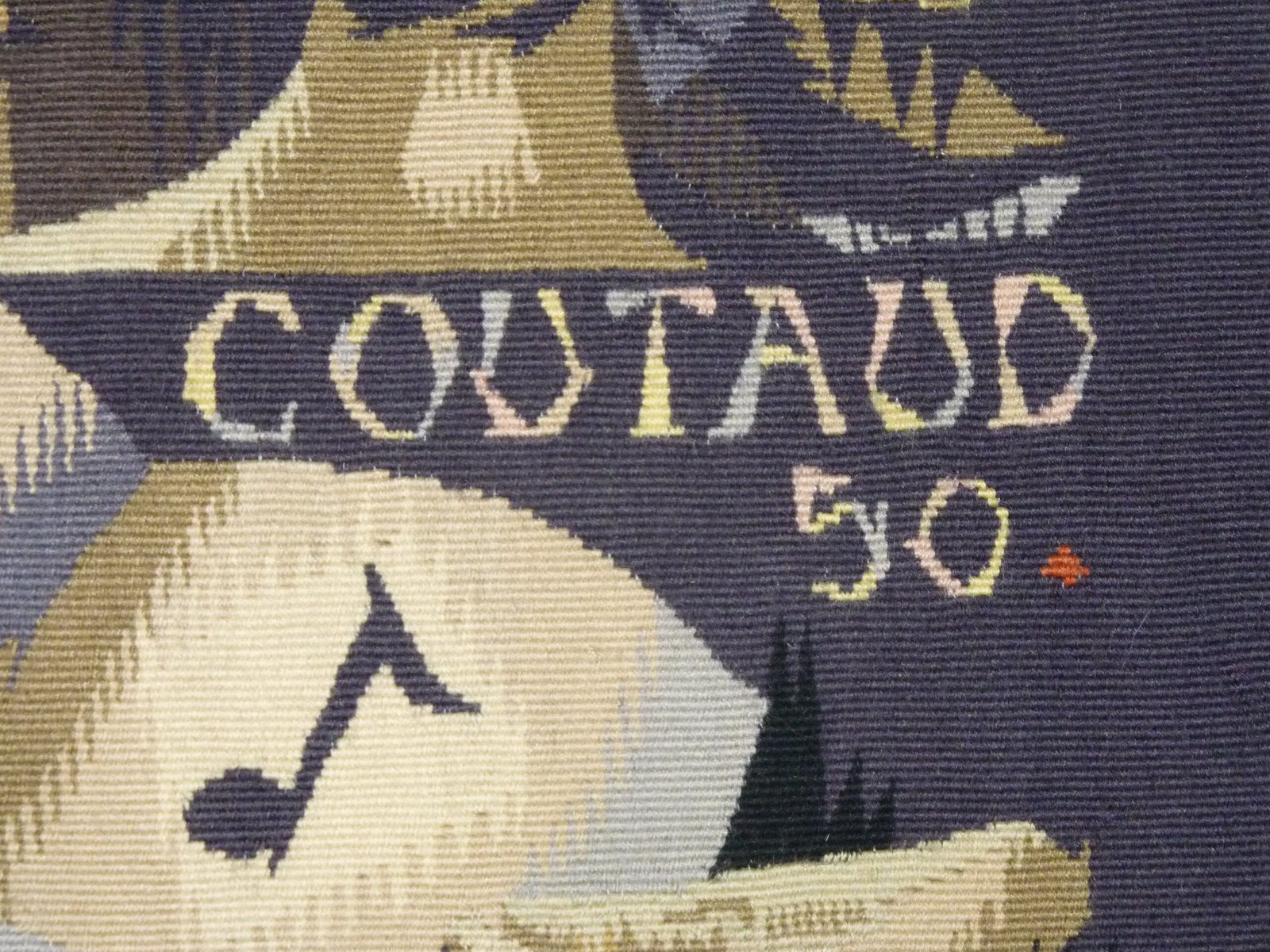
1950.
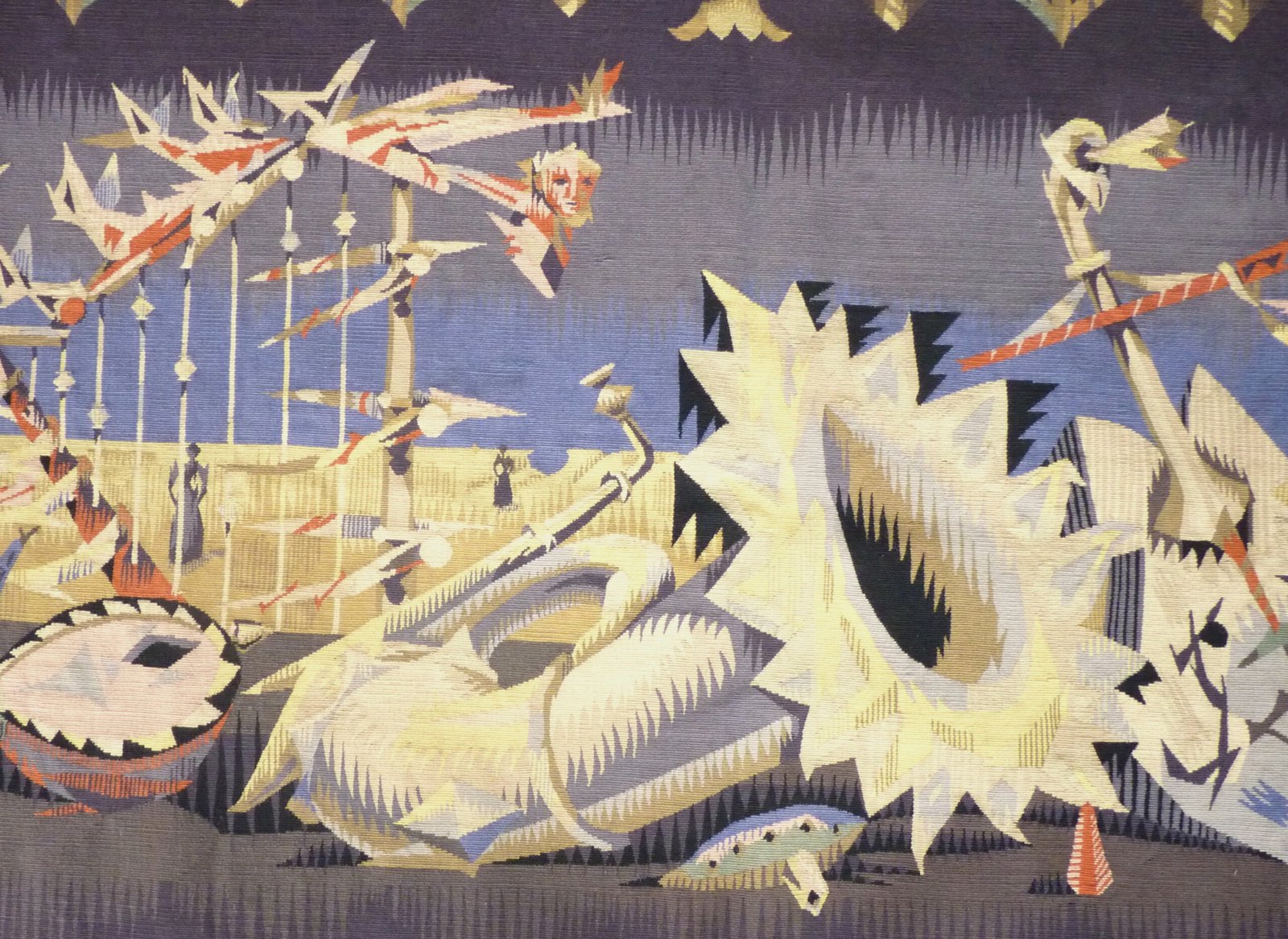
Painter and engraver, Lucien Coutaud also works for the theater with Dullin, Barrault: he then creates numerous sets and costumes. But it is the meeting with Marie Cuttoli in 1933 that will lead him to tapestry: she commissions from him especially cartoons for seats. Most of the following tapestries will be woven at Pinton for the Compagnie des Arts Français, which aims to integrate tapestry into interior decor. The last 3 tapestries by the artist in 1960 testify to his fame since 'Exotic Gardens' adorn the First Class lounge of the 'France'. The qualities of a scenographer influenced by surrealism are reflected in Coutaud's woven work: his universe is figurative, but stylized (the shapes are sharp, hatched), resolutely oneiric, with very often unusual borders.
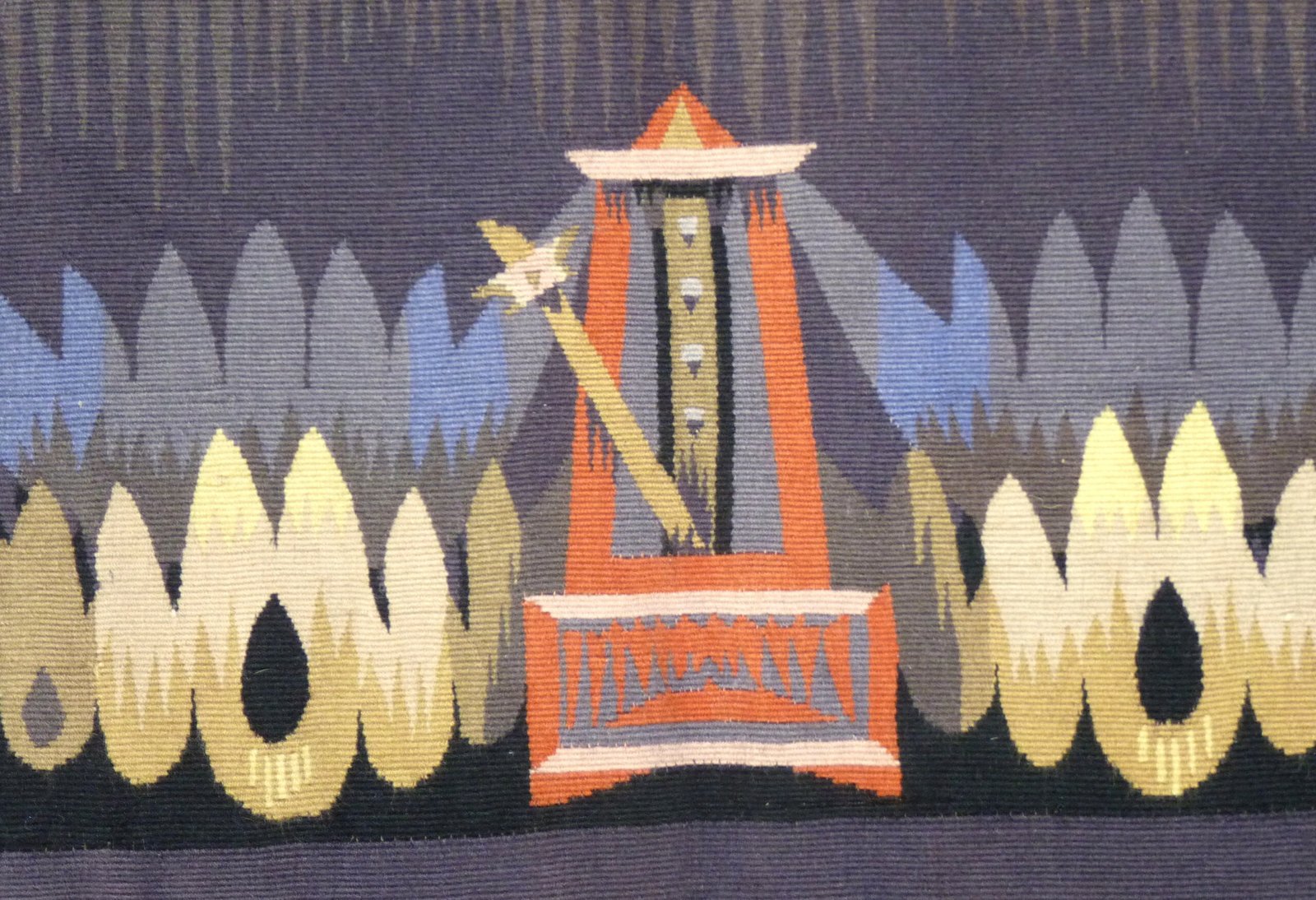
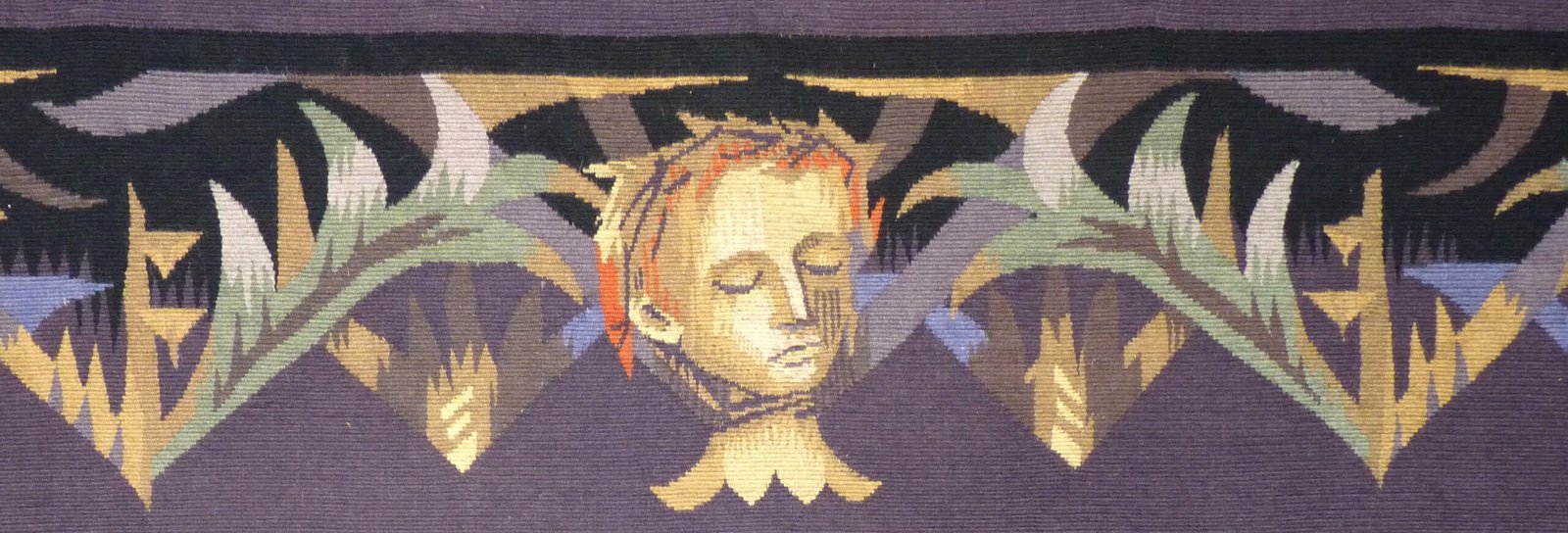
The cartoon "Lunar Musical Instruments" (Coutaud himself drew his cartoons in gouache, without resorting to numbered cartoons) dates back to 1950: it is one of the rare tapestries by the artist (along with "Marine Harp" and "Spring Violin", other testaments to the artist's taste for these musical still lifes) where the human figure is scarce. The center of the composition (of the scene) is occupied by the instruments, while 2 heads (blowers, musicians in the pit) adorn the lower corners, all within an austere, nocturnal landscape (lunar, precisely), illustrating the oneiric worlds dear to the artist.
The Gothenburg City Theatre retains a copy of this tapestry.
Bibliography:
J. Cassou, M. Damain, R. Moutard-Uldry, French tapestry and cartoonists, Tel, 1957, ill. p.86
Cat. Exp. Lucien Coutaud, woven work, Aubusson, Departmental Museum of Tapestry, 1988-1989, illustrated p.42-43
Cat. Expo. Theatre in Tapestry, Cavaillès, Lurçat, Matisse, Sorèze, Abbaye-école Musée dom Robert, 2017, ill. n°8


