





Les 12 mois
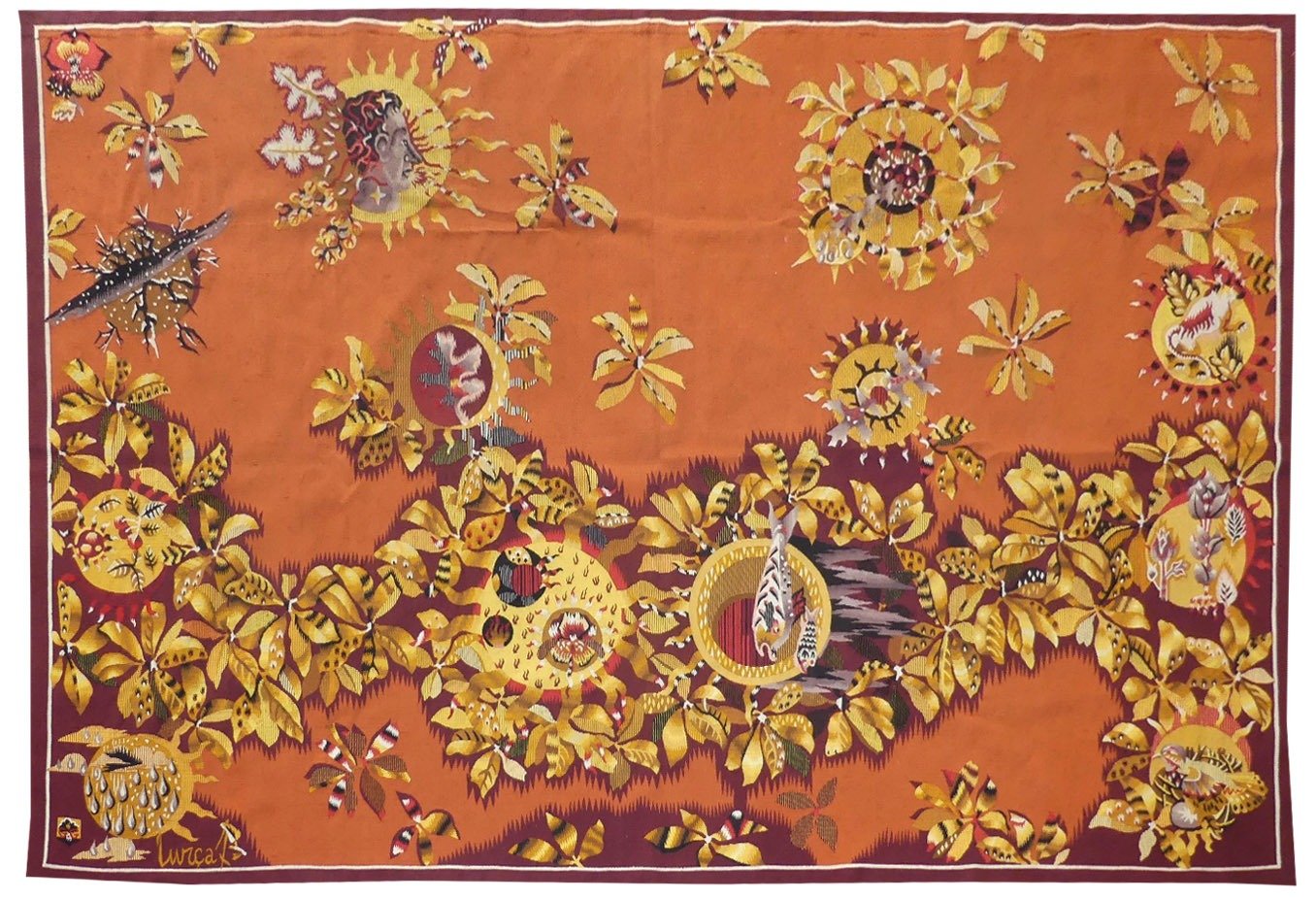
Tapisserie d’Aubusson tissée par l’atelier Goubely.
Circa 1940.
L’Œuvre de Lurçat est immense : c’est toutefois son rôle dans la rénovation de l’art de la tapisserie qui lui vaut d’être passé à la postérité. Dès 1917, il commence par des œuvres au canevas, puis, dans les années 20 et 30, il travaillera avec Marie Cuttoli. Sa première collaboration avec les Gobelins date de 1937, alors qu’il découvre simultanément la tenture de l’Apocalypse d’Angers qui l’incite définitivement à se consacrer à la tapisserie. Il abordera les questions techniques d’abord avec François Tabard, puis à l’occasion de son installation à Aubusson pendant la guerre, il définira son système : gros point, tons comptés, cartons dessinés numérotés.
Une production gigantesque commence alors (plus de 1000 cartons), amplifiée par la volonté d‘entraîner ses amis peintres, la création de l’A.P.C.T. (Association des Peintres-Cartonniers de Tapisserie) et la collaboration avec la galerie La Demeure et Denise Majorel, puis par son rôle d’inlassable propagateur du médium à travers le Monde.
Son œuvre tissée témoigne d’un art d’imagier spécifiquement décoratif, dans une iconographie symbolique très personnelle, cosmogonique (soleil, planètes, zodiaque, 4 éléments…), végétale stylisée, animale (boucs, coqs, papillons, chimères…), se détachent sur un fond sans perspective (volontairement éloigné de la peinture), et destinée, dans ses cartons les plus ambitieux, à faire partager une vision à la fois poétique (il émaille d’ailleurs parfois ces tapisseries de citations) et philosophique (les grands thèmes sont abordés dès la guerre : la liberté, la résistance, la fraternité, la vérité… ) et dont le point culminant sera le « Chant du Monde » ( Musée Jean Lurçat, ancien hôpital Saint-Jean, Angers) , inachevé à sa mort.
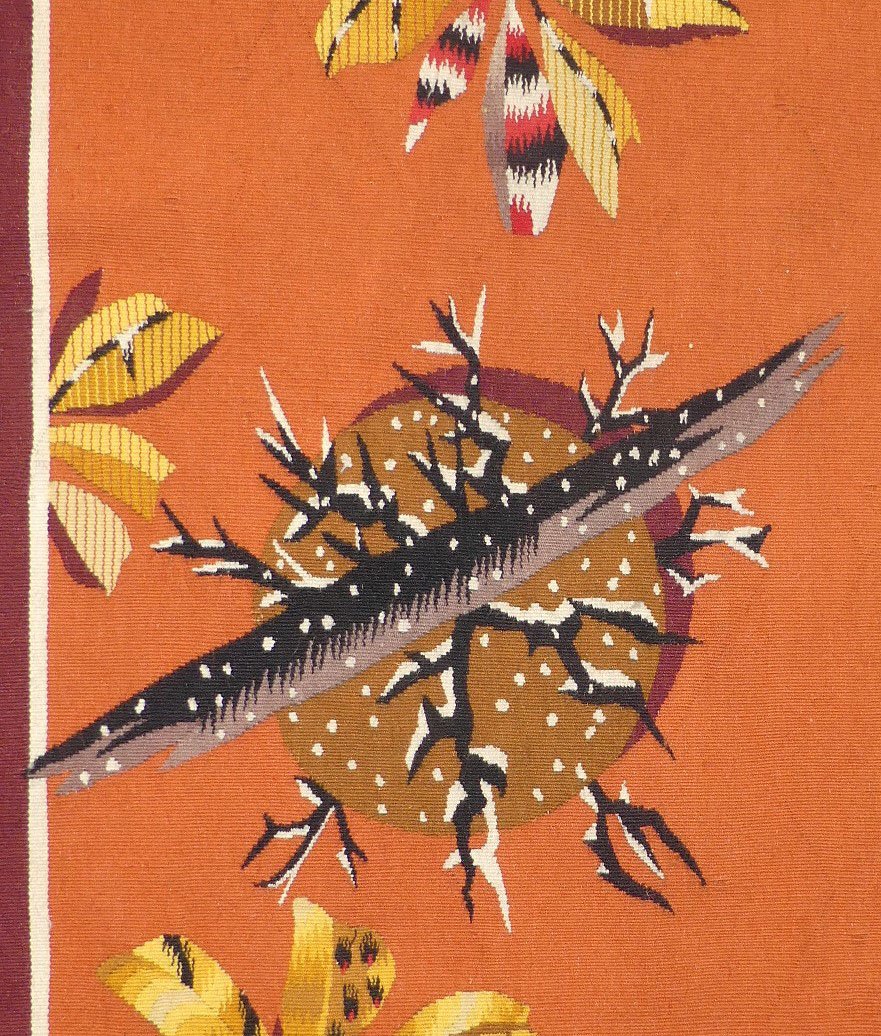
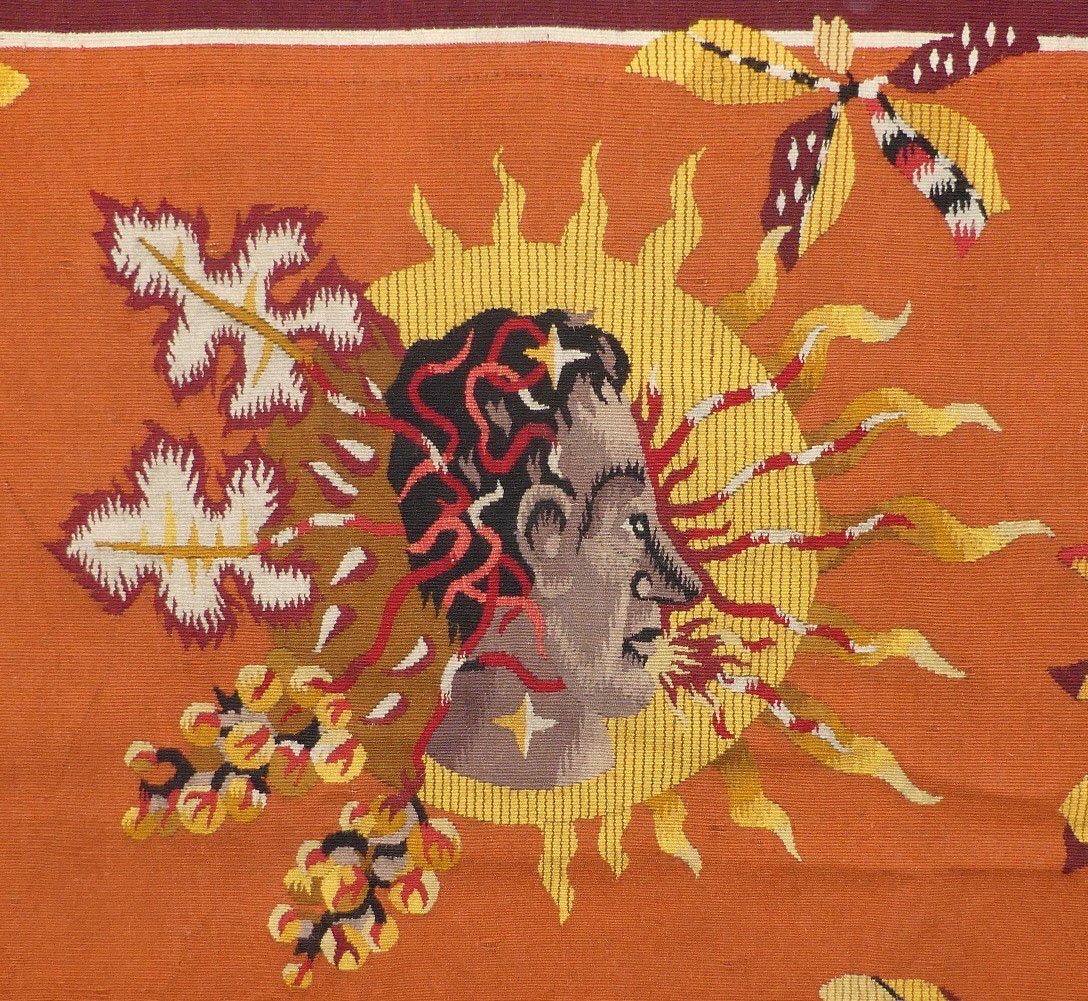
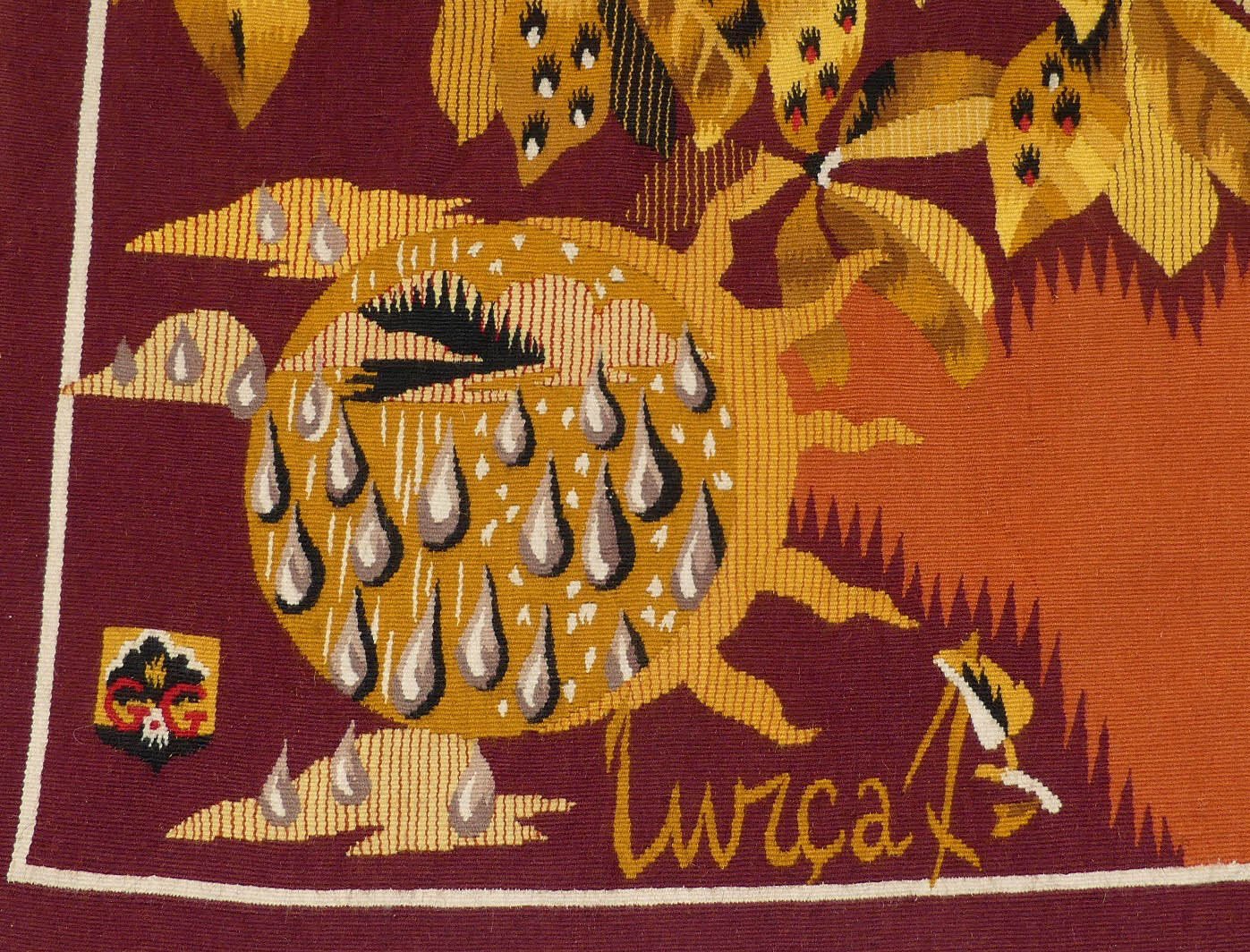
« C’est une version très originale que donne Lurçat, du thème des mois illustré par la tapisserie depuis de nombreux siècles. Chacun des mois est symbolisé par une bulle d’où naissent des éléments de végétation ou encore des rayons de soleil.
Conçue dans le même esprit que le « De Natura solari rerum », cette pièce préfigure « Es la verdad », dans laquelle on retrouve, un peu à la façon d’une bordure, placés en fridse, les douze mois de l’année » (Martine Mathias in Cat. Expo. Jean Lurçat, le combat et la victoire, centenaire, Aubusson, Musée départemental de la Tapisserie, 1992, p.43)
Bibliographie :
Tapisseries de Jean Lurçat 1939-1957, Pierre Vorms Editeur, 1957
Cat. Expo. Lurçat, 10 ans après, Musée d’Art moderne de la ville de Paris, 1976
Cat. Expo. Les domaines de Jean Lurçat, Angers, Musée Jean Lurçat et de la tapisserie contemporaine, 1986
Cat. Expo. Jean Lurçat, le combat et la victoire, centenaire, Aubusson, Musée départemental de la Tapisserie, 1992, ill. p.43
Colloque Jean Lurçat et la renaissance de la tapisserie à Aubusson, Aubusson, Musée départemental de la Tapisserie, 1992
Cat. Expo. Dialogues avec Lurçat, Musées de Basse-Normandie, 1992
Cat. Expo. Jean Lurçat, Donation Simone Lurçat, Académie des Beaux-Arts, 2004
Gérard Denizeau, Jean Lurçat, Liénart, 2013
Cat. Expo. Jean Lurçat au seul bruit du soleil, Paris, galerie des Gobelins, 2016


