

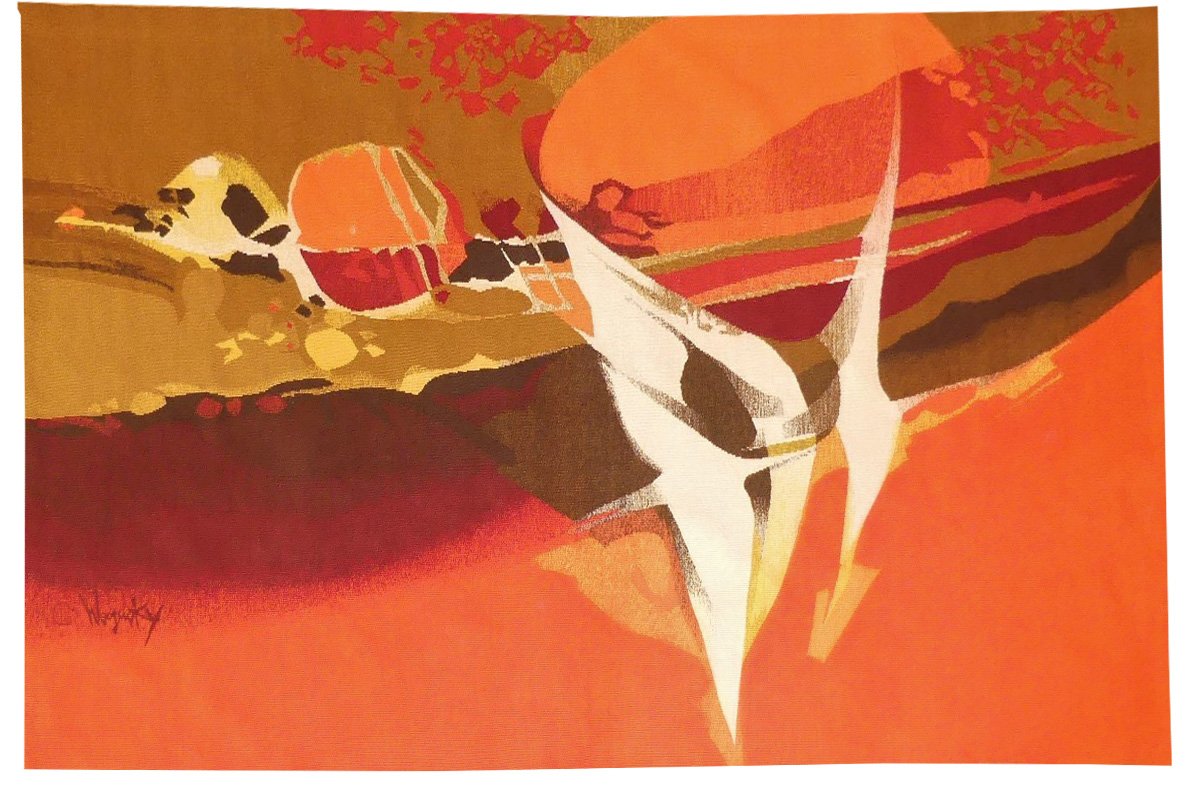
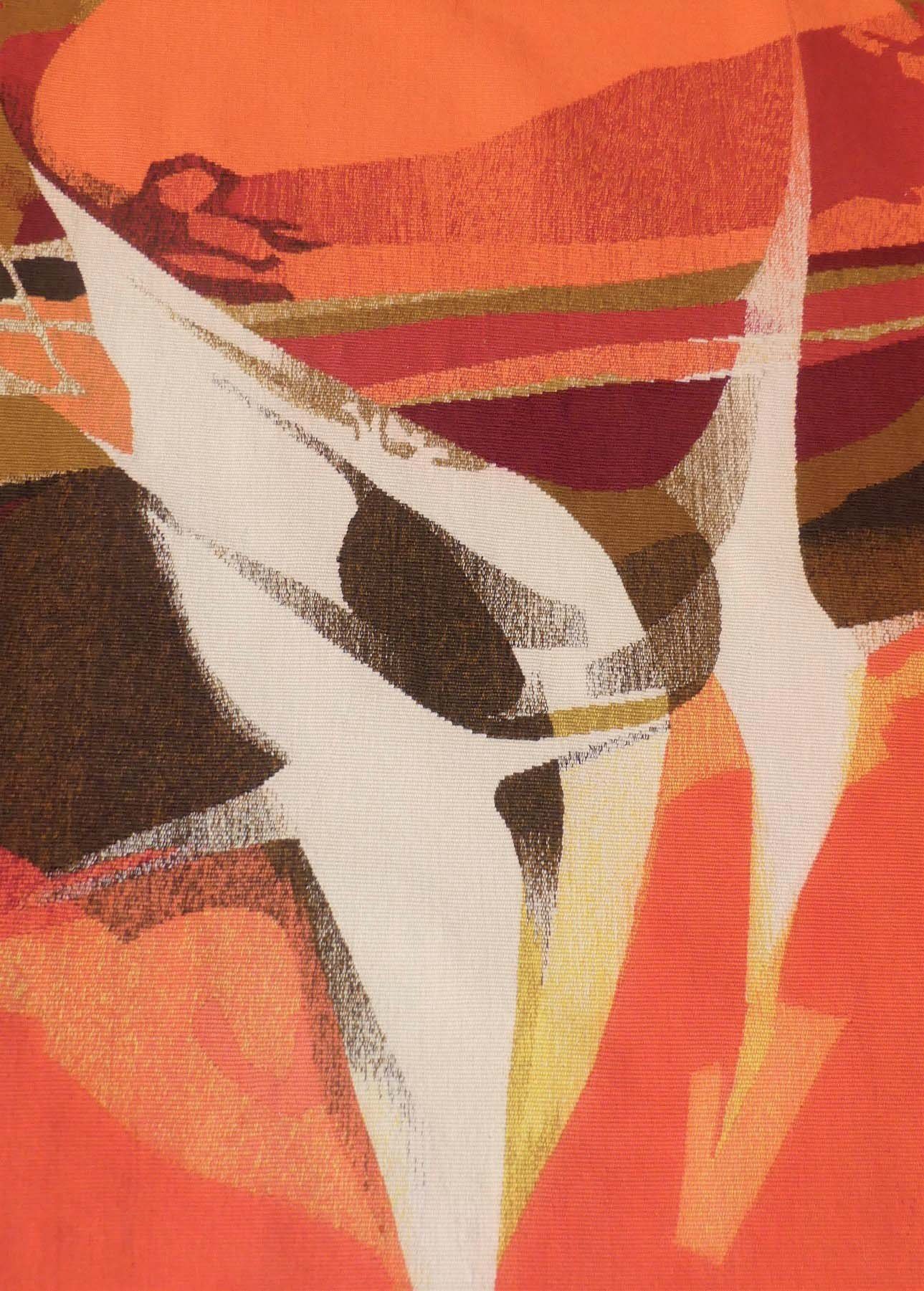
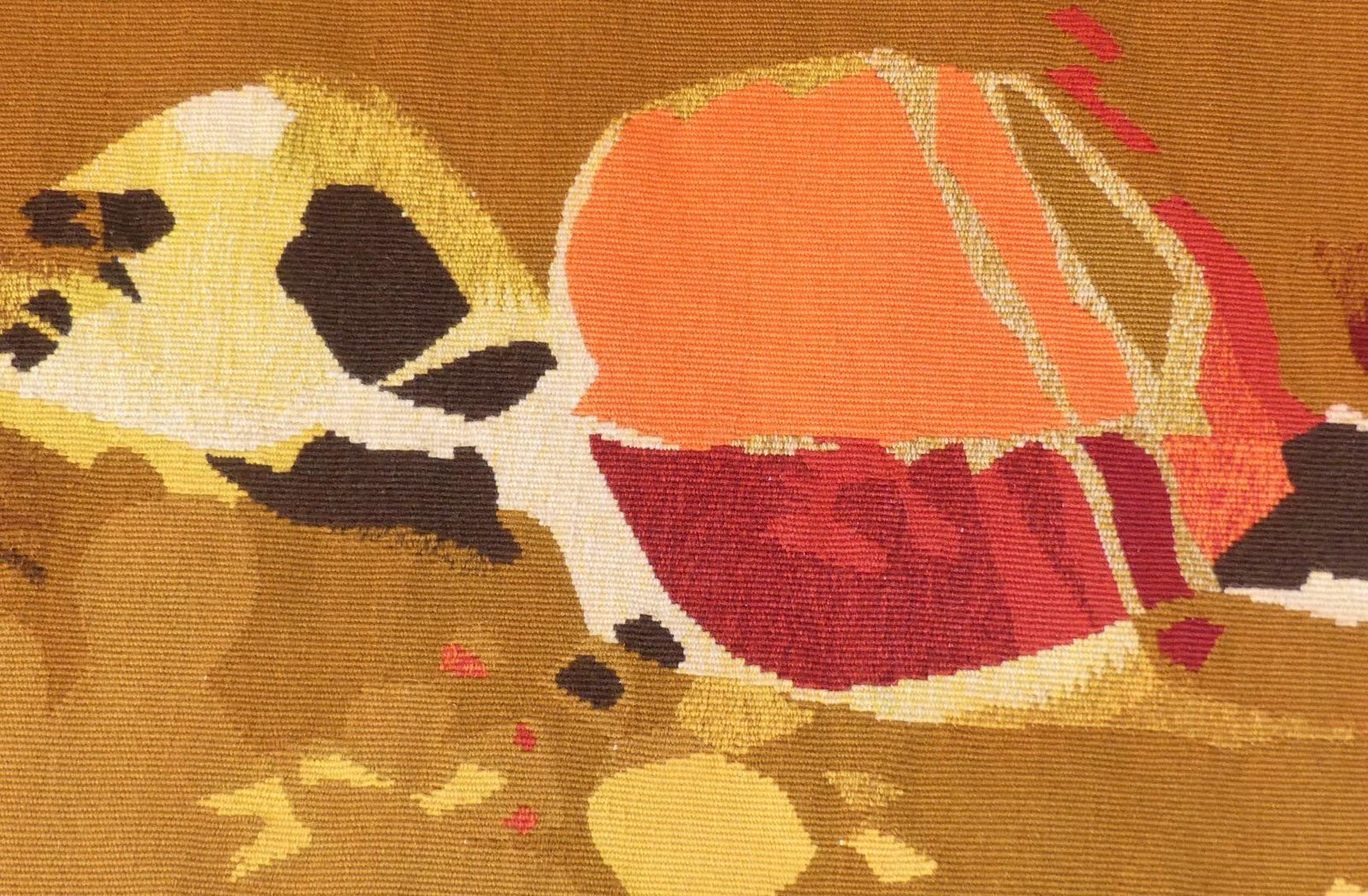
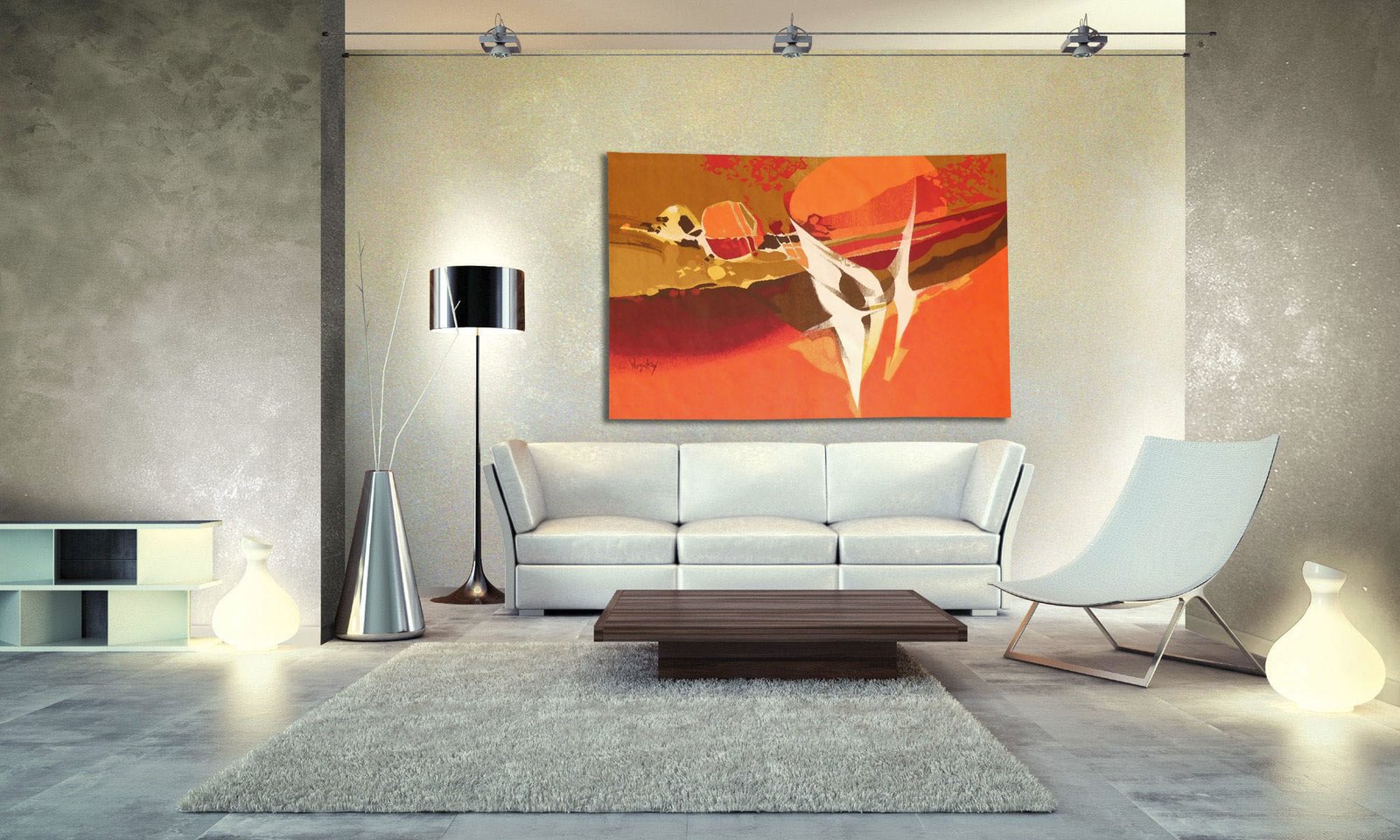
Three white birds
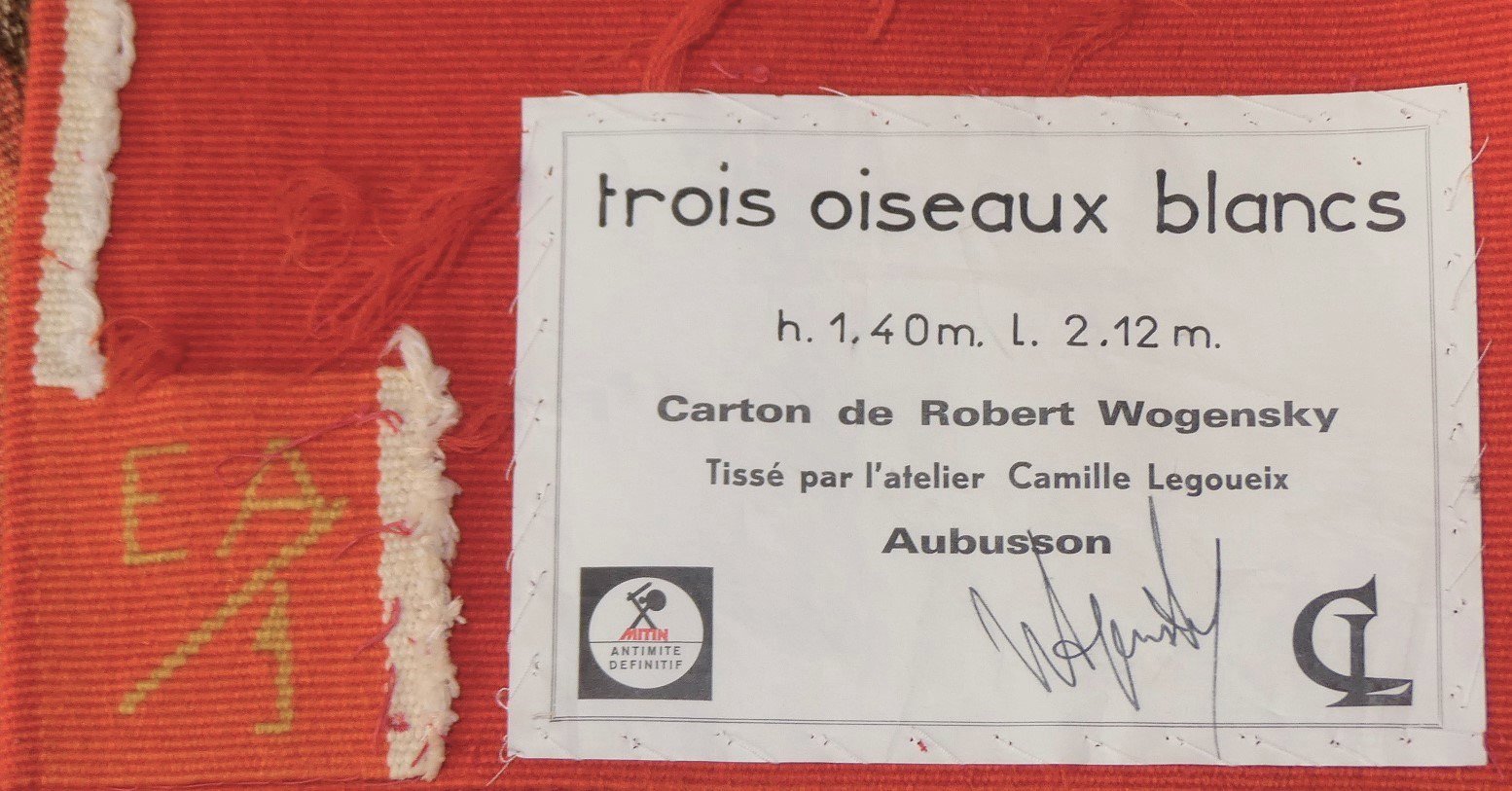
Aubusson tapestry woven by the Atelier Legoueix.
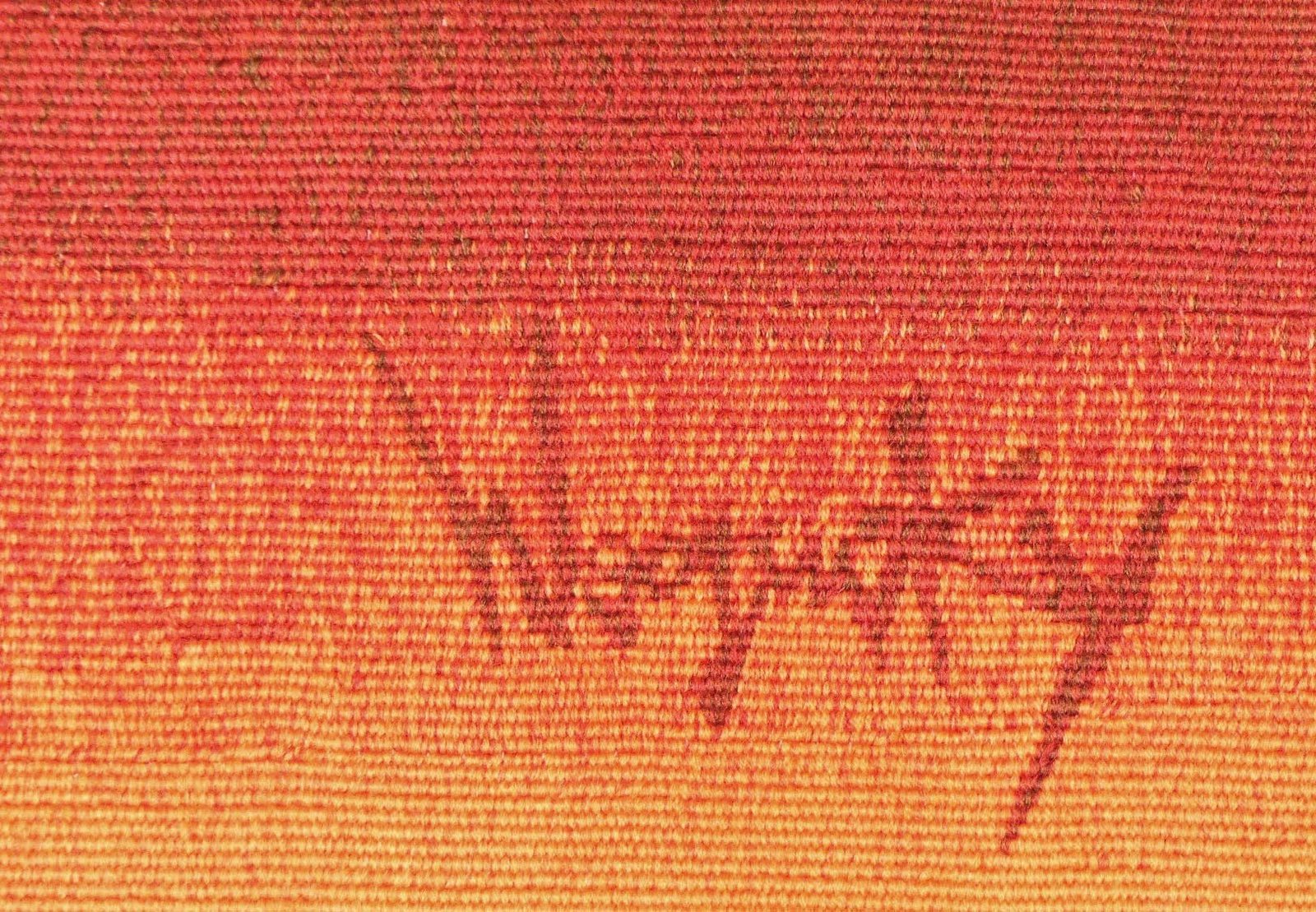
With its bolduc signed, n°EA/1.
1968.
Member of the A.P.C.T. (Association des Peintres-Cartonniers de Tapisserie), Wogensky was one of the many artists who devoted themselves to tapestry following Lurçat, in the immediate post-war period. First influenced by him, Wogensky’s work (159 cartoons after the 1989 exhibition catalogue) then developed in the 1960s toward a lyrical abstraction, not always fully embraced: from cosmic-astronomical themes to decomposed and moving bird forms, toward cartoons that were more refined and less dense. Although he always proclaimed himself a painter, the artist’s reflection on tapestry was highly developed: “Realize a wall cartoon…. it means thinking in relation to a space that no longer belongs to us, because of its dimensions, its scale; it is also the requirement of a broad gesture that transforms and heightens our presence.”
The omnipresent bird theme most often received an abstract, kinetic translation in Wogensky's work. Lines, trajectories, forces, energies,… are the descriptors used by critics and commentators at the time. Yet, with his "Trois oiseaux blancs" (motif later taken up with "Plein vol" in 1982), the artist returned to a more figurative approach to the subject, in which wings, beaks, and tails were legible, though fleeting.
Bibliography:
Cat. Expo. Oiseaux solaires, oiseaux marins, tapisseries de Robert Wogensky, Paris, galerie la Demeure, n°2 ill.
Cat. Expo. Robert Wogensky, l’oeuvre tissé, Aubusson, Musée départemental de la tapisserie, 1989
Cat. Expo. Robert Wogensky, Angers, Musée Jean Lurçat and de la Tapisserie Contemporaine, 1989-1990


