

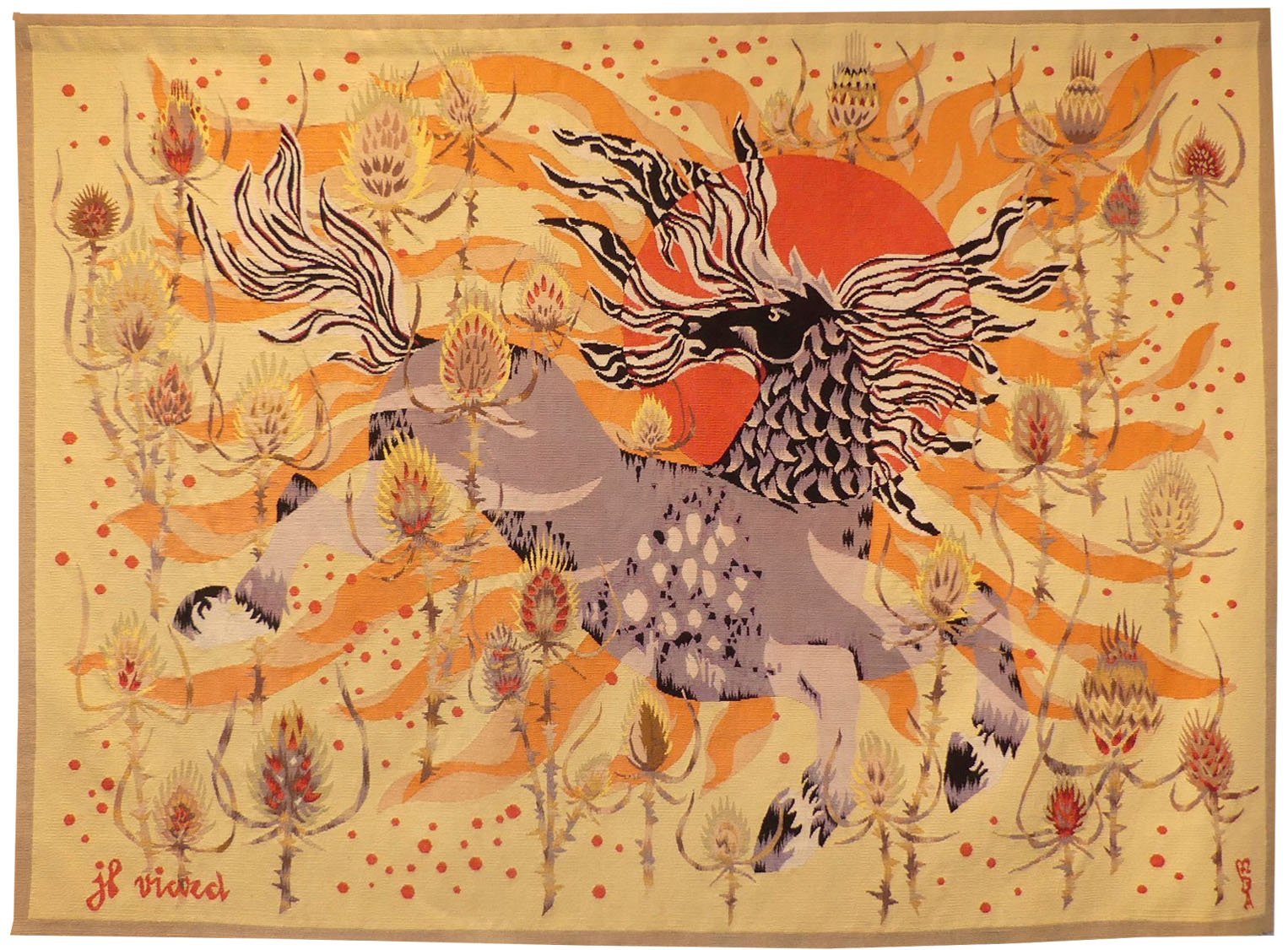
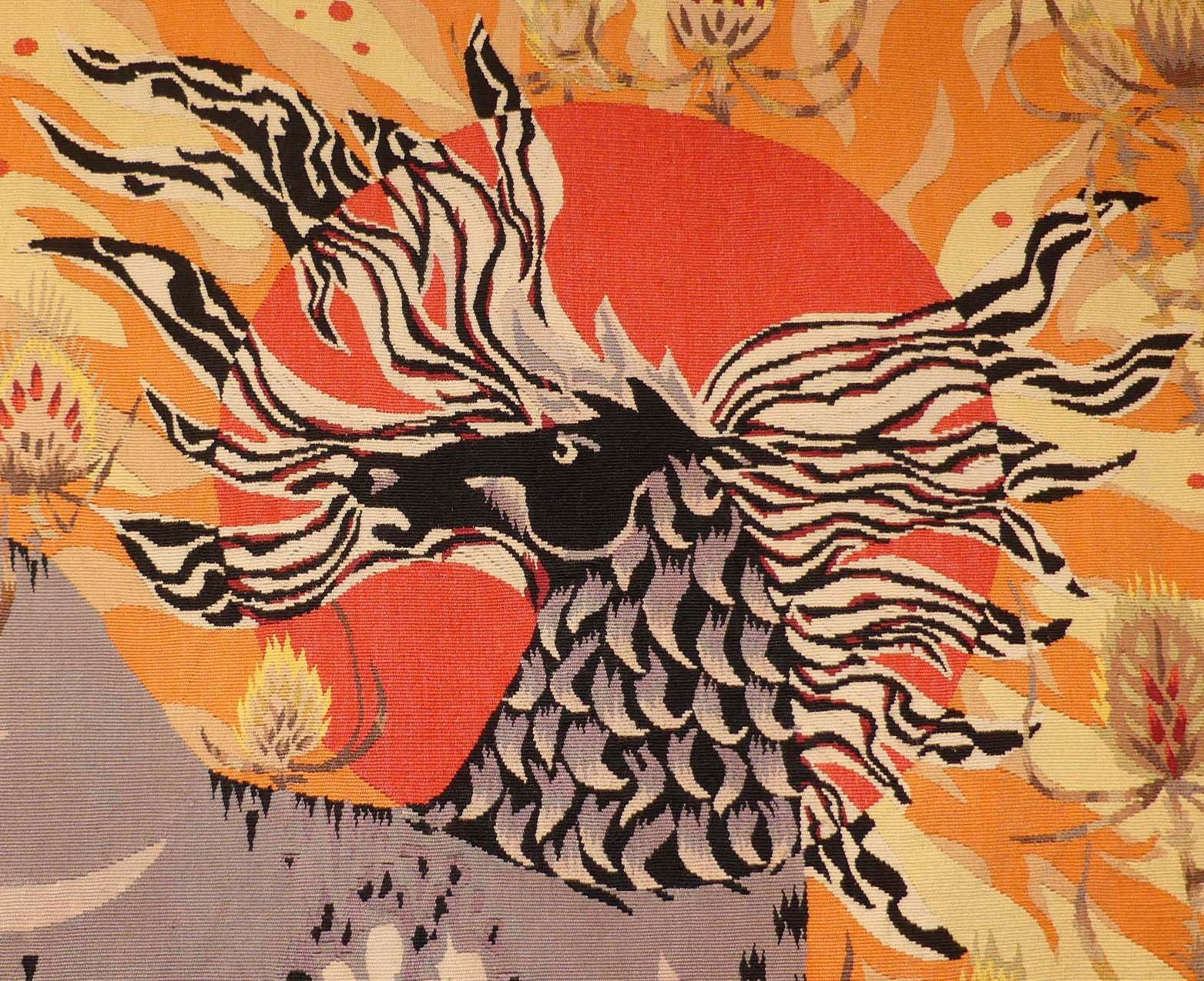
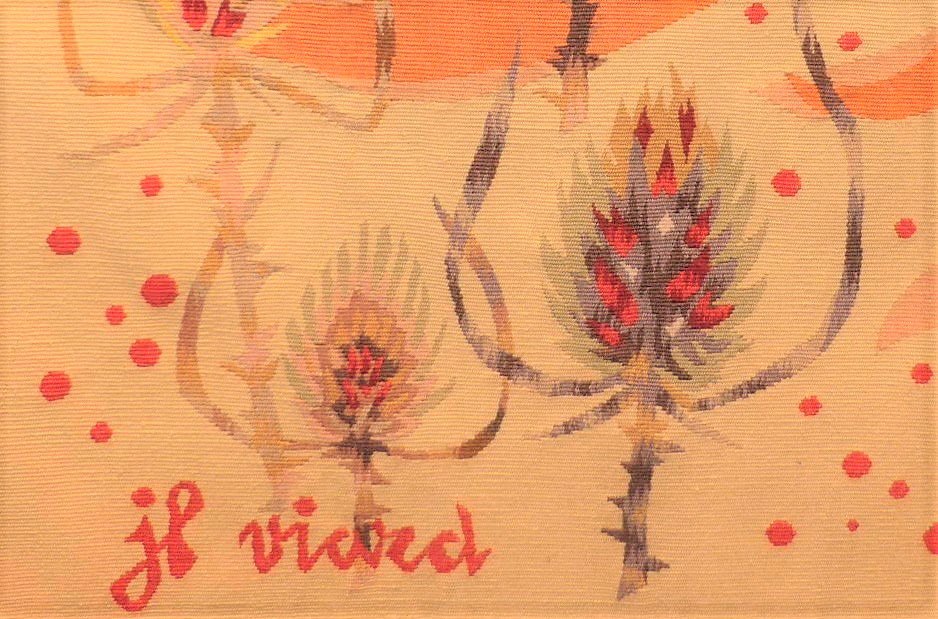
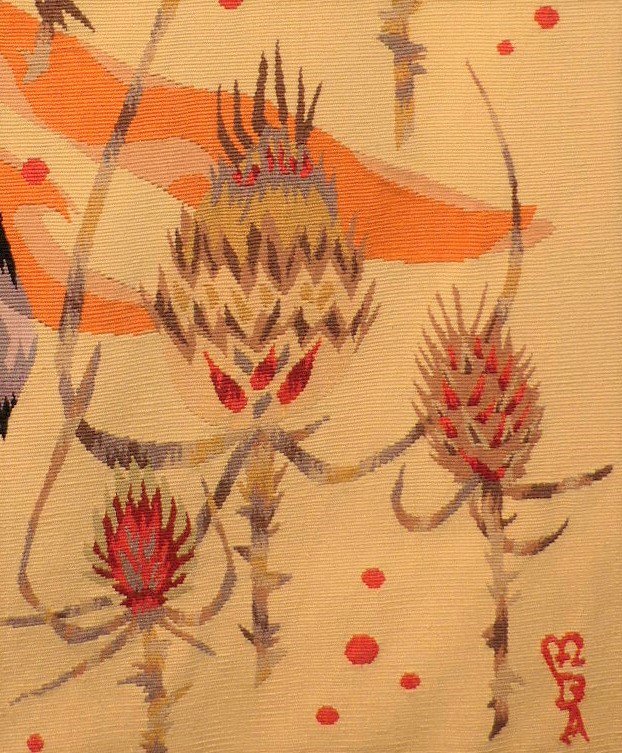
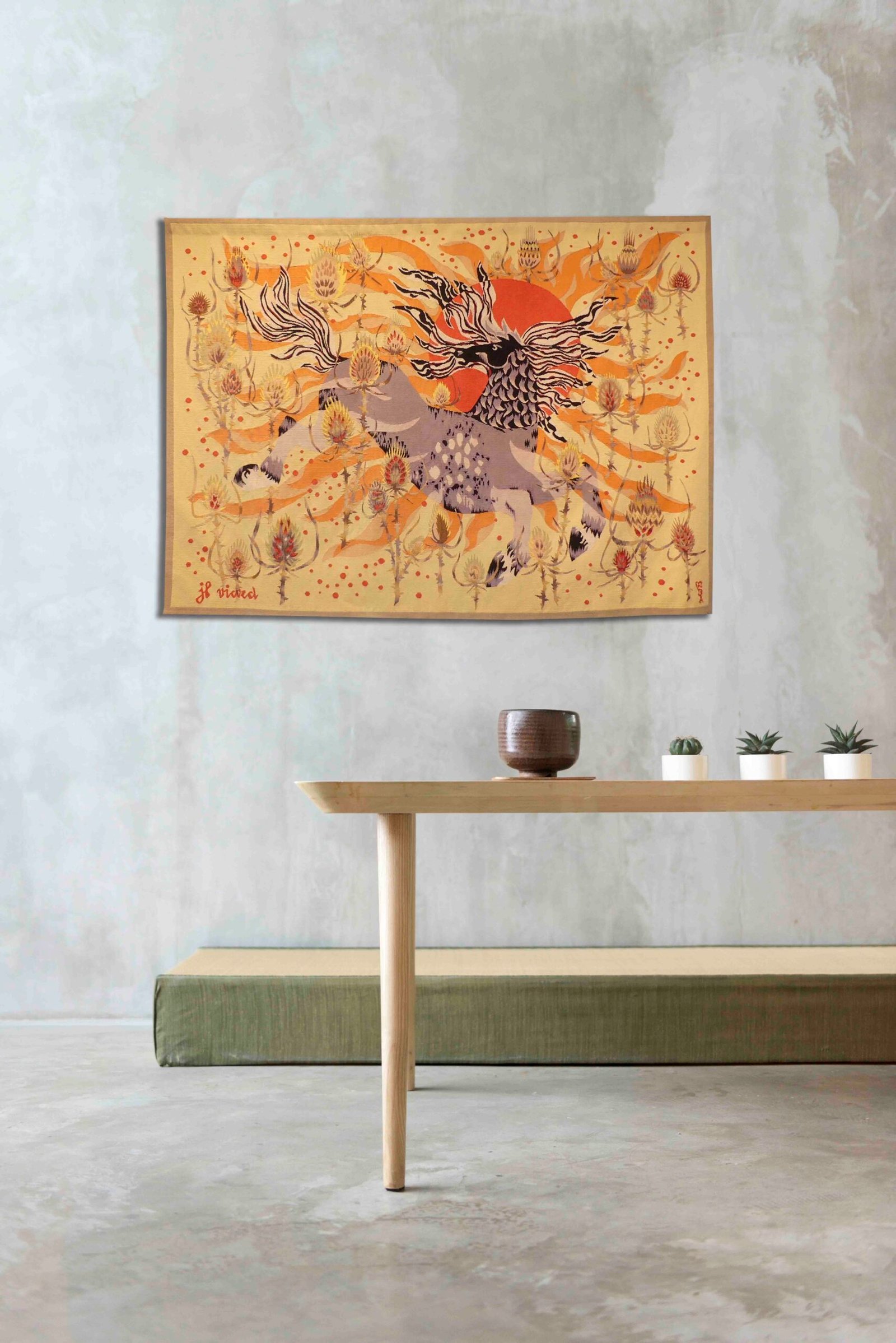
Camargue
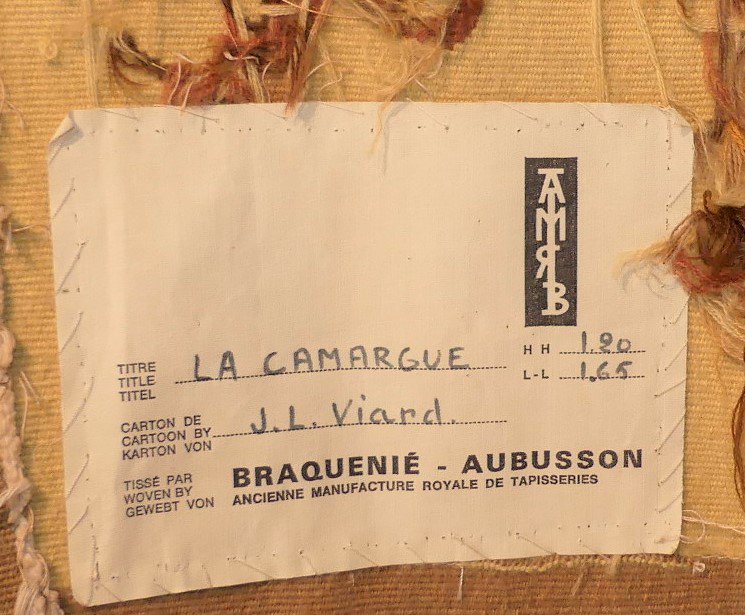
Aubusson tapestry woven by the Braquenié workshop.
With label.
Circa 1960.
Originally an engraver (Prix de Rome, intaglio technique in 1942), Jean-Louis Viard designed his first tapestry cartoons in the mid 1950’s.
At first his work was figurative (he was collaborating at the time with Picart Le Doux), but then he evolved along the same lines as many other painter-cartoonists of the period (Matégot, Tourlière or Prassinos,…) towards abstraction. He produced scores of cartoons working up until the 2000’s, in parallel to his work as a painter and engraver, but throughout revealing a particular interest for the use of contrasting materials and textures in the tradition of the “Nouvelle Tapisserie” of which Pierre Daquin was one of the leading lights.The inspiration for his motifs, sometimes metaphysical (“Mémoires” Memories, “Destins” Destinies,…) is wide-reaching, from astronomical infinity « ténèbres solaires » solar darkness) to the microscopic (« Mutation végétale” Plant mutation) : a profuse and varied production, regularly exhibited at his home, in various public and private exhibition spaces and, most significantly, at the Salon Comparaison of which he was the curator for the Tapestry section.
The theme of thistles, Sun and the Camargue horse is a recurring motif from the artist’s early career (see his mechanical tapestries [not to be confused with our tapestry, hand-woven by the Braquenié workshop] ‘Soleil sur les chardons’, ‘Chardon de Camargue’), when his themes and style were still closely reminiscent of Picart le Doux.


