



Vera Cruz
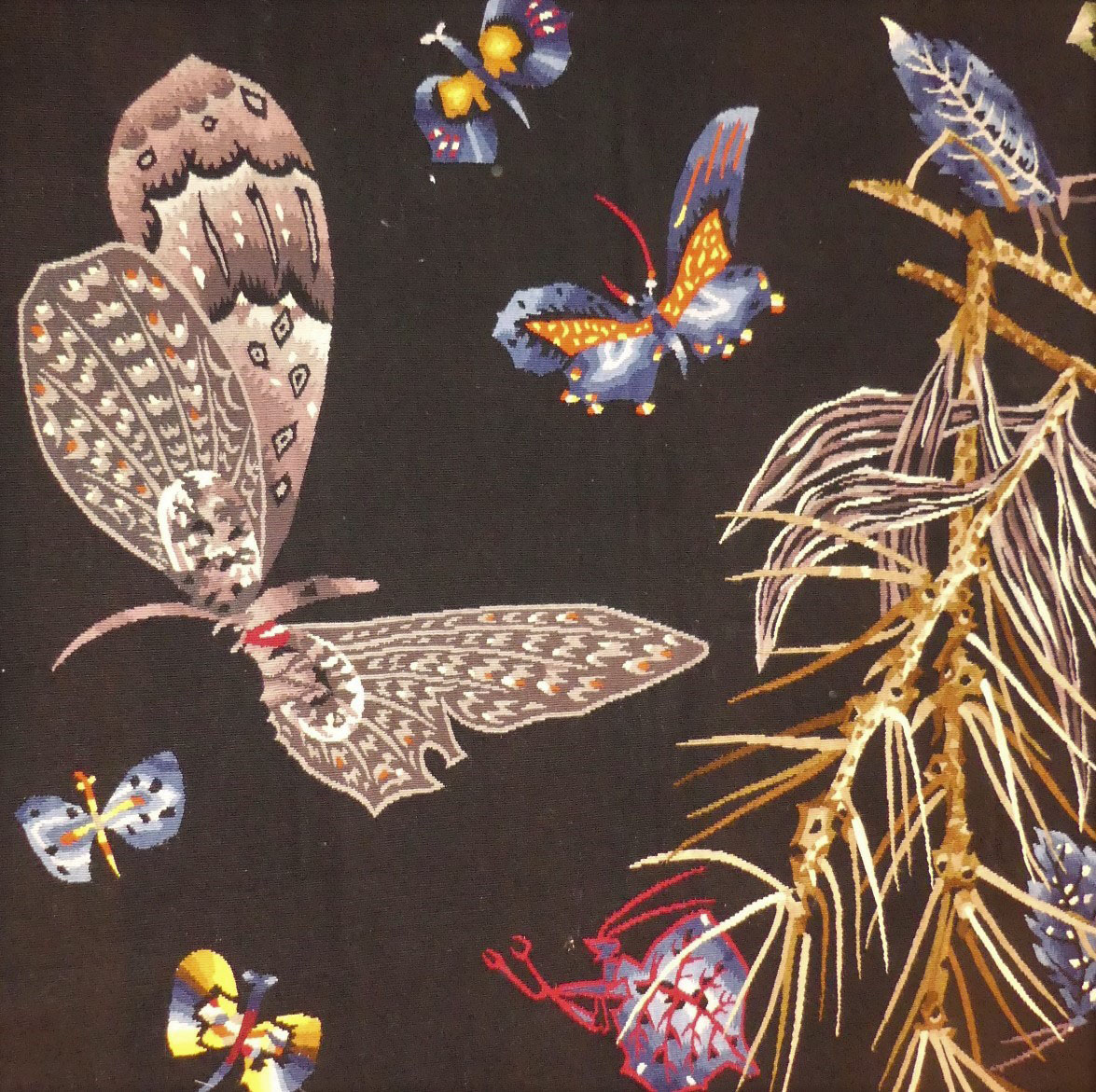
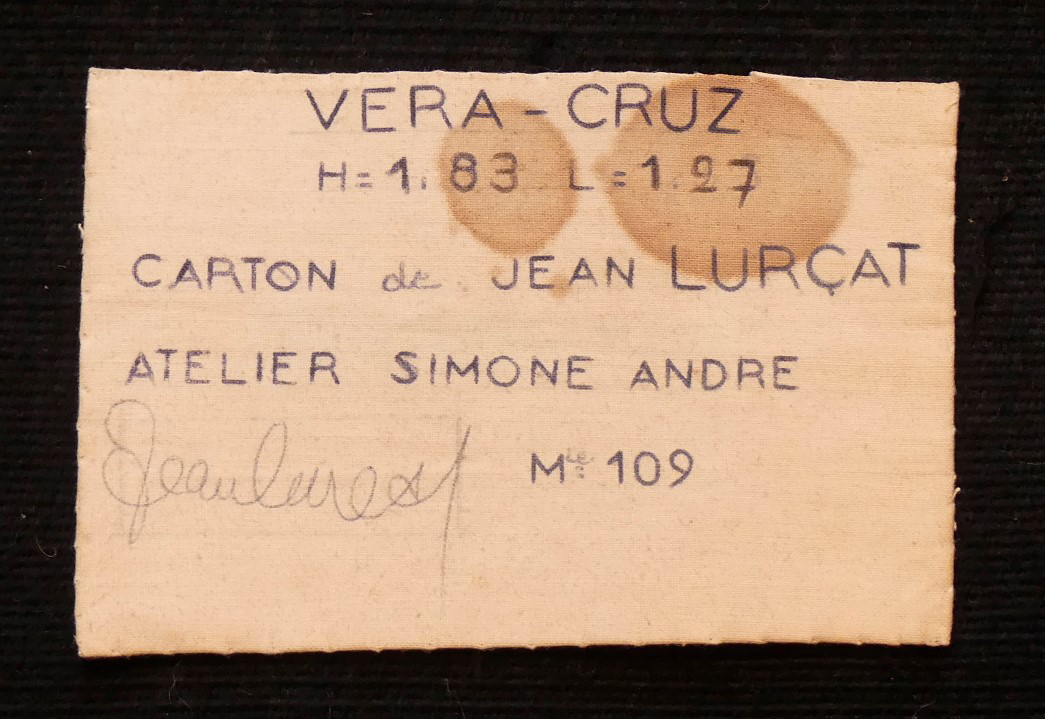
Aubusson tapestry woven by the Simone André workshop.
With signed label.
Circa 1955.
Lurçat’s artistic production was immense : it is however his role as the renovator of the art of tapestry design which ensures his lasting renown. As early as 1917, he started producing works on canvas, then in the 20’s and 30’s, he worked with Marie Cuttoli. His first collaboration with the Gobelins workshop dates back to 1937, at the same time he discovered the tapestry of the Apocalypse which was essential in his decision to devote himself to tapestry design. He first tackled the technical aspects with François Tabard, then on his installation at Aubusson during the war, he established his technique : broad point, a simplified palette, outlined cartoons with colours indicated by pre-ordained numbers. A huge production then follows (over 1000 cartoons) amplified by his desire to include his painter friends, the creation of the A.P.C.T. (Association des Peintres-Cartonniers de Tapisserie) and the collaboration with the art gallery La Demeure and Denise Majorel, and then by his role as a tireless advocate for the medium around the world.
His tapestries reveal a pictorial world which is specifically decorative, with a very personal symbolic iconography : cosmogony (the sun, the planets, the zodiac, the four elements…) stylised vegetation, fauna (rams, cocks, butterflies, chimera …) standing out against a background without perspective (voluntarily different from painting) and, in his more ambitious work, designed as an invitation to share in a poetic (he sometimes weaves quotations into his tapestries) and philosophical (the grand themes are broached from the wartime period onwards) vision whose climax is the “Chant du Monde” (Song of the World) (Jean Lurçat Museum , ancien hôpital Saint Jean, Angers) which remained unfinished at his death.
His journey to Brazil in 1954 was a decisive source of inspiration for Lurçat : the flora and fauna (particularly the butterflies, a recurrent theme) of the Amazon appear repeatedly : “What interests me with the butterfly, … is the extraordinary inventiveness of the interlacing forms, the sparkling colours, the total freedom of their coloration…” (Claude Faux, Lurçat à haute voix, 1962, p. 151). This geographical source will know several avatars: ‘Vera Cruz’ thus, but also ‘New Delhi’… will be pretexts for butterflies.
Bibliography :
Tapisseries de Jean Lurçat 1939-1957, Pierre Vorms Editeur, 1957
Exhibition Catalogue Jean Lurçat, Nice, Musée des Ponchettes, 1968
Exhibition Catalogue Lurçat, 10 ans après, Musée d’Art moderne de la ville de Paris, 1976, ill.
Exhibition catalogue Les domaines de Jean Lurçat, Angers, Musée Jean Lurçat et de la tapisserie contemporaine, 1986
Symposium Jean Lurçat et la renaissance de la tapisserie in Aubusson, Aubusson, Musée départemental de la tapisserie 1992
Exhibition Catalogue Dialogues avec Lurçat, Musées de Basse-Normandie, 1992
Exhibition catalogue Jean Lurçat, Donation Simone Lurçat, Académie des Beaux-Arts, 2004
Jean Lurçat, le chant du monde Angers 2007
Gérard Denizeau, Denise Majorel, une vie pour la tapisserie, Aubusson, Musée départemental de la tapisserie
Gérard Denizeau, Jean Lurçat, Liénart, 2013
Exhibition Catalogue Jean Lurçat, Meister der französischen Moderne, Halle, Kunsthalle
Exhibition Catalogue Jean Lurçat au seul bruit du soleil, Paris, galerie des Gobelins, 2016
Exhibition Catalogue Jean Lurçat, la terre, le feu, l’eau, l’air, Perpignan, Musée d’art Hyacinthe Rigaud, 2024


