

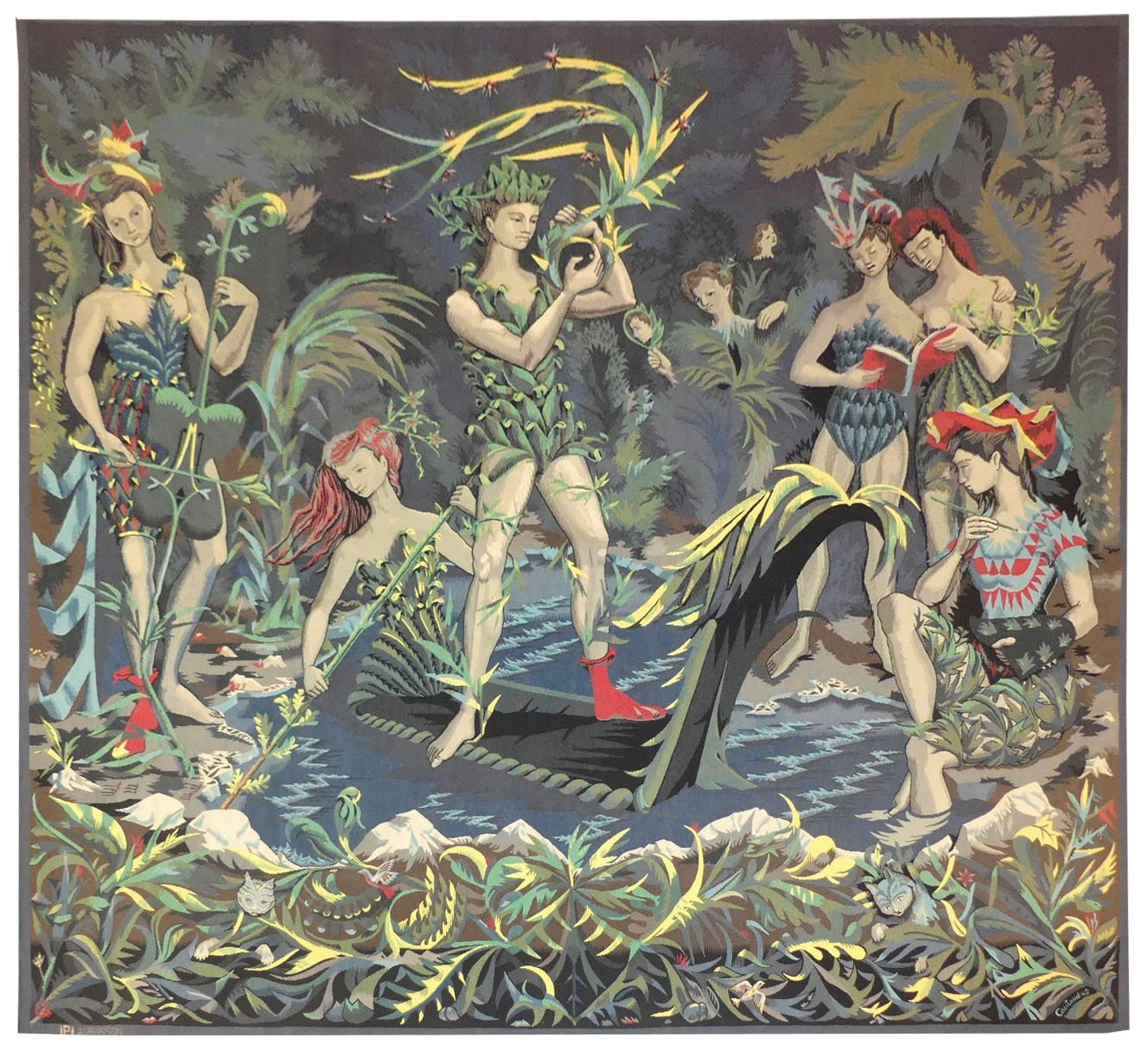
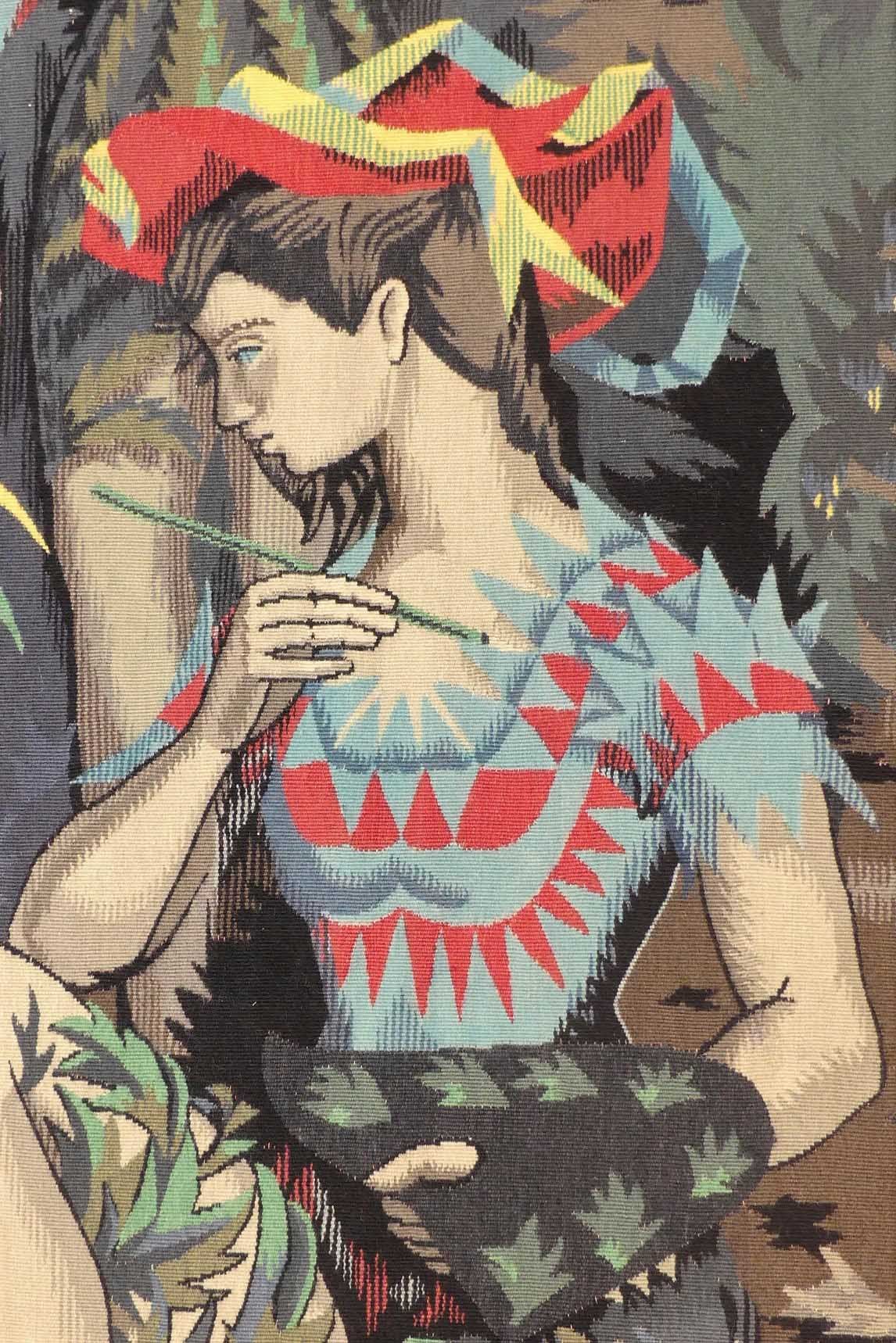
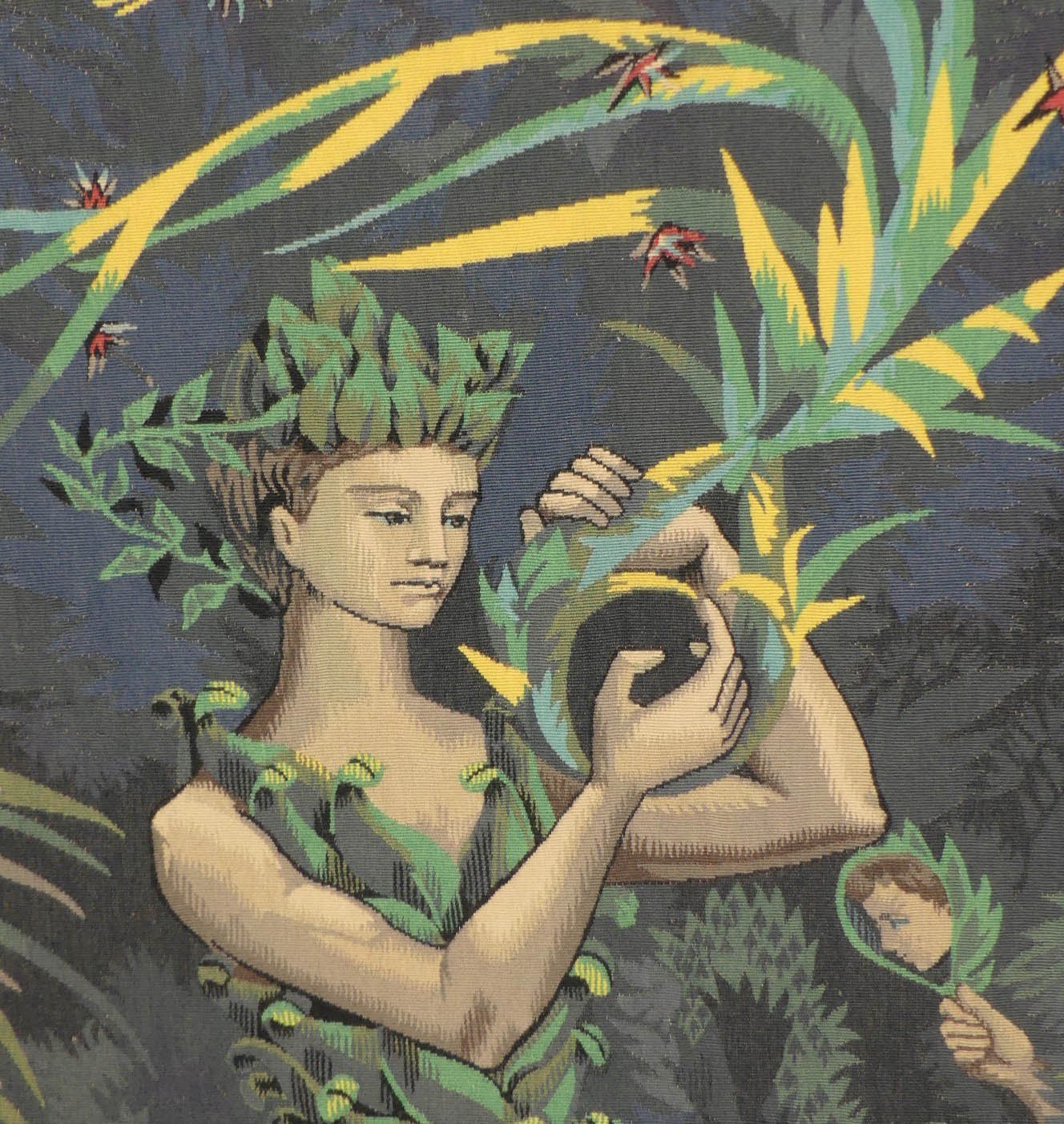
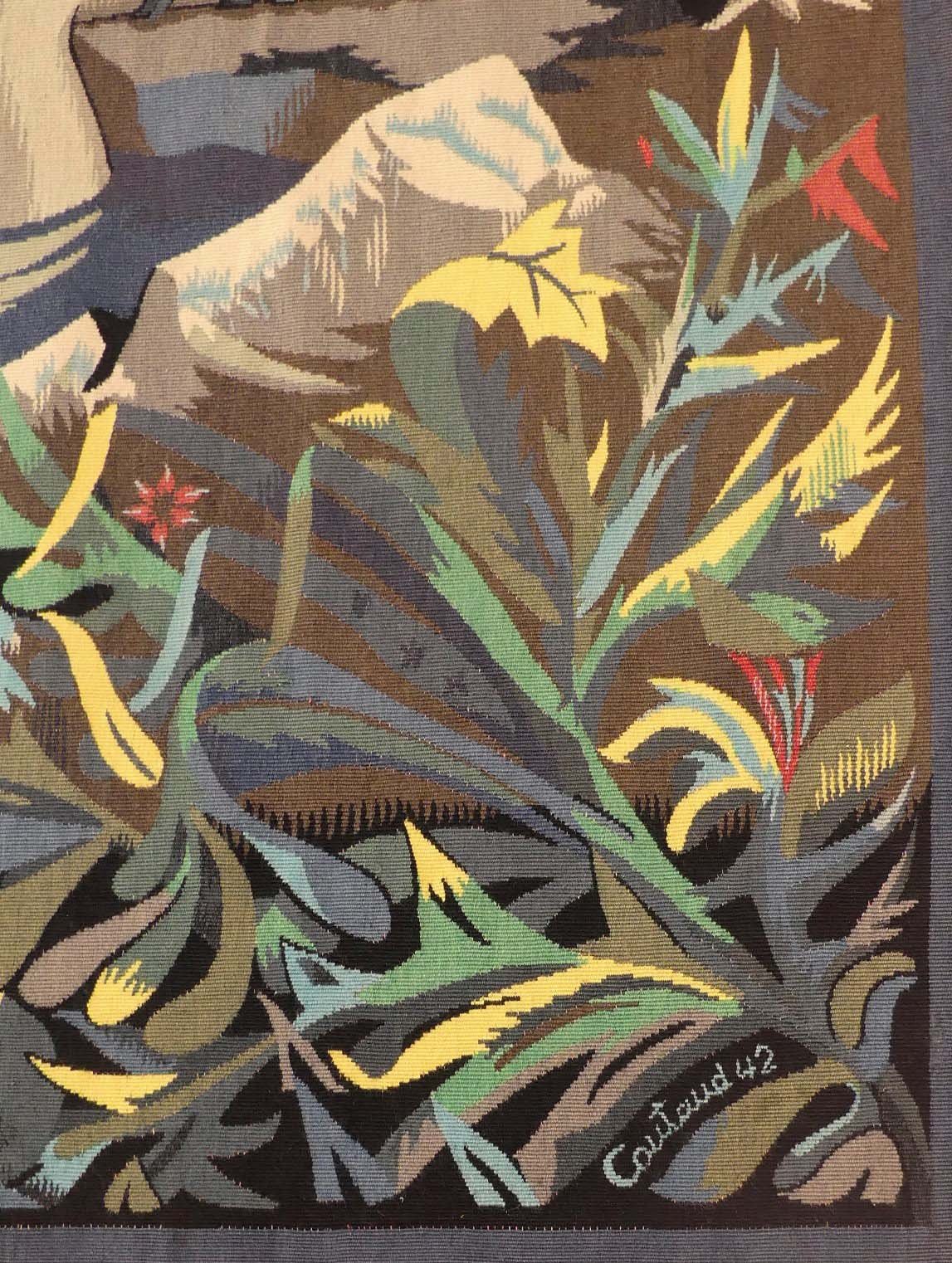
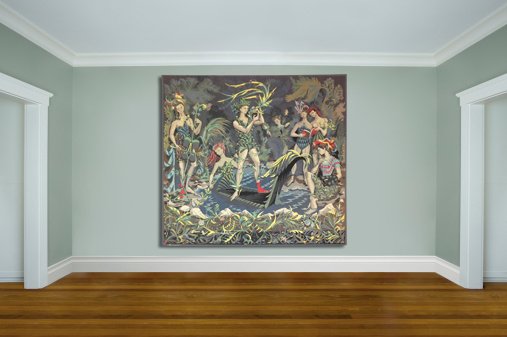
Orphée et les Muses
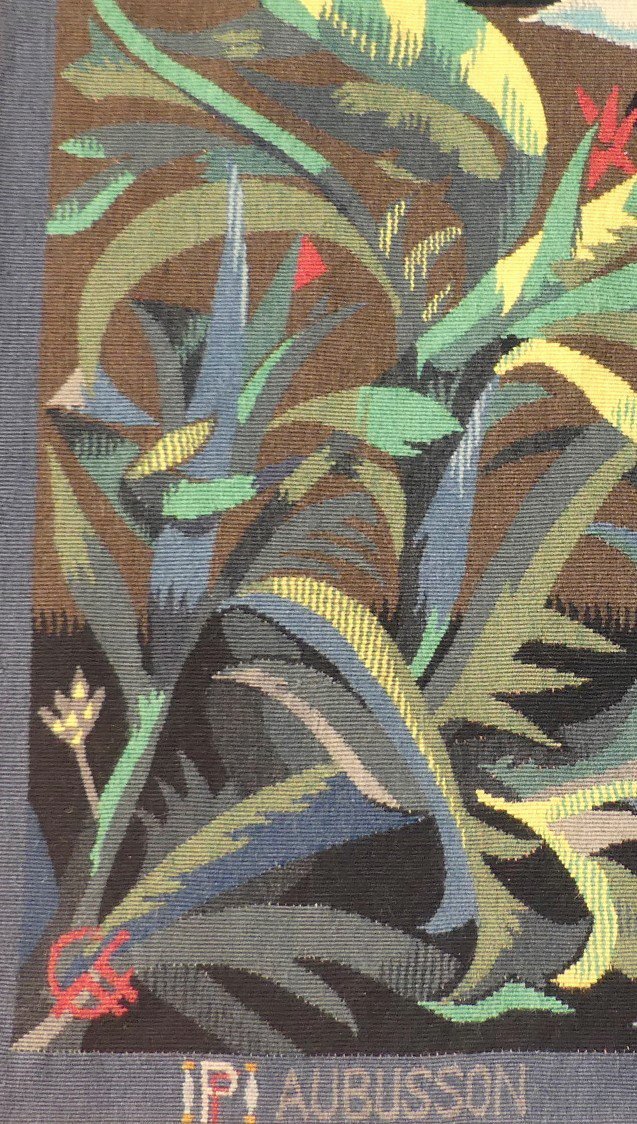
Aubusson tapestry woven by the Pinton workshop for the Compagnie des Arts Français.
1942.
A painter and engraver, Lucien Coutaud also worked in the theatre with Dullin, Barrault and designed numerous sets and costumes. However it was his encounter with Marie Cuttoli in 1933 which would introduce him to tapestry : she mainly commissioned seat cover designs. Most of the tapestries that followed were woven in the Pinton workshop for the Compagnie des Arts Français, whose main aim was to integrate tapestry as an element of interior decoration. The last 3 tapestries designed by the artist in 1960 are a tribute to his notoriety because “Jardins exotiques” was chosen to decorate the 1st class saloon on the “France” transatlantic liner.Elements of his work as a set designer, influenced by surrealism, are discernible in Coutaud’s woven art : the world he illustrates is figurative yet stylised (shapes are angular and harsh) contained in a dream world often incorporating unusual borders.
The evocation of great myths is rare in modern tapestry, but the allegorical function (to be compared with Saint-Saëns’ “Thésée et le Minotaure” in particular) of the hero going to the Underworld to bring back his beloved, remains open, in these times of war. Here, it’s more the theme of musical inspiration that prevails (Coutaud was close to Milhaud, Lifar and Claude Luter) in the artist’s usual dreamlike register. Another copy was shown at the 1946 exhibition. There is also a larger variant of the tapestry, with additional borders.
Bibliography :
Multi-authored, Muraille et laine, éditions pierre Tisné, 1946, plate 57
Exh. Cat. Lucien Coutaud, œuvre tissé, Aubusson, Musée Départemental de la Tapisserie, 1988-1989, ill. p. 25
Robert Guinot, la tapisserie, Aubusson et Felletin, éditions Dessagne, ill.p.27
Exh. Cat. Le salon de musique, Felletin, église du château, 2002, ill. p.36


