

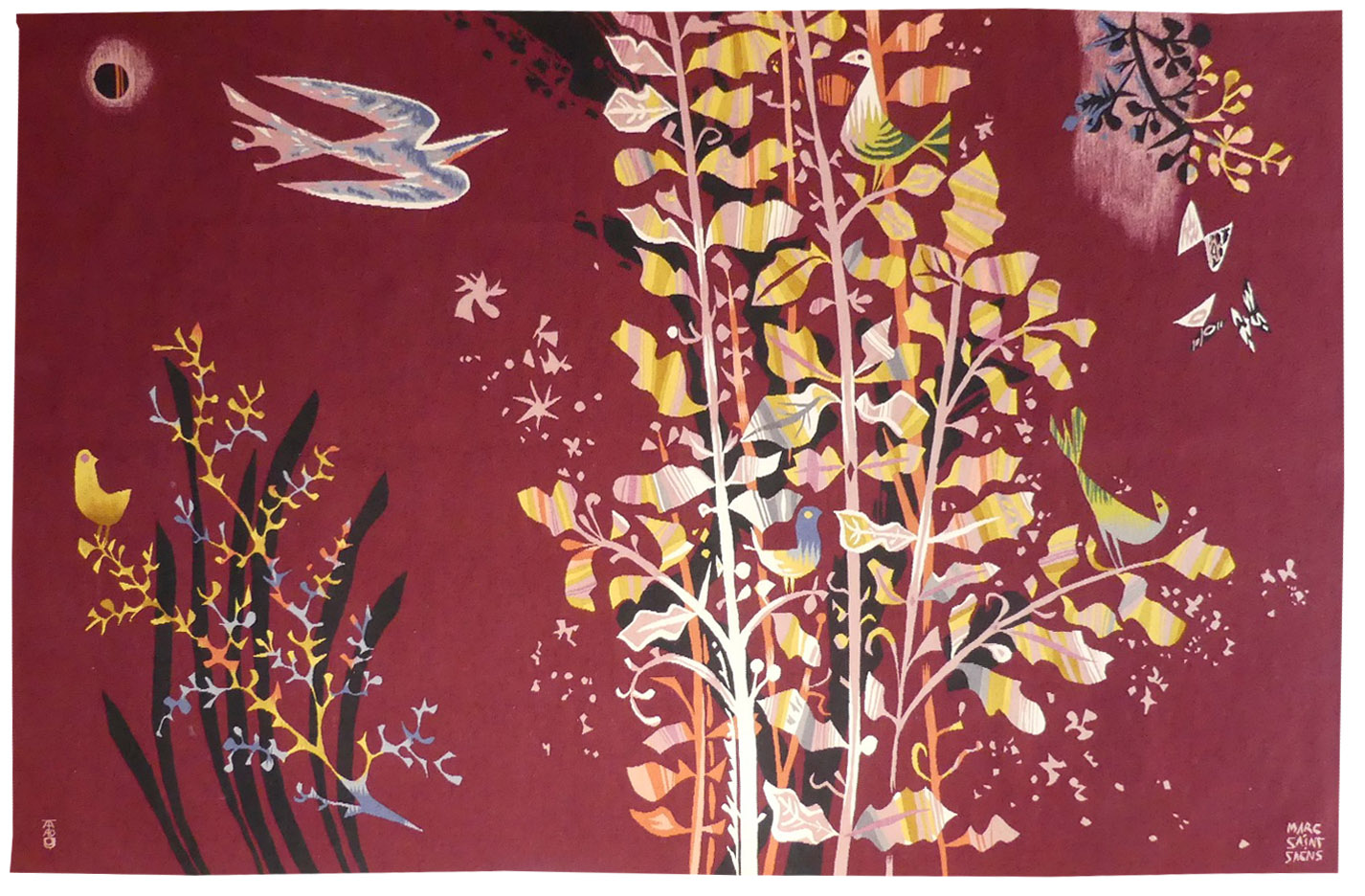
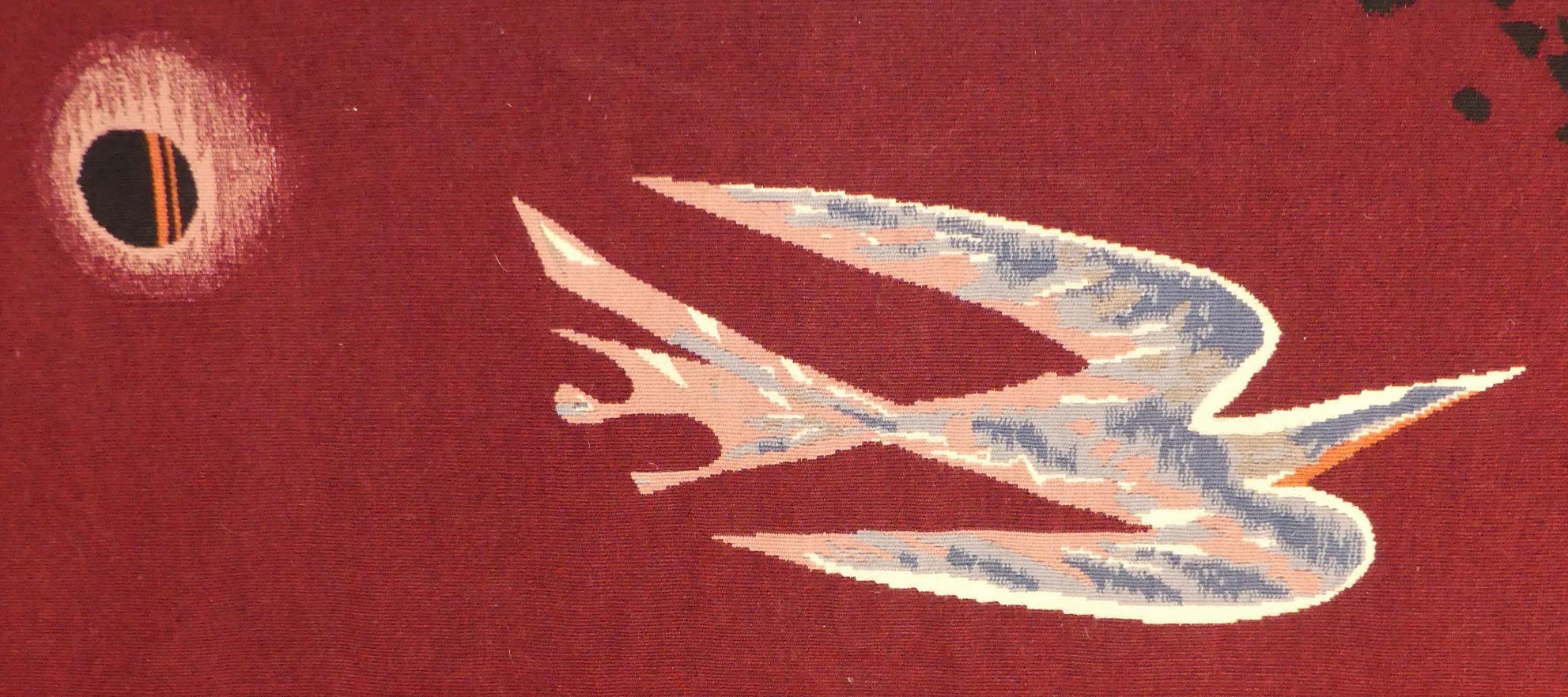
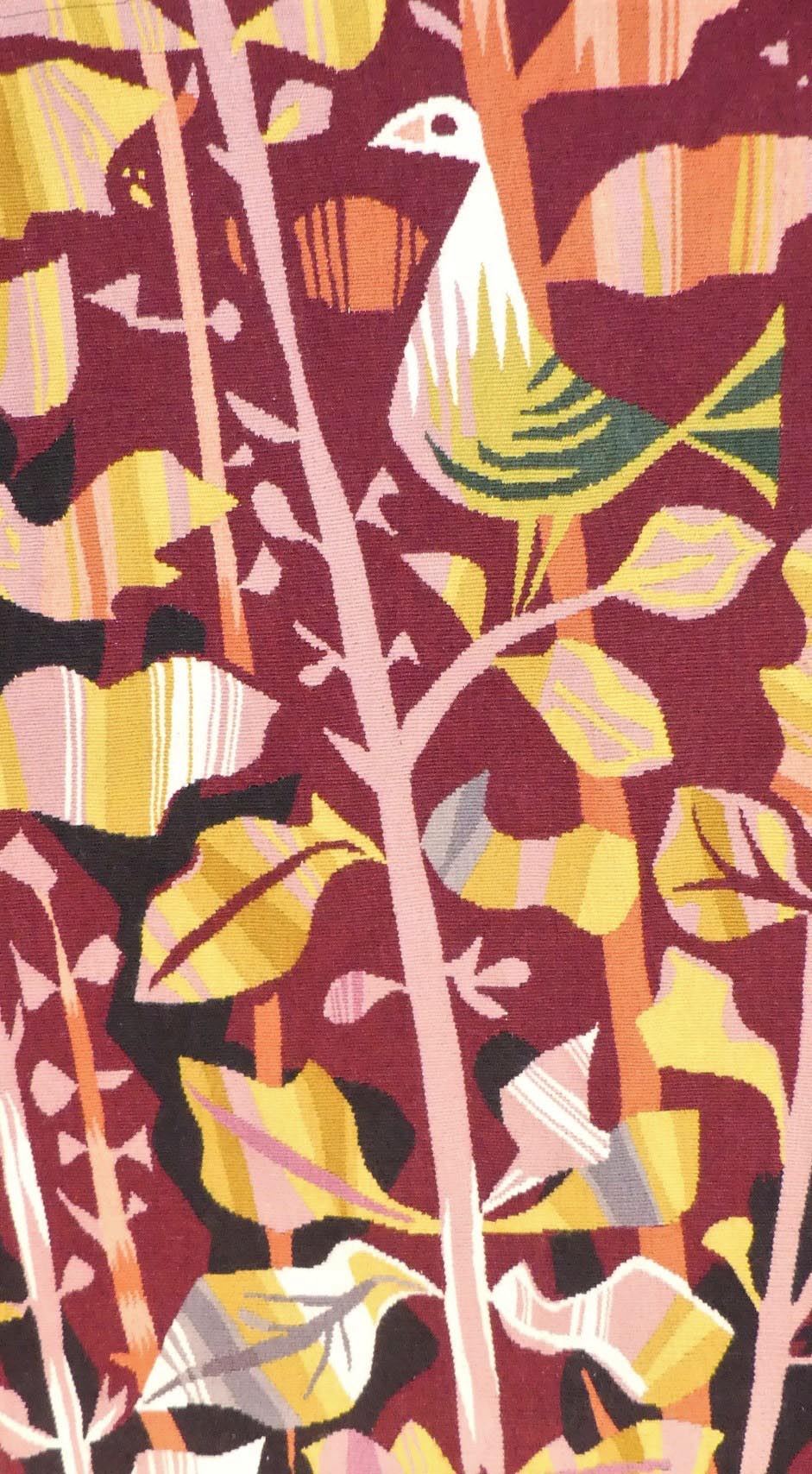
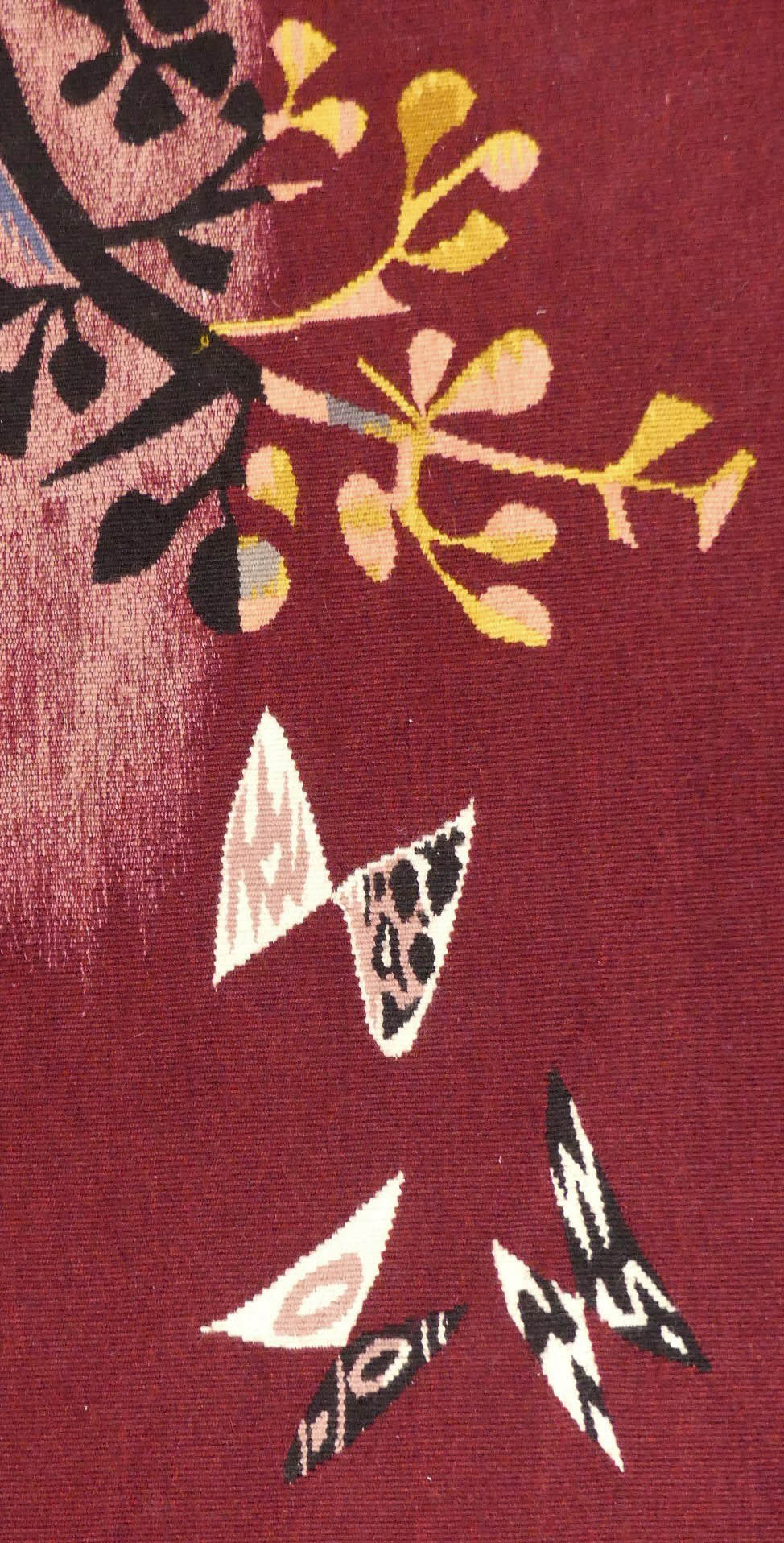
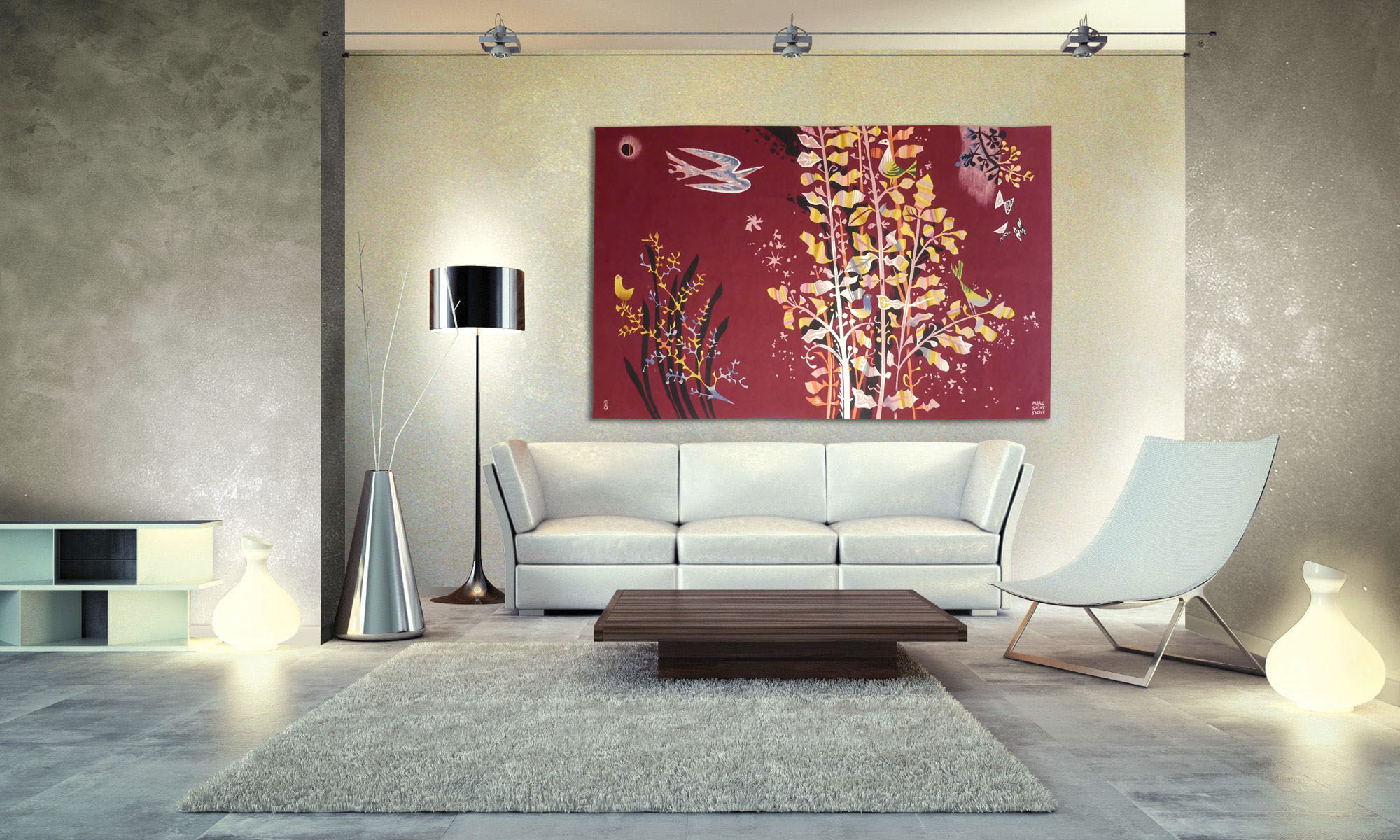
Oiseaux et feuillages (Birds and leaves)
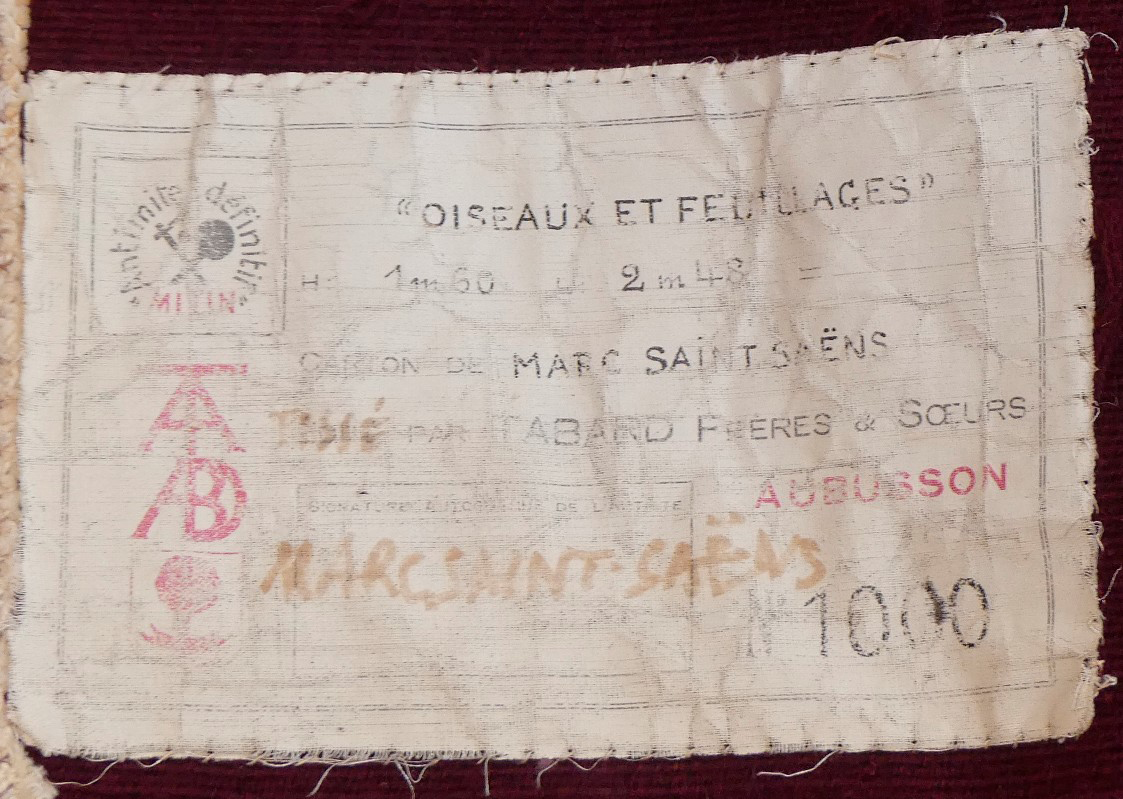
Aubusson tapestry woven by the Tabard workshop.
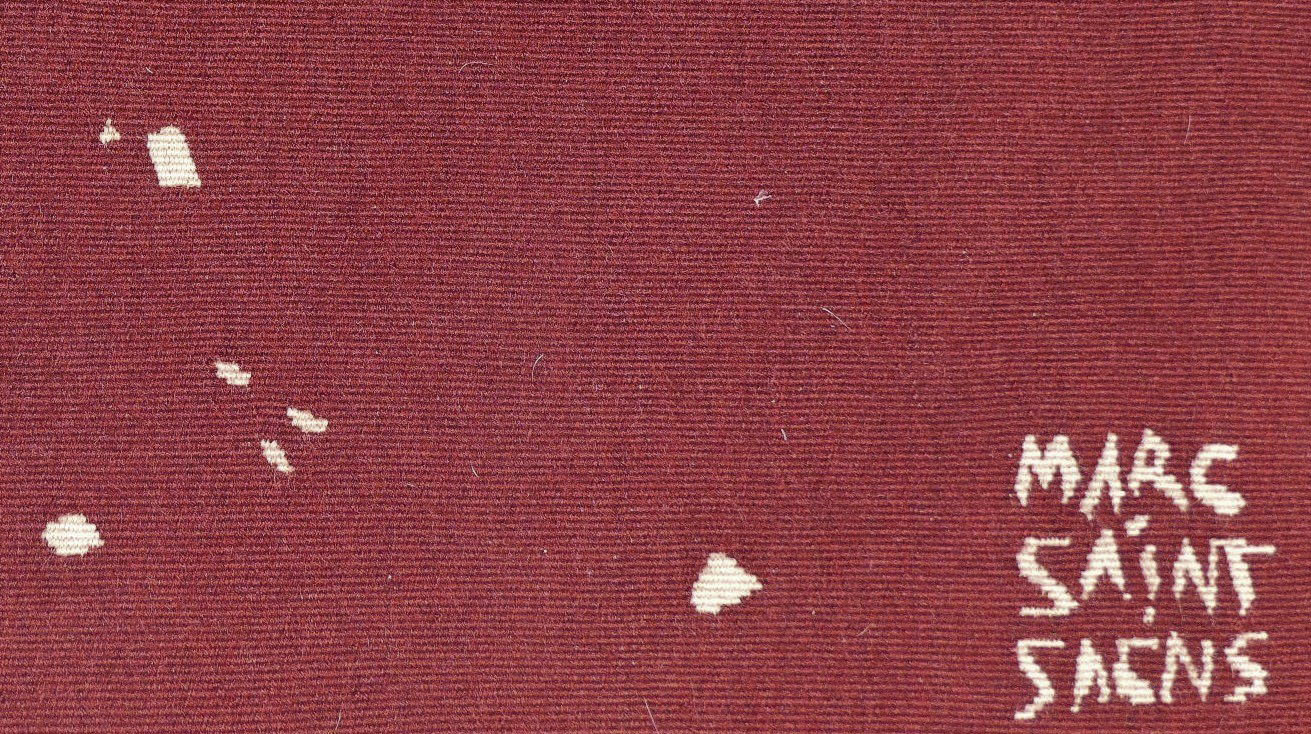
With signed label.
1961.
Lurçat approached Saint-Saëns, originally a painter of murals, in 1940. And during the war the latter produced the first of his allegorical masterpieces, tapestries reflecting indignation, combat, resistance : “les Vierges folles (the foolish virgins), “Thésée et le Minotaure” (Theseus and the Minotaur). At the end of the war, as a natural development he joined up with Lurçat, whose convictions he shared (concerning a simplified palette, outlined cartoons with colours indicated by pre-ordained numbers, and the specific nature of tapestry design…) at the A.P.C.T. (Association des Peintres-cartonniers de Tapisserie). His universe, where the human figure, stretched, elongated, ooccupies an important place (particularly when compared to his companions Lurçat or Picart le Doux), pivots around traditional themes : woman, the Commedia dell’arte, Greek mythology… refined by the brilliance of the colours and the simplification of the layout. His work would evolve later, in the 1960’s, towards cartoons of a more lyrical design, almost abstract where elemental and cosmic forces would dominate.
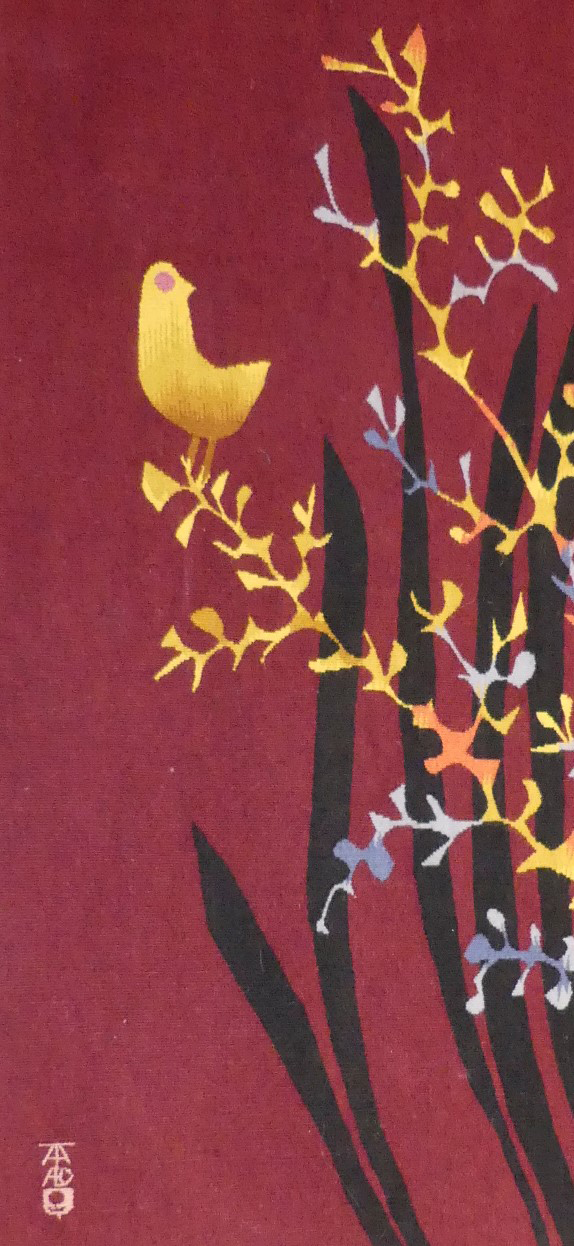
‘[This cartoon] was a success (7 copies) and there are 2 versions: one with a burgundy background, the other with a black background. Once again Saint-Saëns refers to the great tradition of “verdures tapestries” populated by animals and flowers, an art of unpretentious relaxation….’ (Michèle Heng in Exhibition catalogue Saint-Saëns, the tapestries, Aubusson, Musée départemental de la Tapisserie, 1987, p.34)
Bibliography :
Exhibition catalogue Saint-Saëns, the tapestries, Aubusson, Musée départemental de la Tapisserie, 1987
Exhibition catalogue Marc Saint-Saëns, tapestries, 1935-1979, Angers, Musée Jean Lurçat et de la Tapisserie Contemporaine 1997-1998


