

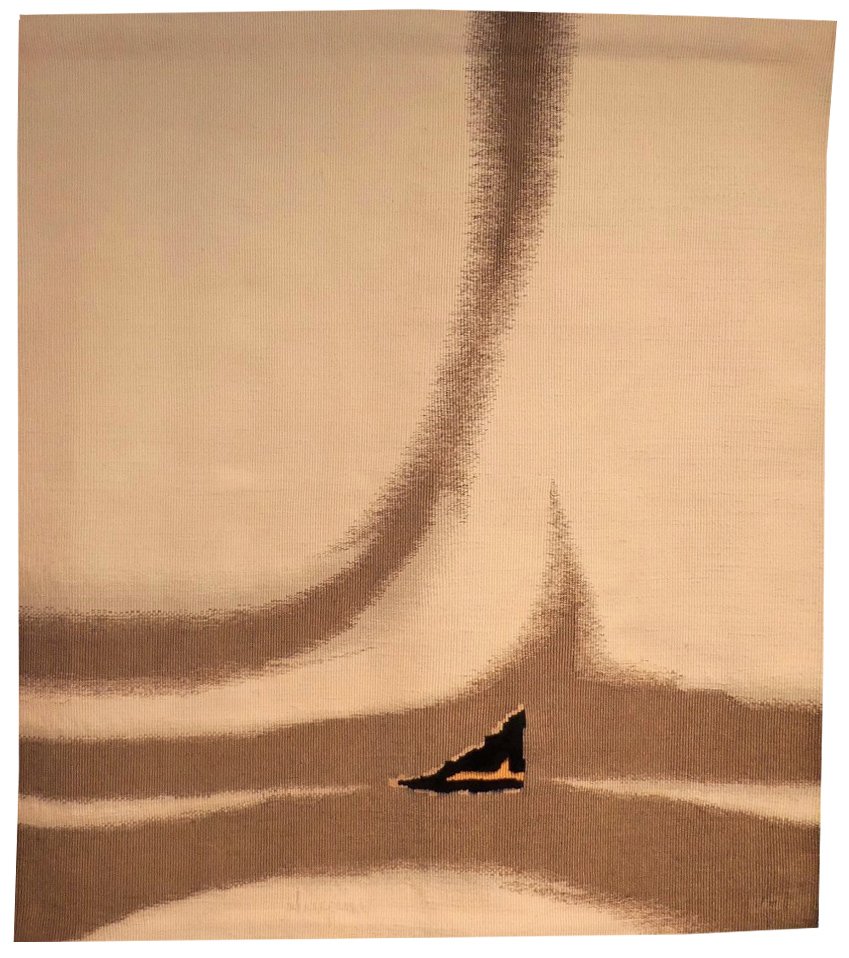

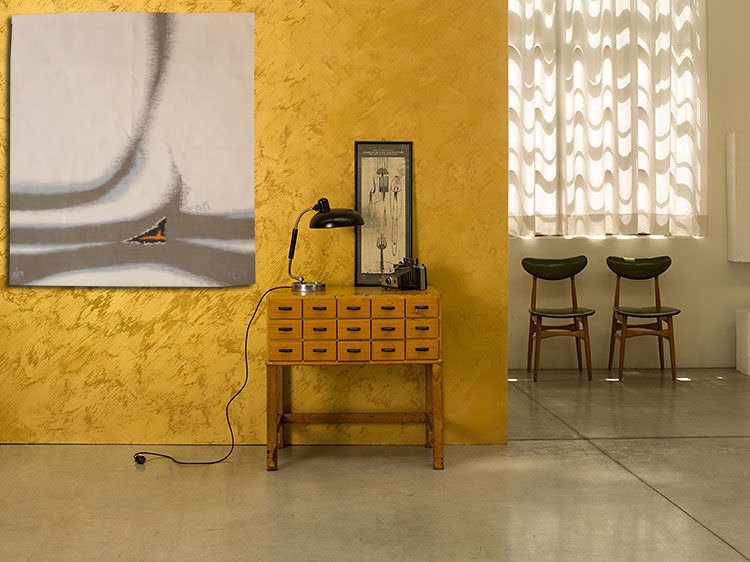
Appel éolien (Wind call)
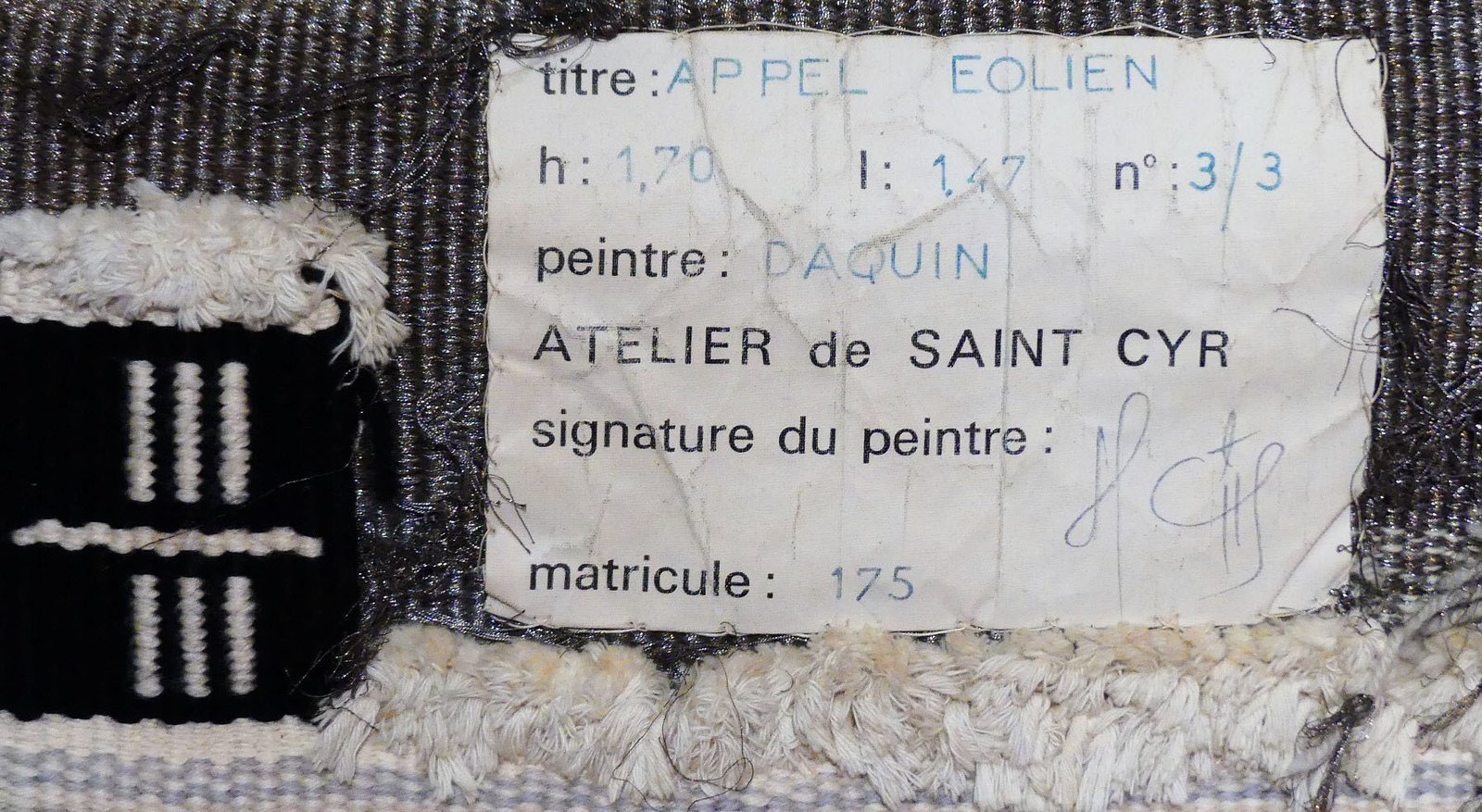
Tapestry woven by the Atelier de Saint-Cyr. Bearing its signed bolduc, no. III/III. Circa 1970.
Pierre Daquin is emblematic of the versatile artists who revolutionised tapestry in the second half of the 1960s. Both designer and maker, he possessed a perfect technical command of the medium, acquired in the Manufactures Nationales and subsequently developed at the Atelier de Saint-Cyr, which he founded in 1965 after leaving Beauvais. There, in addition to his own works, he wove tapestries after Ubac, Feito and Arthur-Bertrand, among others.
Pierre Daquin was above all one of the leading protagonists in France of the “Nouvelle Tapisserie” movement. Emerging from the first Lausanne Biennials onwards, this movement brought about a fundamental reappraisal of tapestry: its form, sometimes in three dimensions; its function, particularly in relation to the wall and to space; its technique; its texture; and its materials, with wool and cotton at times becoming subsidiary elements. Daquin’s own concerns with whiteness, emptiness, three-dimensionality and relief are expressed, for example, in *Mospalis* — Angers, Musée Jean Lurçat et de la tapisserie contemporaine — exhibited at the 4th Lausanne Biennial in 1969.
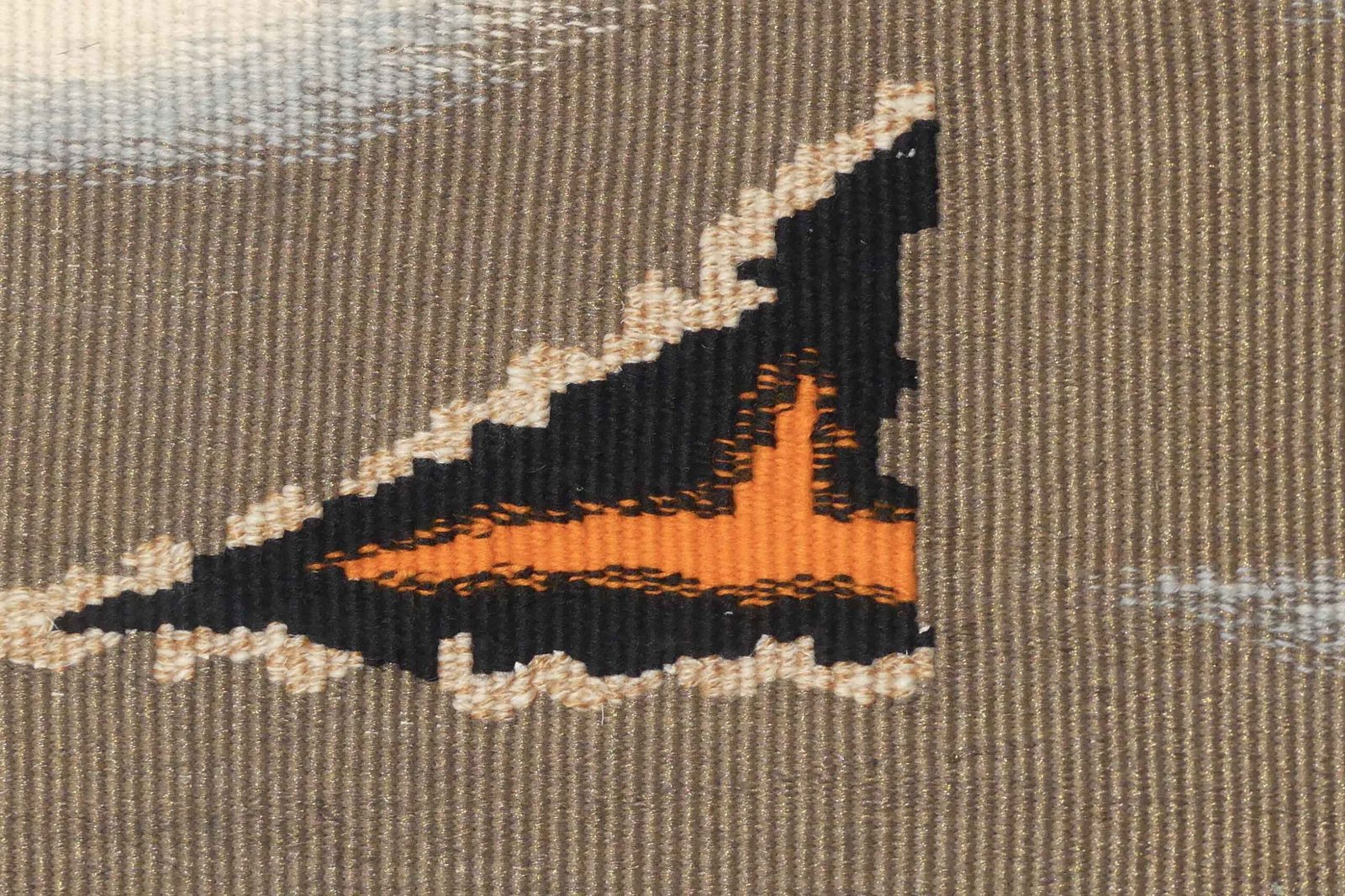
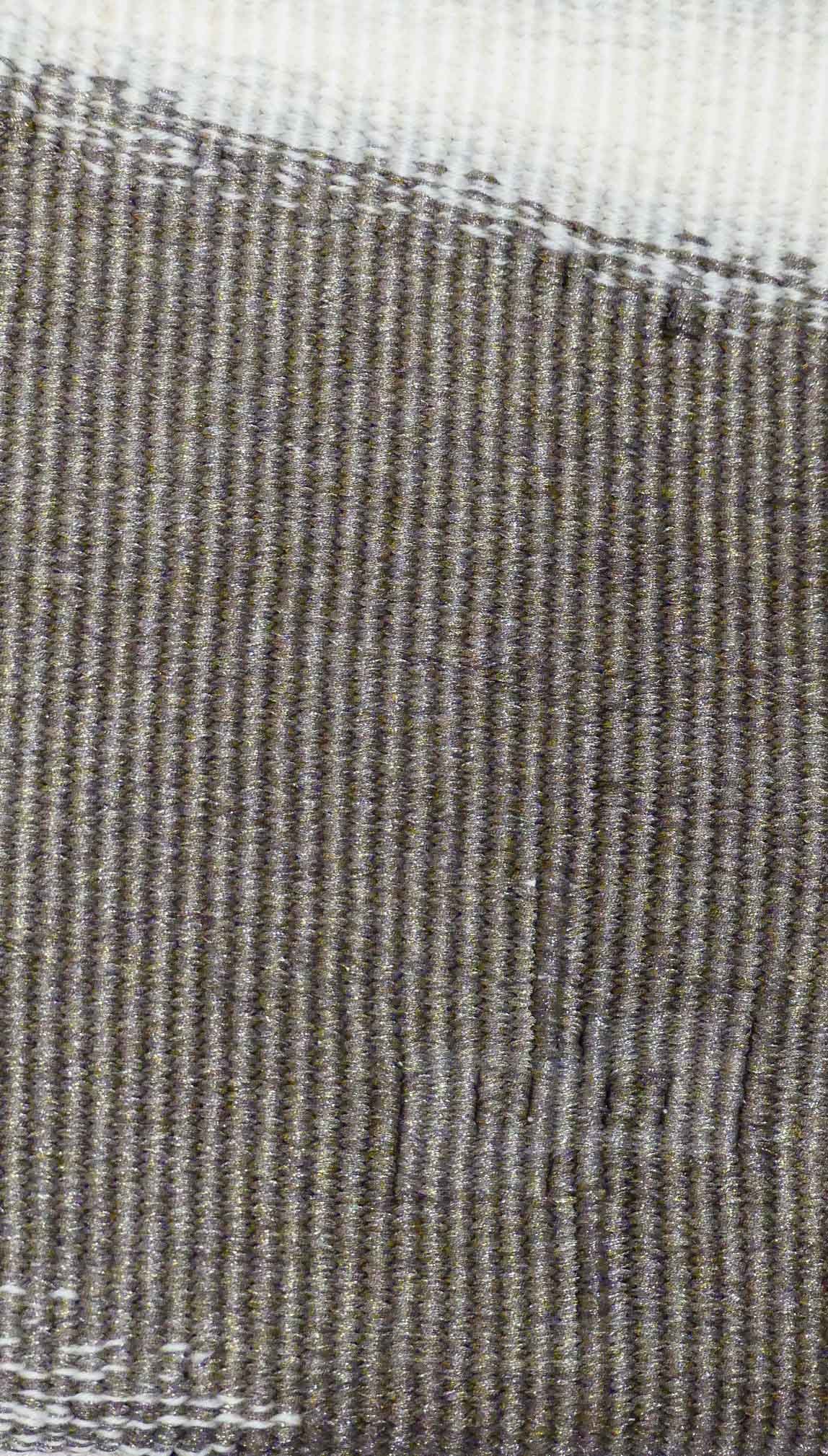
*Appel éolien* is a cartoon from before the rupture and radicality: abstract, worked in large stitches and incorporating metallic threads, yet still retaining the appearance of a traditional tapestry.
Bibliographie : Cat. Expo. Decorum, Musée d’art moderne de la ville de Paris, 2013
Collectif, de la tapisserie au fiber art, les biennales de Lausanne 1962-1995, Skira/fondation Toms Pauli, 2017


