

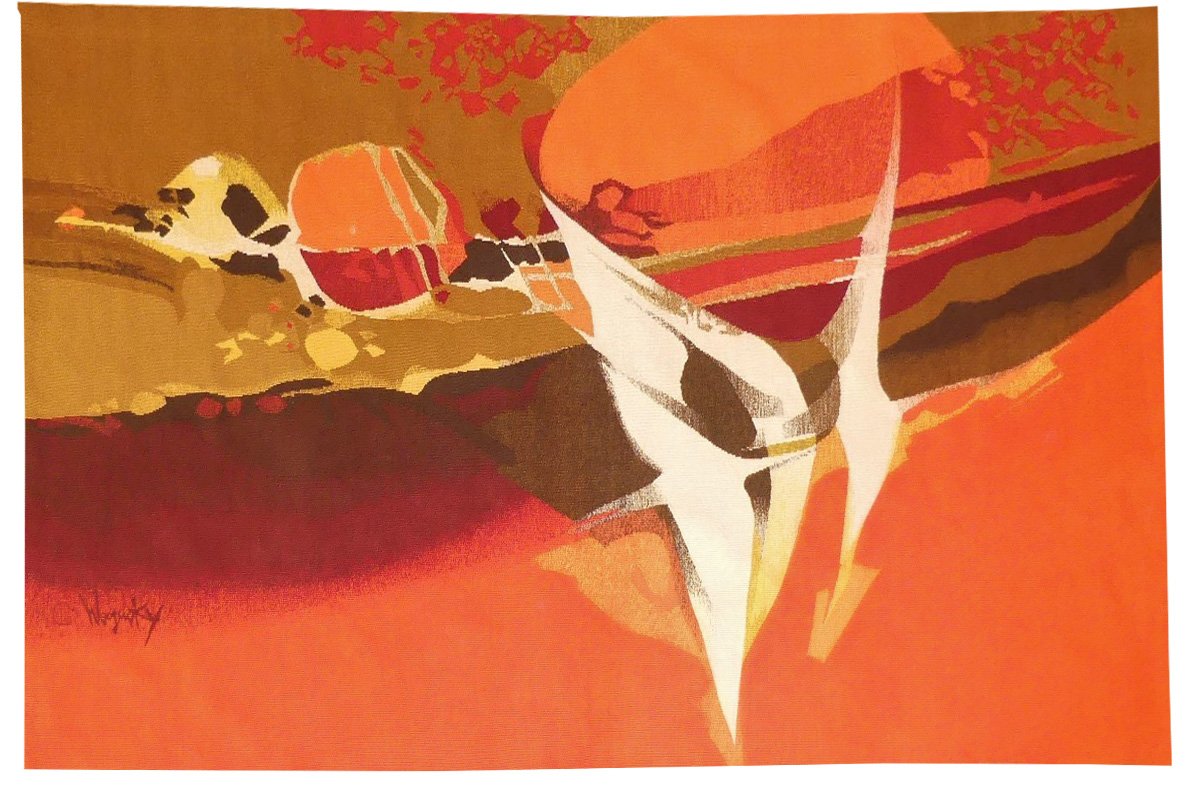
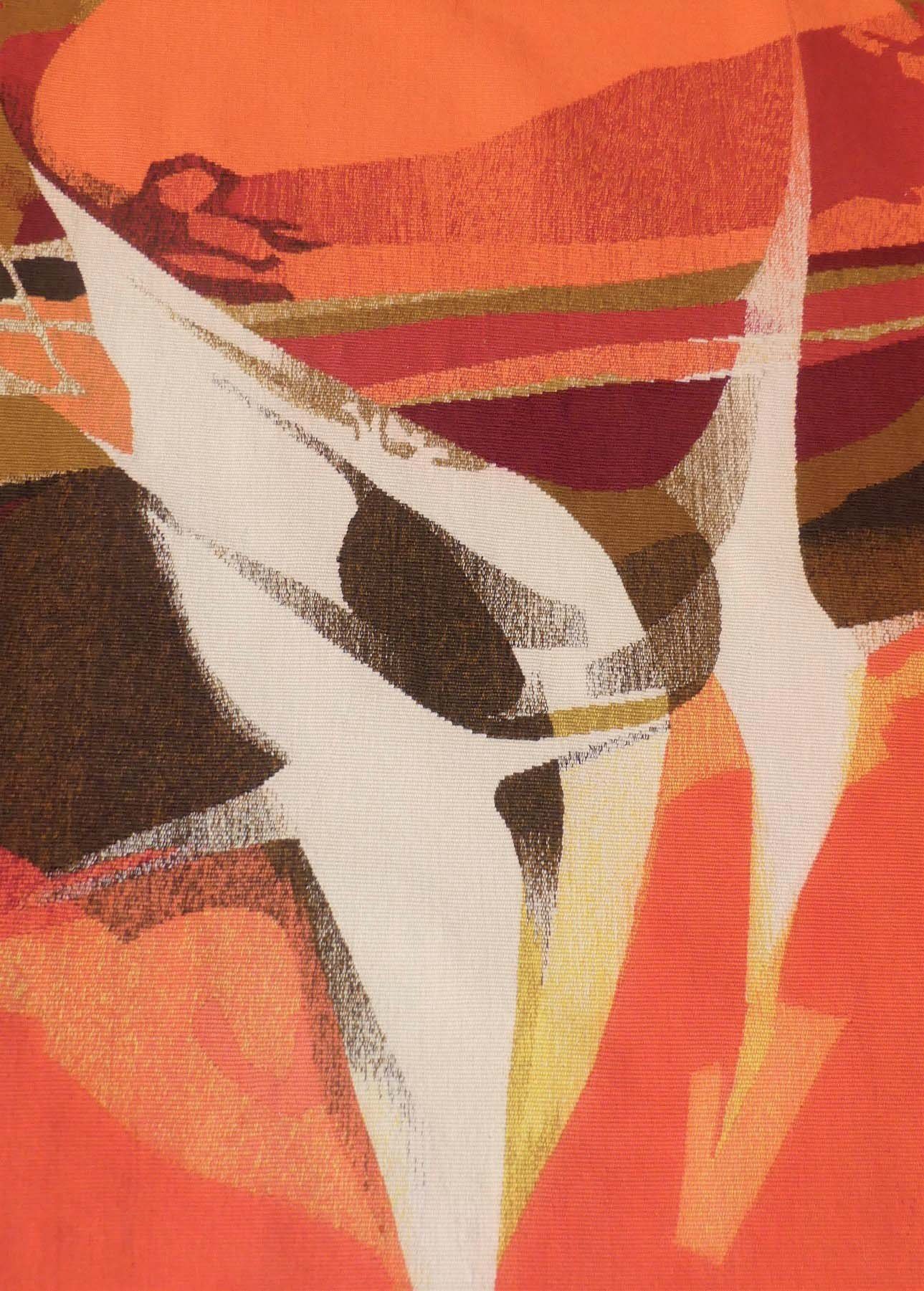
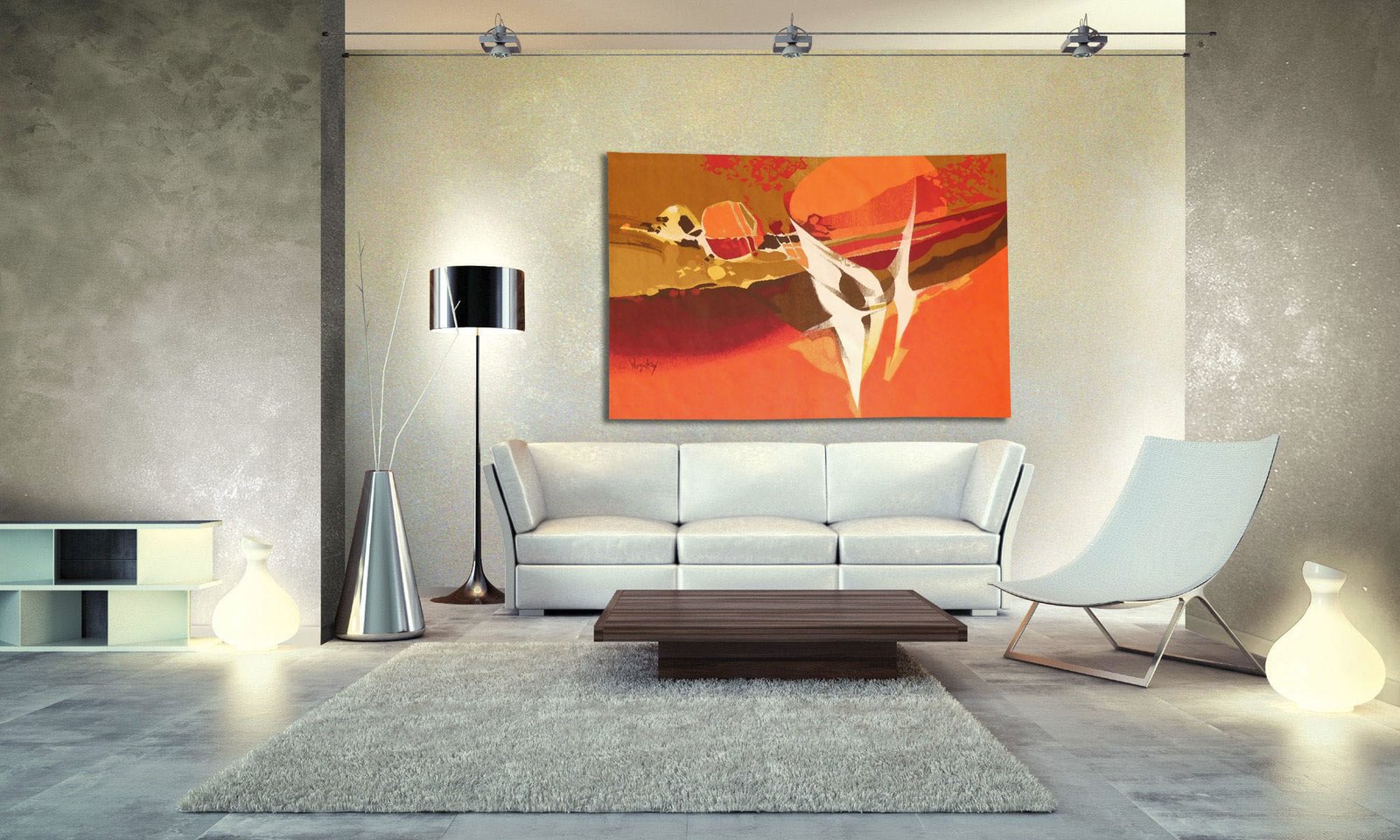
Trois oiseaux blancs (Three White Birds)
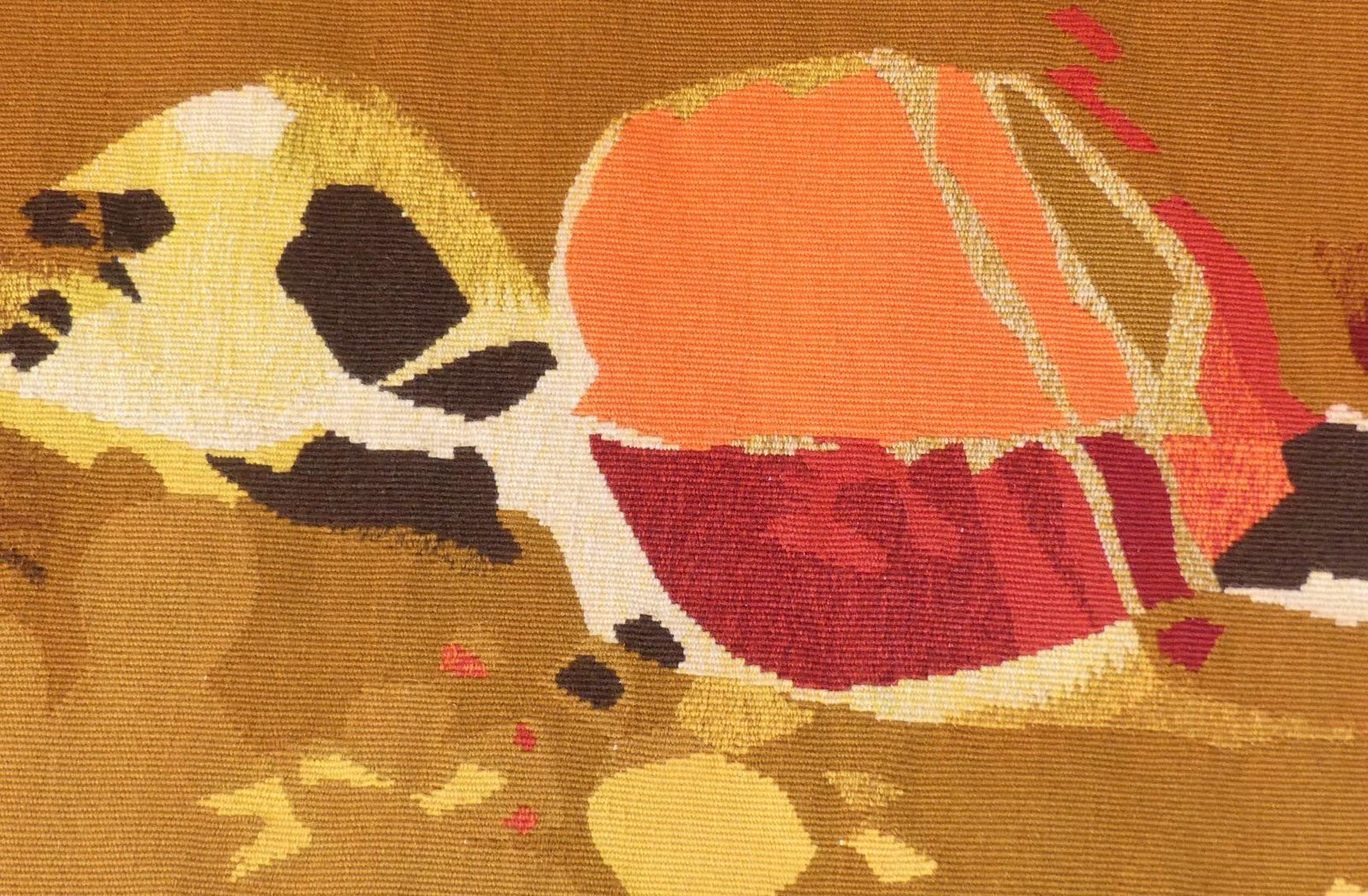
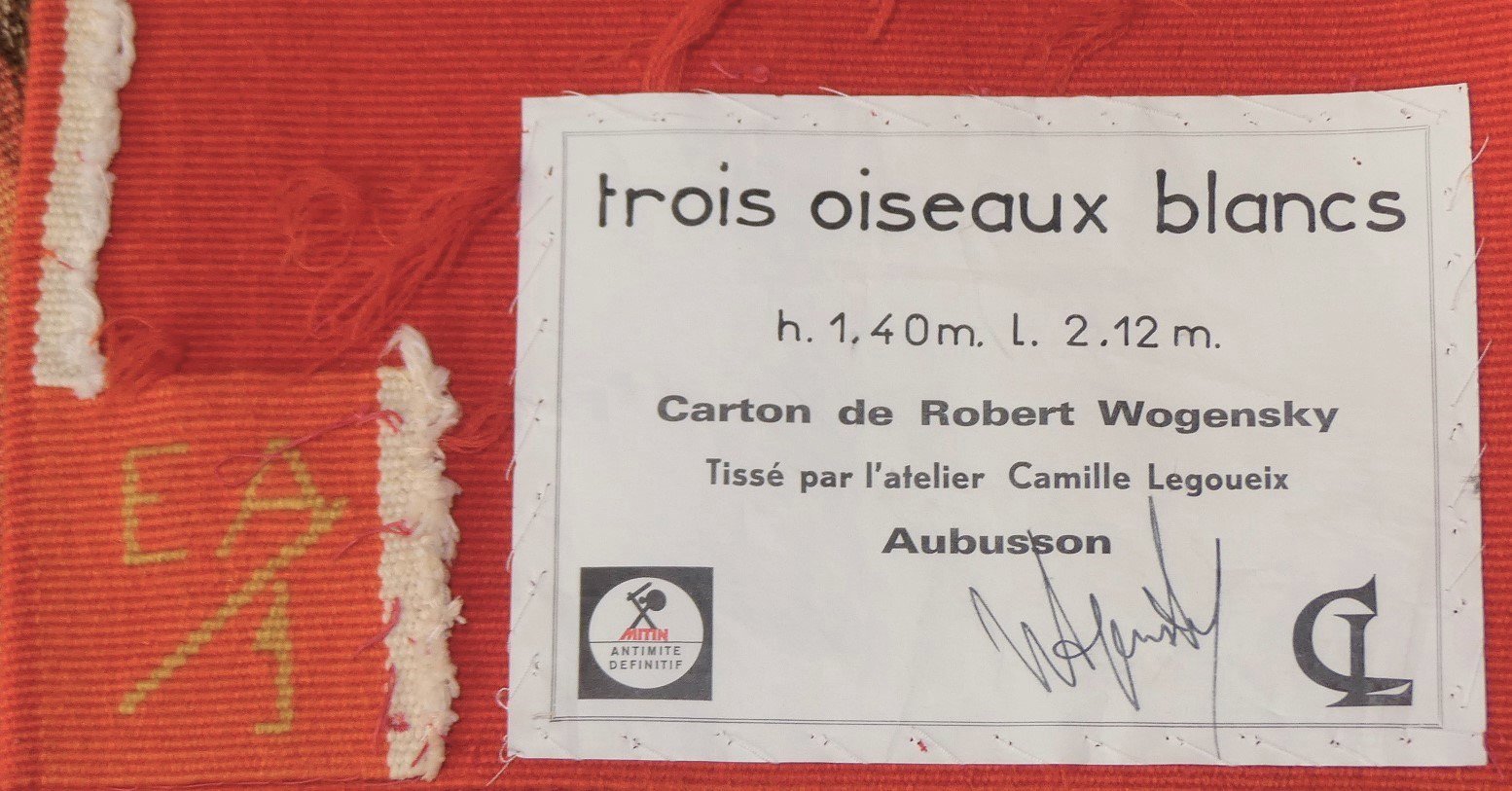
Aubusson tapestry woven by the Legoueix workshop.
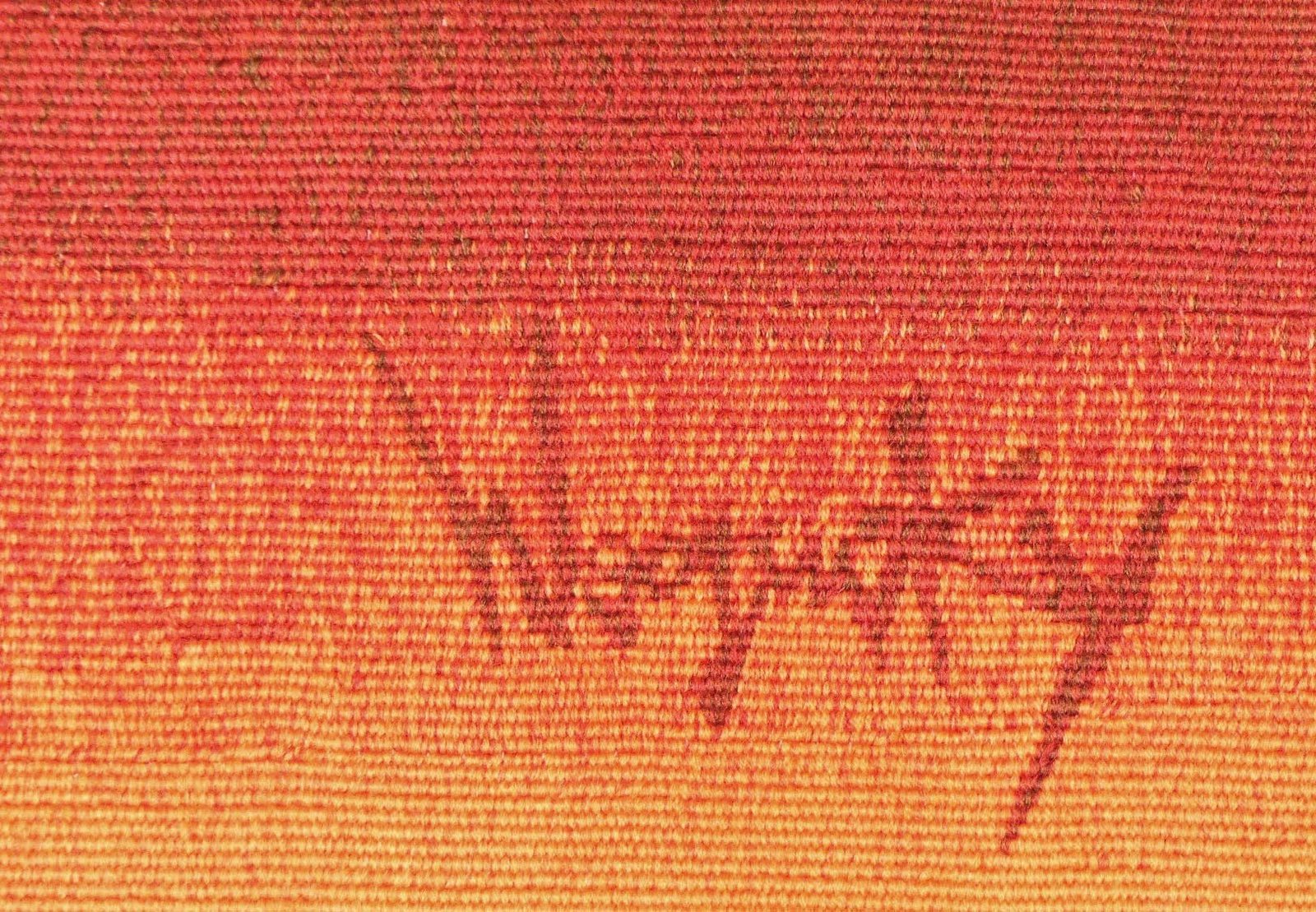
With signed label, no. EA/1.
1968.
A member of the A.P.C.T. (Association des Peintres-Cartonniers de Tapisserie), Wogensky is one of the many artists who would follow in Lurçat’s footsteps immediately after the war. At first influenced by his predecessor, Wogensky’s subsequent work (159 cartoons according to the 1989 exhibition catalogue) would evolve during the 1960’s towards a, not completely self-avowed, lyrical abstraction, from cosmic-astronomical themes expressed in decomposed, moving, birdlike shapes to cartoons both more refined and less dense. Although always claiming to be a painter, the artist’s conception of tapestry is extremely well thought out : “the realisation of a mural cartoon…. requires the consideration of a space which is no longer ours alone, by the nature of its dimensions, its scale, it also imposes a grand gesture which transforms and accentuates our presence.”
The omnipresent theme of the bird in Wogensky’s work is, more often than not, treated in an abstract way which emphasises its kinetic qualities : lines, trajectories, force, energy,… are the words used by critics and commentators in their descriptions. However, and notably in “Plein vol” at the beginning of the 1980’s, the artist reverts to a more figurative treatment where wings, beaks and tails are discreetly discernible.
Bibliography :
Exhibition catalogue Robert Wogensky, Aubusson, Musée départemental de la tapisserie, 1989
Exhibition catalogue Robert Wogensky, Angers, Musée Jean Lurçat et de la Tapisserie Contemporaine, 1989-1990


