
-
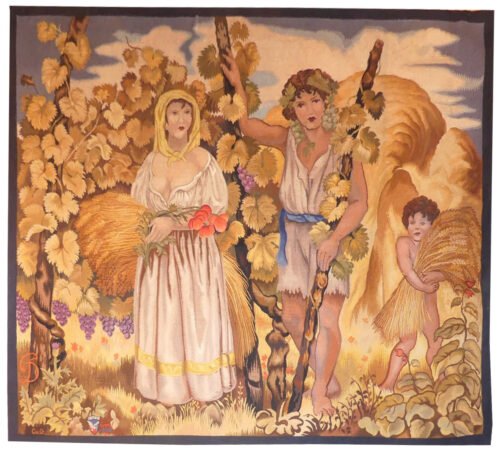
Messidor
Tapisserie tissée par un lissier Ch. G. pour Ami de la Paix. Circa 1945. -
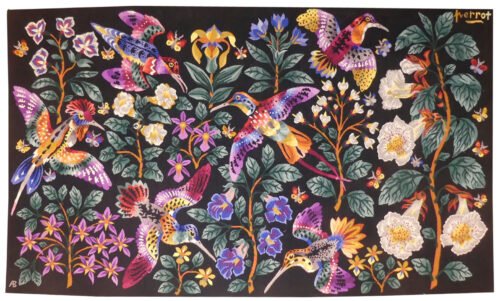
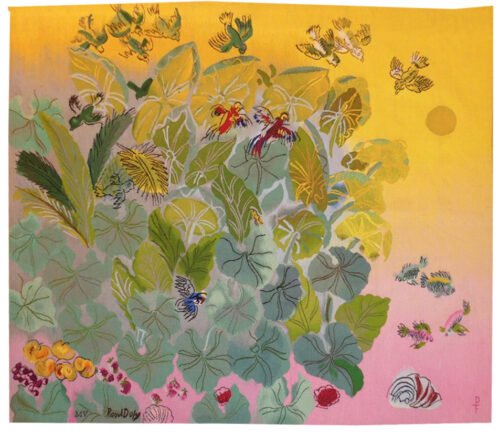
Fleurs de serres et colibris
Tapisserie d’Aubusson tissée par l'atelier Bascoulergue. Avec son bolduc signé, n°3/6. Circa 1975. -
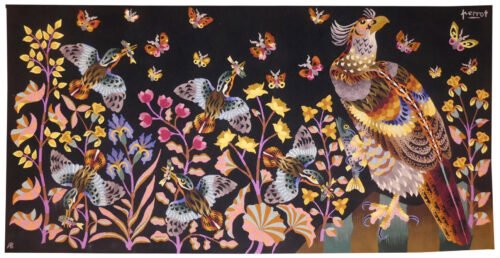
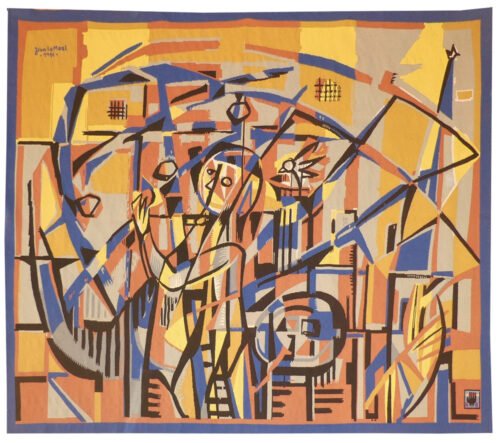
Les pirates
Tapisserie d’Aubusson tissée par l'atelier Bascoulergue. Avec son bolduc signé de la veuve de l'artiste, n°1/6. Circa 1975. -
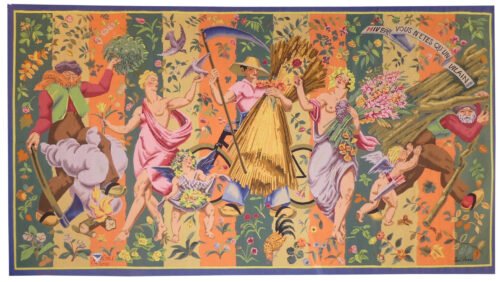
Hiver vous n'êtes qu'un vilain
Tapisserie d'Aubusson tissée par l’atelier Bascoulergue pour AMI. Circa 1950. -
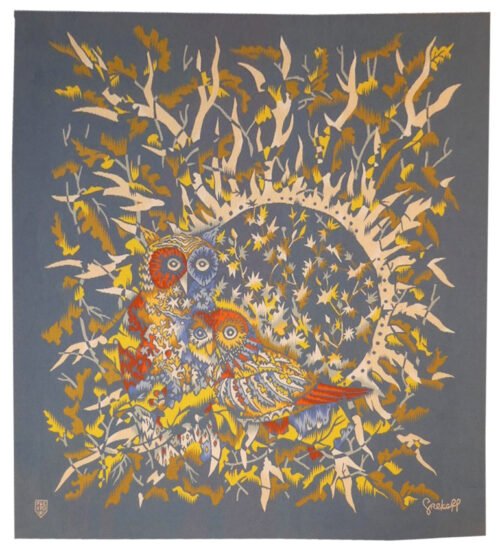
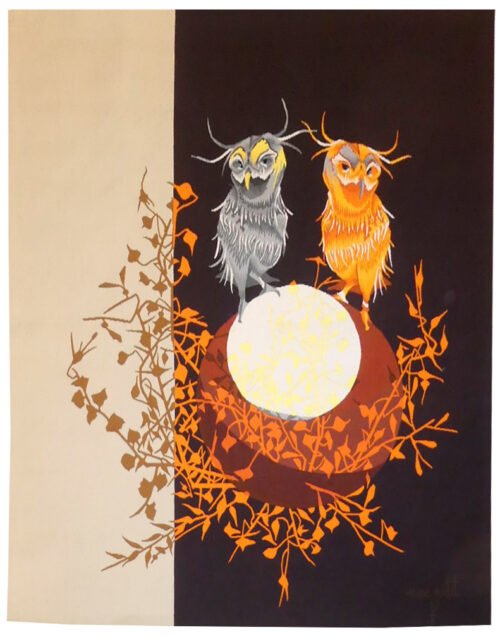
Deux hiboux fond bleu
Tapisserie d'Aubusson tissée par l'atelier Picaud. Avec son bolduc, n°3/6. Circa 1970. -
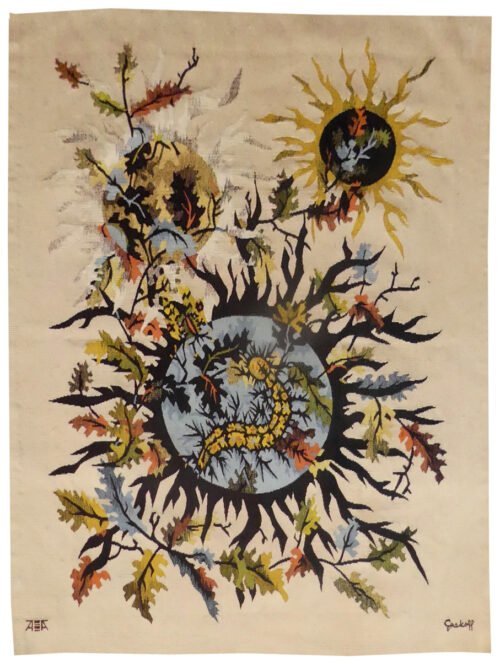
Annick
Elie Grekoff, proche de l'esthétique de Lurçat, réalisera plus de 300 cartons. Le thème des soleils feuillagés est un classique de l’artiste ; peut-être le titre fait-il allusion à une licière de l’Atelier de Tapisserie d’Angers, ouvert cette même année 1968, et où Grekoff fut le premier peintre-cartonnier à être tissé.Tapisserie tissée par l’ATA (Atelier de Tapisserie d'Angers) Avec son bolduc signé. 1968. -
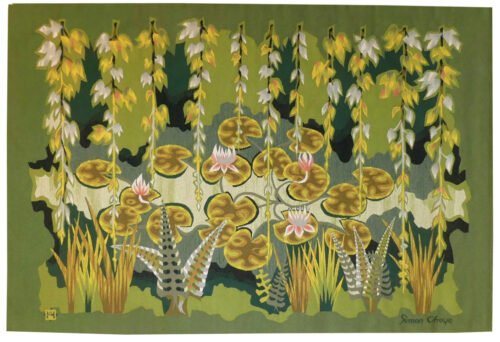
Eau calme
Tapisserie d’Aubusson tissée par l’atelier Hamot. Avec son bolduc, n°1/6. 1965. -
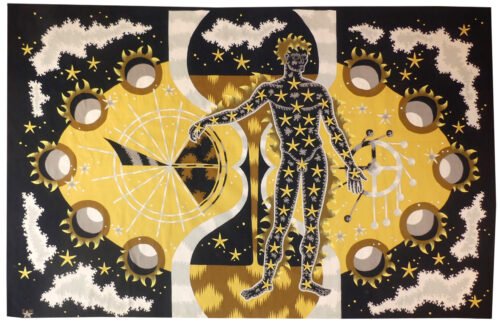
Le Temps
Tapisserie d'Aubusson tissée par l'atelier Berthaut. 1962. -
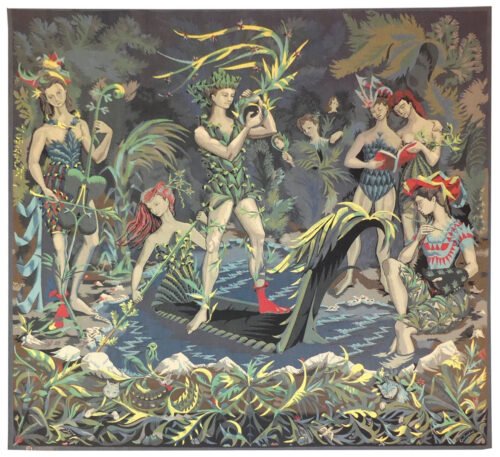
Orphée et les Muses
Tapisserie d’Aubusson tissée par l’atelier Pinton pour la Compagnie des Arts Français. 1942. -
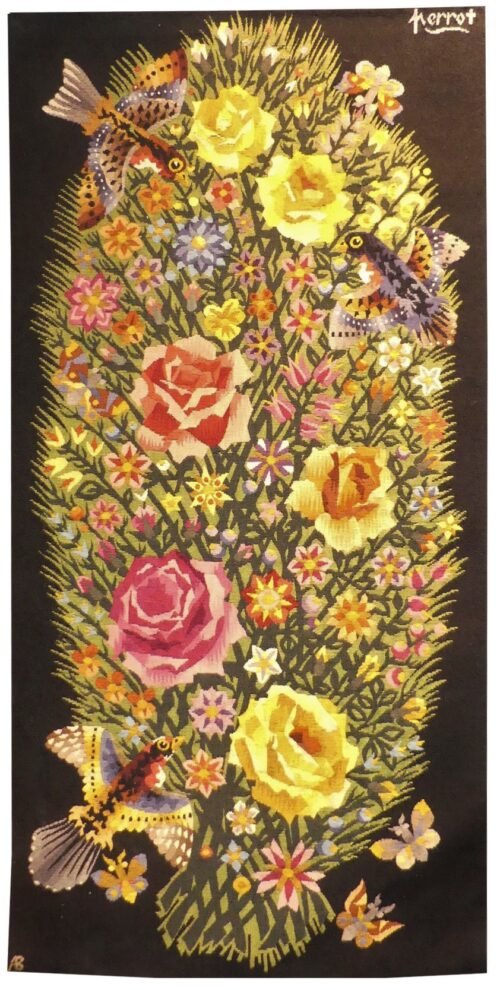
Bouquet
Tapisserie d’Aubusson tissée par l'atelier Bascoulergue. Circa 1960. -
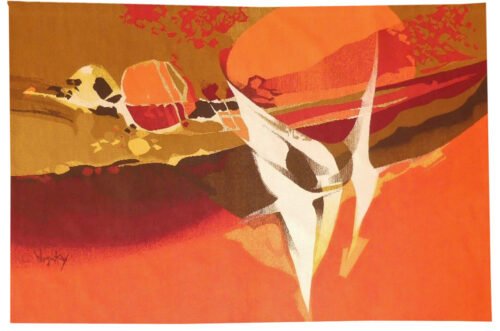
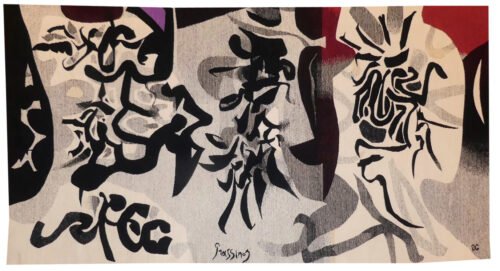
Trois oiseaux blancs
Membre de l’A.P.C.T. (Association des Peintres-Cartonniers de Tapisserie), Wogensky est un des nombreux artistes qui se consacreront à la tapisserie à la suite de Lurçat, dans l’immédiat après-guerre. D’abord influencé par celui-ci, l’oeuvre de Wogensky (159 cartons d’après le catalogue d’exposition de 1989) évolue ensuite ensuite dans les années 60 vers une abstraction lyrique pas toujours complètement assumée, des thèmes cosmiques-astronomiques aux formes d’oiseaux décomposées et en mouvement, vers des cartons plus épurés et moins denses. S’il s’est toujours proclamé peintre, la réflexion de l’artiste sur la tapisserie est très aboutie : “Réaliser un carton mural…. c’est penser en fonction d’un espace qui ne nous appartient plus, par ses dimensions, son échelle, c’est aussi l’exigence d’un geste large qui transforme et accentue notre présence”. Le thème de l’oiseau, omniprésent, a, le plus souvent, une traduction abstraite, cinétique, chez Wogensky : Traits, trajectoires, forces, énergies,… sont les qualificatifs qu’emploient alors critiques et commentateurs. Pourtant, avec ses « Trois oiseaux blancs » (motif repris avec « Plein vol » en 1982), l’artiste revient à une approche plus figurative du sujet, où ailes, becs, queues sont lisibles, bien que furtifs. Bibliographie : Cat. Expo. Robert Wogensky, l’oeuvre tissé, Aubusson, Musée départemental de la tapisserie, 1989 Cat. Expo. Robert Wogensky, Angers, Musée Jean Lurçat et de la Tapisserie Contemporaine, 1989-1990Tapisserie d’Aubusson tissées par l’atelier Legoueix. Avec son bolduc signé, n°EA/1. 1968. -
La boule
Tapisserie d’Aubusson tissée par l’atelier Micheline Henry. Avec son bolduc signé, n°1/2. Circa 1980. -
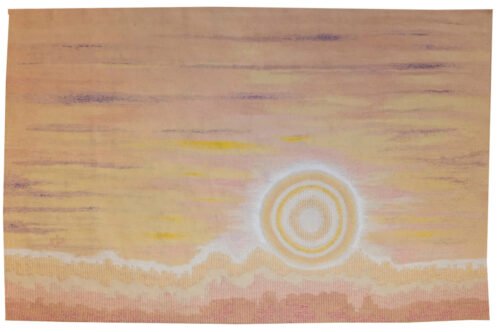
Soleil levant
Tapisserie tissée par l'atelier de Saint-Cyr. Avec son bolduc signé, n°I/VI. Circa 1970. -
La cueillette des fruits
Tapisserie d’Aubusson tissée par l’atelier Rivière des Borderies. Avec son bolduc d'origine, et un bolduc postérieur signé de l'atelier Pinton. 1946. -
Envol
Tapisserie d’Aubusson tissée par l’atelier Pinton. Avec son bolduc. 1963. -
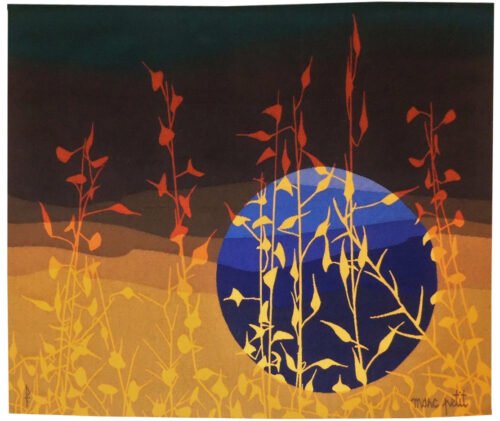
L'or sage
Marc Petit rencontre Jean Lurçat en 1954, séjourne à Aubusson en 1955, expose pour la première fois à La Demeure en 1956, devient membre de l'A.P.C.T. (Association des Peintres-Cartonniers de Tapisserie) en 1958. A partir de ces débuts fulgurants, il produit des centaines de cartons, dans un style très personnel, où des échassiers croisent des funambules dans des paysages oniriques. Les rapaces nocturnes sont un leitmotiv (comme aussi chez Lurçat) de Petit depuis ses débuts. Il les associe à un autre de ses poncifs, le traitement en écho/négatif/symétrie, dans les oiseaux, les feuillages, les fonds…Tapisserie d’Aubusson tissée par l’atelier Pinton. Avec son bolduc, n°EX-A. Circa 1970. -
De l'autre côté
Tapisserie d’Aubusson tissée par l’atelier Pinton. Avec son bolduc, n°1/6. Circa 1970.Marc Petit rencontre Jean Lurçat en 1954, séjourne à Aubusson en 1955, expose pour la première fois à La Demeure en 1956, devient membre de l'A.P.C.T. (Association des Peintres-Cartonniers de Tapisserie) en 1958. A partir de ces débuts fulgurants, il produit des centaines de cartons, dans un style très personnel, où des échassiers croisent des funambules dans des paysages oniriques. Economie de moyens toujours, avec de larges aplats et une gamme chromatique resserrée : « de l’autre côté » est le doublon d’une autre tapisserie autrefois en notre possession « Contrejour », même composition, de mêmes dimensions, mais aux couleurs différentes. -
Les affluents
Tapisserie d'Aubusson tissée par l'atelier Goubely. Avec son bolduc signé. Circa 1955. -
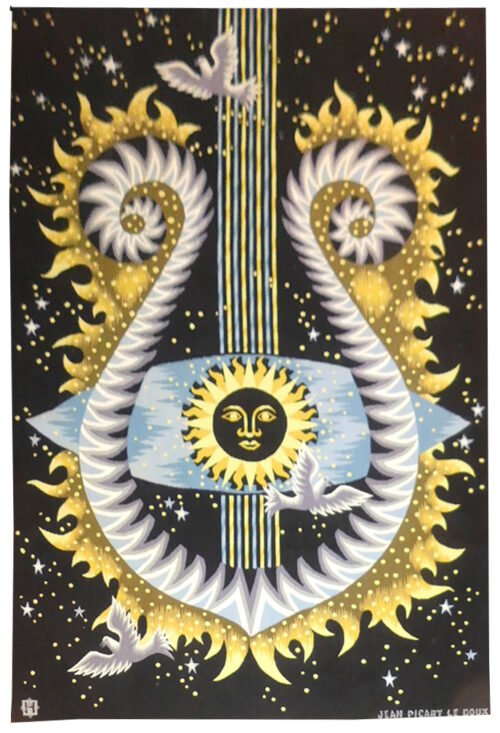
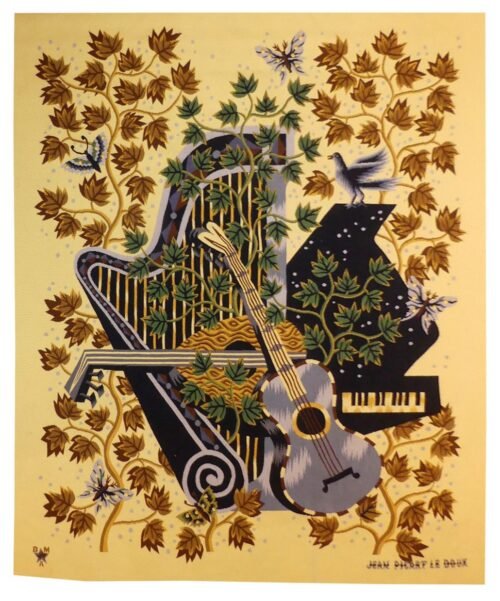
Soleil-lyre
Tapisserie d'Aubusson tissée par l'atelier Hamot. Avec son bolduc signé. 1957. Jean Picart le Doux est l'un des grands animateurs du renouveau de la tapisserie. Ses débuts dans le domaine datent de 1943 : il réalise alors des cartons pour le paquebot "la Marseillaise". Proche de Lurçat, dont il épouse les théories (tons limités, cartons numérotés,...), il est membre fondateur de l'A.P.C.T.(Association des Peintres-cartonniers de Tapisserie), et bientôt professeur à l'Ecole Nationale Supérieure des Arts Décoratifs. L'Etat lui commande de nombreux cartons tissés pour la plupart à Aubusson, pour certains aux Gobelins : les plus spectaculaires le seront pour l'Université de Caen, le Théâtre du Mans, le Paquebot France ou la Préfecture de la Creuse,.... Si les conceptions de Picart le Doux sont proches de celles de Lurçat, ses sources d'inspiration, ses thématiques, le sont aussi, mais dans un registre plus décoratif que symbolique, où se côtoient les astres (le soleil, la lune, les étoiles...), les éléments, la nature (le blé, la vigne, les poissons, les oiseaux...), l'homme, les textes,.... Carton d’un bel effet : la symétrie de la lyre (un des instruments de prédilection chez Picart le Doux), s’orne d’un visage-Soleil (très Louis XIV) poncif de tous les mythes solaires. Ce carton annonce « le Soleil d’Orphée », qui ornera le bar du paquebot « France ». Bibliographie : Marthe Belle-Jouffray, Jean Picart le Doux, Publications filmées d'art et d'histoire, 1966, ill. no. 9 Maurice Bruzeau, Jean Picart le Doux, Murs de soleil, Editions Cercle d'art, 1972, ill. n°82 Cat. Exp. Jean Picart le Doux, tapisseries, Musée de Saint-Denis, 1976 Cat. Exp. Jean Picart le Doux, Musée de la Poste, 1980, ill. -
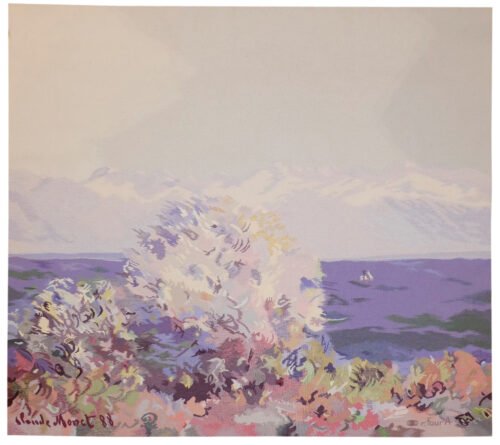
Cap d'Antibes, mistral
La manufacture Four reproduit en tapisserie, tissée à la main, certaines des grandes oeuvres de la peinture : ainsi Klee, Modigliani, Macke ou, ici, mONET ont été transcrits en laine, en reproduisant les nuances de matières et de touches des artistes.Tapisserie d'Aubusson tissée par l'atelier Four. Avec son bolduc, n°EA2/2. D'après une oeuvre de l'artiste de 1888, conservée au Museum of Fine Arts, Boston. -
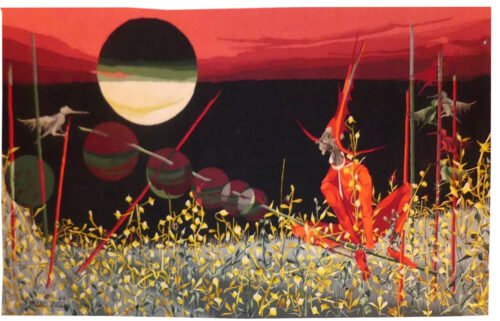
Malgré lui
Marc Petit rencontre Jean Lurçat en 1954, séjourne à Aubusson en 1955, expose pour la première fois à La Demeure en 1956, devient membre de l'A.P.C.T. (Association des Peintres-Cartonniers de Tapisserie) en 1958. A partir de ces débuts fulgurants, il produit des centaines de cartons, dans un style très personnel, où des échassiers croisent des funambules dans des paysages oniriques. Cette ample tapisserie conjugue plusieurs motifs propres à Marc Petit, caractéristiques de son imaginaire : personnage-funambule, oiseaux (discrets ici), astre, feuillage, à un titre équivoque, poétique, dont il est friand.Tapisserie d’Aubusson tissée par l’atelier Picaud pour la galerie Verrière. Avec son bolduc, n°EA. Circa 1970. -
La guêpe
Tapisserie d'Aubusson tissée par l'atelier Tabard. Avec son bolduc signé. Circa 1955. -
Nocturne
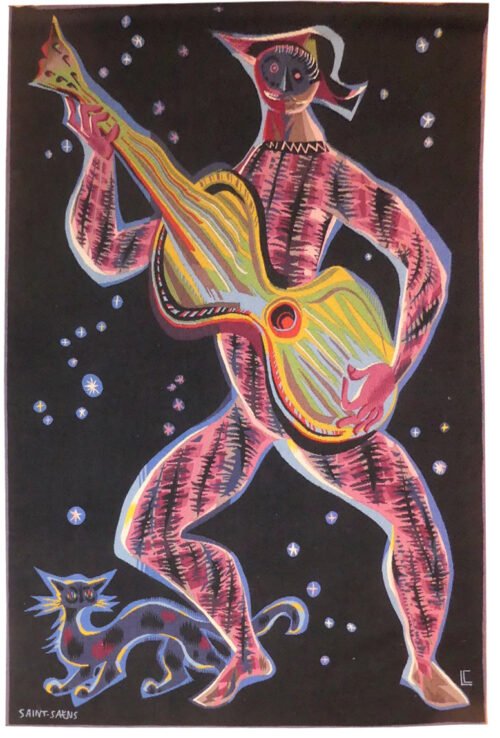
Tapisserie d'Aubusson tissée par l'atelier Legoueix. Avec son bolduc signé, n°4/6. 1952. Lurçat sollicite Saint-Saëns, d'abord fresquiste, dès 1940. Et, pendant la guerre, celui-ci produit ses premiers chefs d'oeuvre allégoriques, tapisseries d'indignation, de combat, de résistance : "les Vierges folles", "Thésée et le Minotaure". A l'issue de la guerre, tout naturellement, il rejoint Lurçat dont il partage les convictions (sur le carton numéroté et les tons comptés, sur l'écriture spécifique que requiert la tapisserie,...) au sein de l'A.P.C.T. (Association des Peintres-cartonniers de Tapisserie). Son univers, où la figure humaine, étirée, allongée, tient une place considérable (comparée notamment à la place qu'elle occupe chez ses confrères Lurçat, ou Picart le Doux), tourne autours de thèmes traditionnels : la femme, la Commedia dell'arte, les mythes grecs,..., sublimés par l'éclat des coloris et la simplification de la mise en page. Il évoluera ensuite, dans les années 60 vers des cartons plus lyriques, presque abstraits, où dominent éléments et forces cosmiques. Les thèmes de la musique, du théâtre, et plus spécifiquement de la Comedia dell’Arte (« la Comédie Italienne », carton de 1947) sont omniprésents chez Saint-Saëns : ici, « nocturne » est un double renvoi, à la musique, à la nuit : une sérénade sous les étoiles. Bibliographie : Cat. Expo. Saint-Saëns, galerie La Demeure, 1970 Cat. Expo. Saint-Saëns, oeuvre tissé, Aubusson, Musée départemental de la Tapisserie, 1987 Cat. Expo. Marc Saint-Saëns, tapisseries, 1935-1979, Angers, Musée Jean Lurçat et de la Tapisserie Contemporaine, 1997-1998 -
Les perroquets
Tapisserie d'Aubusson tissée par l'atelier Pinton pour le Moulin de Vauboyen. N°4/8. Circa 1970. -
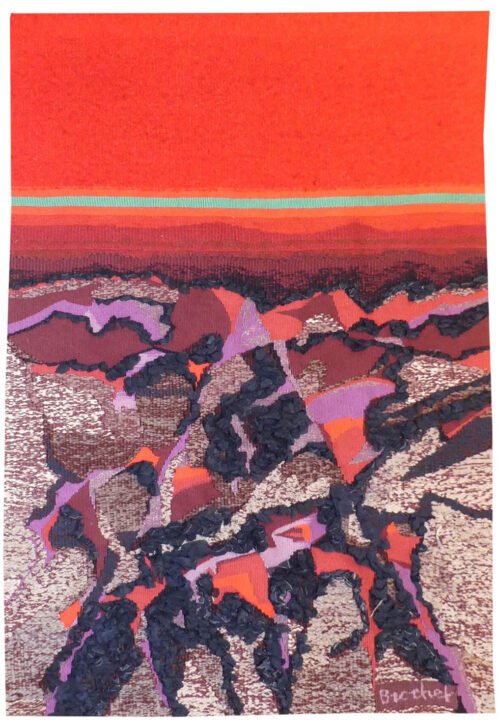
Le rayon vert
Tapisserie probablement tissée par l’atelier Brachet. N°EA1. 1976. -
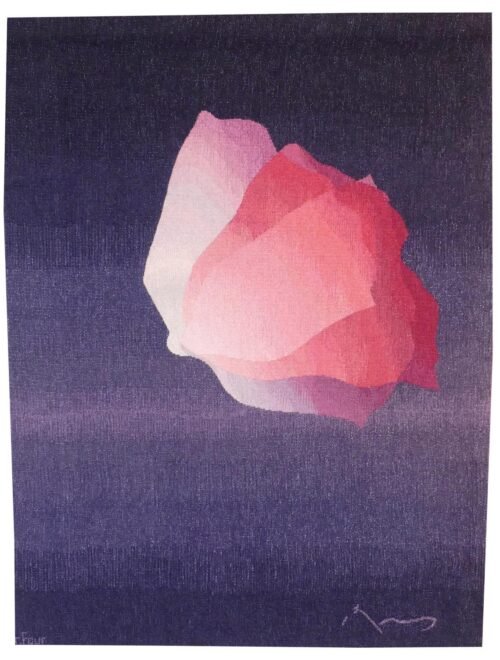
Fleur de nuit (fragment)
Kozo Inoué s’installe à Paris en 1960 et s’oriente alors principalement vers la sérigraphie. Il sera tissé par la manufacture Four à partir de 1984. Dans ses œuvres, toutes de « grâces » s’éploient, comme en suspension, pétales, feuilles ou papillons, motifs simples (ou parfois répétés), sur un fond contrastant en dégradés.Tapisserie d'Aubusson tissée par l'atelier Four. Avec son bolduc, n°EA1/2. Circa 1990. -
Tonga
Tapisserie d'Aubusson tissée par l’atelier Tabard. Avec son bolduc signé. Circa 1960. -
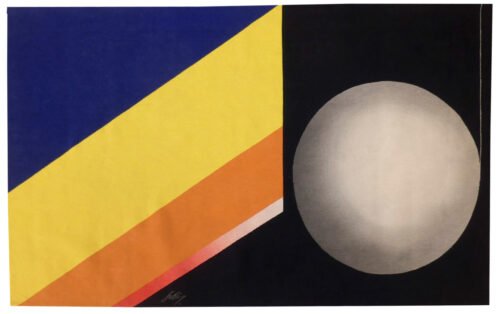
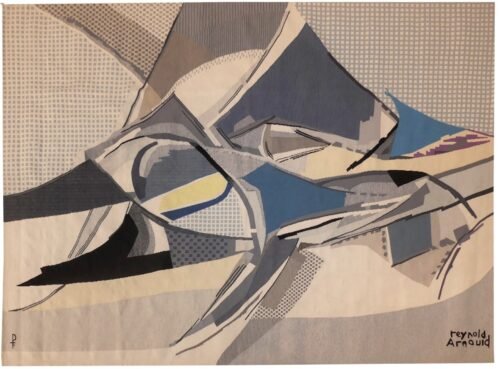
Antiope
Membre de l'A.P.C.T. (Association des Peintres-Cartonniers de Tapisserie), Wogensky est un des nombreux artistes qui se consacreront à la tapisserie à la suite de Lurçat, dans l'immédiat après-guerre. D'abord influencé par celui-ci, l'oeuvre de Wogensky (159 cartons d'après le catalogue d'exposition de 1989) évolue ensuite ensuite dans les années 60 vers une abstraction lyrique pas toujours complètement assumée, des thèmes cosmiques-astronomiques aux formes d'oiseaux décomposées et en mouvement, vers des cartons plus épurés et moins denses. S'il s'est toujours proclamé peintre, la réflexion de l'artiste sur la tapisserie est très aboutie : "Réaliser un carton mural.... c'est penser en fonction d'un espace qui ne nous appartient plus, par ses dimensions, son échelle, c'est aussi l'exigence d'un geste large qui transforme et accentue notre présence". Plus qu’à la mythologie, « Antiope » renvoie probablement à l’astronomie : cet astéroïde s’inscrit alors dans l’inspiration dominante de Wogensky dans les années 60, et dont « Cosmos » (1968, Université de Strasbourg), et « Galaxie » (1970, Sénat, palais du Luxembourg) seront les points d’orgue. On observe qu’ici, paradoxalement, Wogensky essaie d’exprimer l’immensité de l’Espace en tout petit format. Bibliographie : Cat. Expo. Robert Wogensky, l'oeuvre tissé, Aubusson, Musée départemental de la tapisserie, 1989 Cat. Expo. Robert Wogensky, Angers, Musée Jean Lurçat et de la Tapisserie Contemporaine, 1989Tapisserie d’Aubusson tissées par l’atelier Legoueix. Avec son bolduc signé, n°2/4. 1968. -
Appel éolien
Tapisserie tissée par l'atelier de Saint-Cyr. Avec son bolduc signé, n°III/III. Circa 1970. Pierre Daquin est emblématique de ces artistes polyvalents qui ont révolutionné la tapisserie dans la deuxième moitié des années 60. A la fois concepteur et éxécutant, il a une parfaite maîtrise technique du médium, acquise dans les Manufactures Nationales, exploitée ensuite dans l’atelier de Saint-Cyr (qu’il fonde en 1965, après avoir quitté Beauvais), où il tisse, hormis ses propres œuvres, des tapisseries d’après Ubac, Feito ou Arthur-Bertrand,… Pierre Daquin est surtout l’un des protagonistes majeurs, en France, de la « Nouvelle Tapisserie », dont l’éclosion, dès les premières Biennales de Lausanne, imprime à la tapisserie une remise en cause de sa forme (parfois en 3 dimensions,…), de sa fonction (dans son rapport au mur et à l’espace notamment), de sa technique, de sa texture et de ses matériaux ( laine et coton peuvent devenir subsidiaires,….) : ses préoccupations personnelles autour du blanc, du vide, de la tridimensionnalité, du relief,…. s’expriment par exemple dans « Mospalis » (Angers, Musée Jean Lurçat et de la tapisserie contemporaine), exposée à la 4e biennale de Lausanne, en 1969. « Appel éolien » est un carton d’avant la rupture et la radicalité : abstrait, à gros points, à fils métalliques, mais qui présente encore l’aspect d’une tapisserie traditionnelle. Bibliographie : Cat. Expo. Decorum, Musée d’art moderne de la ville de Paris, 2013 Collectif, de la tapisserie au fiber art, les biennales de Lausanne 1962-1995, Skira/fondation Toms Pauli, 2017 -
Voltige
Tapisserie d'Aubusson tissée par l'atelier Pinton. Avec son bolduc signé, n°5/6. 1969. -
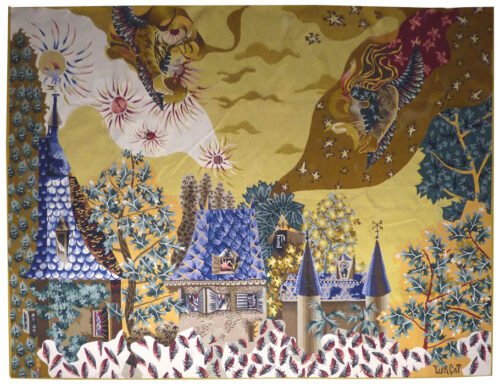
Les toits
L’Œuvre de Lurçat est immense : c’est toutefois son rôle dans la rénovation de l’art de la tapisserie qui lui vaut d’être passé à la postérité. Dès 1917, il commence par des œuvres au canevas, puis, dans les années 20 et 30, il travaillera avec Marie Cuttoli. Sa première collaboration avec les Gobelins date de 1937, alors qu’il découvre simultanément la tenture de l’Apocalypse d’Angers qui l’incite définitivement à se consacrer à la tapisserie. Il abordera les questions techniques d’abord avec François Tabard, puis à l’occasion de son installation à Aubusson pendant la guerre, il définira son système : gros point, tons comptés, cartons dessinés numérotés. Une production gigantesque commence alors (plus de 1000 cartons), amplifiée par la volonté d‘entraîner ses amis peintres, la création de l’A.P.C.T. (Association des Peintres-Cartonniers de Tapisserie) et la collaboration avec la galerie La Demeure et Denise Majorel, puis par son rôle d’inlassable propagateur du médium à travers le Monde. Son œuvre tissée témoigne d’un art d’imagier spécifiquement décoratif, dans une iconographie symbolique très personnelle, cosmogonique (soleil, planètes, zodiaque, 4 éléments…), végétale stylisée, animale (boucs, coqs, papillons, chimères…), se détachent sur un fond sans perspective (volontairement éloigné de la peinture), et destinée, dans ses cartons les plus ambitieux, à faire partager une vision à la fois poétique (il émaille d’ailleurs parfois ces tapisseries de citations) et philosophique (les grands thèmes sont abordés dès la guerre : la liberté, la résistance, la fraternité, la vérité… ) et dont le point culminant sera le « Chant du Monde » ( Musée Jean Lurçat, ancien hôpital Saint-Jean, Angers) , inachevé à sa mort. Malgré la profession de son frère André, les incursions de Lurçat dans les tissages à motifs d’architecture sont peu nombreux (on notera l’onirique « Palais du Prince », mais aussi « Chicago » ou « Paris »,…). « Les toits » s’en distingue par son titre, générique, mais qui illustre en fait, de façon allusive, la ville d’Aubusson, dans laquelle l’artiste séjournât pendant la guerre, comme une réponse à « Aubusson » de Gromaire, beaucoup plus détaillée. Quelques toits, tourelles, lucarnes et fenêtres habitées suffisent à incarner la capitale de la Renaissance de la Tapisserie, survolés par 2 anges incarnant le Soleil et la Lune tout droits sortis de l’imagination d’un ymagier médiéval. Aubusson, l’inspiration de la tapisserie médiévale, la symbiose de la Ville et de la nature (notons la variété des feuillages), tout fait de cette tapisserie un manifeste. Bibliographie : Tapisseries de Jean Lurçat 1939-1957, Pierre Vorms Editeur, 1957 Cat.Expo. Jean Lurçat, Nice, Musée des Ponchettes, 1968 Cat. Expo. Lurçat, 10 ans après, Musée d’Art moderne de la ville de Paris, 1976, reproduite Cat. Expo. Les domaines de Jean Lurçat, Angers, Musée Jean Lurçat et de la tapisserie contemporaine, 1986 Colloque Jean Lurçat et la renaissance de la tapisserie à Aubusson, Aubusson, Musée départemental de la Tapisserie, 1992 Cat. Expo. Dialogues avec Lurçat, Musées de Basse-Normandie, 1992 Cat. Expo. Jean Lurçat, Donation Simone Lurçat, Académie des Beaux-Arts, 2004 Gérard Denizeau, Denise Majorel, une vie pour la tapisserie, Aubusson, Musée départemental de la tapisserie Gérard Denizeau, Jean Lurçat, Liénart, 2013 Cat. Expo. Jean Lurçat, Meister der französischen Moderne, Halle, Kunsthalle, 2016 Cat. Expo. Jean Lurçat au seul bruit du soleil, Paris, galerie des Gobelins, 2016 Cat. Expo. Jean Lurçat, la terre, le feu, l’eau, l’air, Perpignan, Musée d’art Hyacinthe Rigaud, 2024Tapisserie d'Aubusson tissée par l'atelier Tabard. Avec son bolduc signé. Circa 1945. -
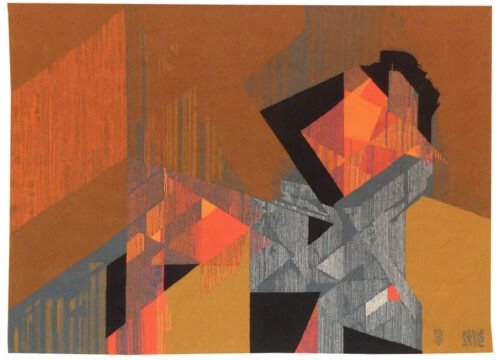
Arlequin
Tapisserie tissée par l'atelier Bourlier. Avec son bolduc signé, n°1/4. 1971. Artiste polymorphe, Bourlier s’est d’abord consacré à la tapisserie dans les années 70, en participant à différentes manifestations (dont la biennale de Menton) : ses sujets, machinistes-constructivistes (« l’homme machine »), abstraits (« construction »), renvoient aux heures de gloire du Bauhaus. -
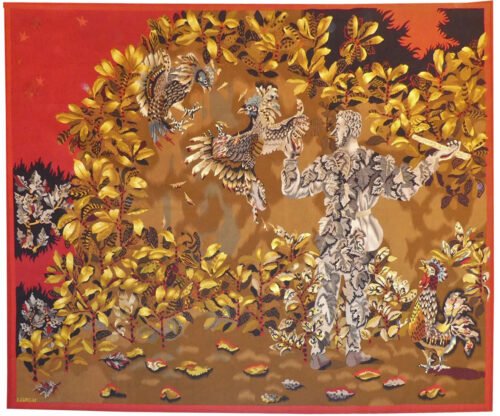
Combat de coqs
L’Œuvre de Lurçat est immense : c’est toutefois son rôle dans la rénovation de l’art de la tapisserie qui lui vaut d’être passé à la postérité. Dès 1917, il commence par des œuvres au canevas, puis, dans les années 20 et 30, il travaillera avec Marie Cuttoli. Sa première collaboration avec les Gobelins date de 1937, alors qu’il découvre simultanément la tenture de l’Apocalypse d’Angers qui l’incite définitivement à se consacrer à la tapisserie. Il abordera les questions techniques d’abord avec François Tabard, puis à l’occasion de son installation à Aubusson pendant la guerre, il définira son système : gros point, tons comptés, cartons dessinés numérotés. Une production gigantesque commence alors (plus de 1000 cartons), amplifiée par la volonté d‘entraîner ses amis peintres, la création de l’A.P.C.T. (Association des Peintres-Cartonniers de Tapisserie) et la collaboration avec la galerie La Demeure et Denise Majorel, puis par son rôle d’inlassable propagateur du médium à travers le Monde. Son œuvre tissée témoigne d’un art d’imagier spécifiquement décoratif, dans une iconographie symbolique très personnelle, cosmogonique (soleil, planètes, zodiaque, 4 éléments…), végétale stylisée, animale (boucs, coqs, papillons, chimères…), se détachent sur un fond sans perspective (volontairement éloigné de la peinture), et destinée, dans ses cartons les plus ambitieux, à faire partager une vision à la fois poétique (il émaille d’ailleurs parfois ces tapisseries de citations) et philosophique (les grands thèmes sont abordés dès la guerre : la liberté, la résistance, la fraternité, la vérité… ) et dont le point culminant sera le « Chant du Monde » ( Musée Jean Lurçat, ancien hôpital Saint-Jean, Angers) , inachevé à sa mort. L’homme est le thème central des premières tapisseries de Lurçat, il se fera plus rare ensuite ; le coq, lui, restera omniprésent, mais avec une évolution significative du motif. A l’orée de son œuvre de cartonnier, cette association permet de voir quels rôles leur sont alors assignés : à cette époque (prémices de ce que l’on appellera la »Renaissance de la Tapisserie ») , l’homme, primitif, est un élément de la nature (vêtu de feuilles, il évolue dans un environnement automnal aux teintes assourdies), qui s’efforce de domestiquer des coqs encore très réalistes, loin de la dimension symbolique qu’ils acquerront par la suite dans l’imaginaire de Lurçat ; un Lurçat ici d’inspiration encore bucolique. Un exemplaire de« Combat de coqs » (et de son pendant « Jardin des coqs ») sont conservés au Musée National d’Art Moderne, à Paris, pièces acquises par l’Etat dès 1940. Bibliographie : Tapisseries de Jean Lurçat 1939-1957, Pierre Vorms Editeur, 1957 Cat. Expo. Lurçat, 10 ans après, Musée d'Art moderne de la ville de Paris, 1976 Cat. Expo. Les domaines de Jean Lurçat, Angers, Musée Jean Lurçat et de la tapisserie contemporaine, 1986 Cat. Expo. Jean Lurçat, le combat et la victoire, centenaire, Aubusson, Musée départemental de la Tapisserie, 1992, ill. p.36 Colloque Jean Lurçat et la renaissance de la tapisserie à Aubusson, Aubusson, Musée départemental de la Tapisserie, 1992, ill.6 p.69 (détail) Cat. Expo. Dialogues avec Lurçat, Musées de Basse-Normandie, 1992 Cat. Expo. Jean Lurçat, Donation Simone Lurçat, Académie des Beaux-Arts, 2004 Gérard Denizeau, Jean Lurçat, Liénart, 2013 Cat. Expo. Jean Lurçat au seul bruit du soleil, Paris, galerie des Gobelins, 2016Tapisserie d'Aubusson tissée par l'atelier Tabard. 1940. -
Les saisons
Tapisserie d'Aubusson tissée par l'atelier Bascoulergue. Avec son bolduc signé. Circa 1970. -
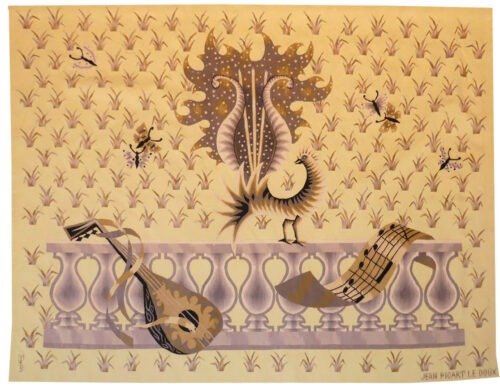
Oiseau à la balustrade
Tapisserie tissée par l'atelier Braquenié. Avec son bolduc. 1954. -
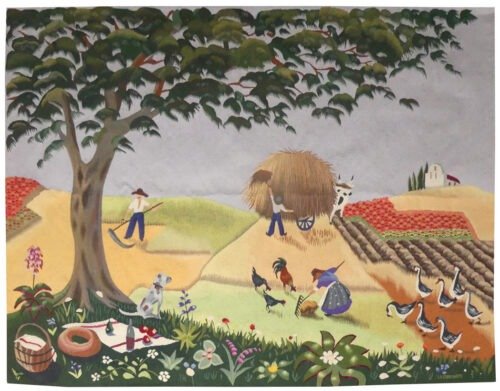
L'été
Peintre naïve, Mady de la Giraudière n’a que peu donné de cartons de tapisseries. « L’été », néanmoins, avec ses travaux des champs, sa miche de pain, son panier en osier et son « kil de rouge » a comme une saveur particulière, dans une veine réaliste très rare en tapisserie.Tapisserie d’Aubusson tissée par l'atelier Pinton. Avec son bolduc, n°2/6. Circa 1970. -
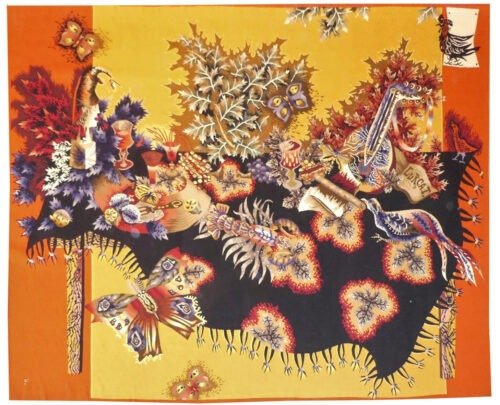
Eloge de la table
L’Œuvre de Lurçat est immense : c’est toutefois son rôle dans la rénovation de l’art de la tapisserie qui lui vaut d’être passé à la postérité. Dès 1917, il commence par des œuvres au canevas, puis, dans les années 20 et 30, il travaillera avec Marie Cuttoli. Sa première collaboration avec les Gobelins date de 1937, alors qu’il découvre simultanément la tenture de l’Apocalypse d’Angers qui l’incite définitivement à se consacrer à la tapisserie. Il abordera les questions techniques d’abord avec François Tabard, puis à l’occasion de son installation à Aubusson pendant la guerre, il définira son système : gros point, tons comptés, cartons dessinés numérotés. Une production gigantesque commence alors (plus de 1000 cartons), amplifiée par la volonté d‘entraîner ses amis peintres, la création de l’A.P.C.T. (Association des Peintres-Cartonniers de Tapisserie) et la collaboration avec la galerie La Demeure et Denise Majorel, puis par son rôle d’inlassable propagateur du médium à travers le Monde. Son œuvre tissée témoigne d’un art d’imagier spécifiquement décoratif, dans une iconographie symbolique très personnelle, cosmogonique (soleil, planètes, zodiaque, 4 éléments…), végétale stylisée, animale (boucs, coqs, papillons, chimères…), se détachent sur un fond sans perspective (volontairement éloigné de la peinture), et destinée, dans ses cartons les plus ambitieux, à faire partager une vision à la fois poétique (il émaille d’ailleurs parfois ces tapisseries de citations) et philosophique (les grands thèmes sont abordés dès la guerre : la liberté, la résistance, la fraternité, la vérité… ) et dont le point culminant sera le « Chant du Monde » ( Musée Jean Lurçat, ancien hôpital Saint-Jean, Angers) , inachevé à sa mort. Le thème de la table dressée est un leitmotiv chez Lurçat, dès les années 40 (cf. Les quatre coins, 1943, Angers, Musée Jean Lurçat et de la tapisserie contemporaine). Ces tables, parfois très "cornes d'abondance", et accompagnée souvent d'instruments de musique (mandoline en général) rappellent les tableaux de nature morte du XVIIe siècle, thème étranger d'ailleurs à la tapisserie d'alors. Notre modèle se distingue par la présence amusante du buste de fou. Bibliographie : Tapisseries de Jean Lurçat 1939-1957, Pierre Vorms Editeur, 1957 Cat. Expo. Lurçat, 10 ans après, Musée d'Art moderne de la ville de Paris, 1976 Cat. Expo. Les domaines de Jean Lurçat, Angers, Musée Jean Lurçat et de la tapisserie contemporaine, 1986 Colloque Jean Lurçat et la renaissance de la tapisserie à Aubusson, Aubusson, Musée départemental de la Tapisserie, 1992 Cat. Expo. Dialogues avec Lurçat, Musées de Basse-Normandie, 1992 Cat. Expo. Jean Lurçat, Donation Simone Lurçat, Académie des Beaux-Arts, 2004 Gérard Denizeau, Jean Lurçat, Liénart, 2013 Cat. Expo. Jean Lurçat au seul bruit du soleil, Paris, galerie des Gobelins, 2016Tapisserie d'Aubusson tissée par l'atelier Pinton. Avec son bolduc. Circa 1950. -
Les comédiens
Tapisserie d'Aubusson tissée par l'atelier Tabard. Avec son bolduc. 1959. Lurçat sollicite Saint-Saëns, d'abord fresquiste, dès 1940. Et, pendant la guerre, celui-ci produit ses premiers chefs d'oeuvre allégoriques, tapisseries d'indignation, de combat, de résistance : "les Vierges folles", "Thésée et le Minotaure". A l'issue de la guerre, tout naturellement, il rejoint Lurçat dont il partage les convictions (sur le carton numéroté et les tons comptés, sur l'écriture spécifique que requiert la tapisserie,...) au sein de l'A.P.C.T. (Association des Peintres-cartonniers de Tapisserie). Son univers, où la figure humaine, étirée, allongée, tient une place considérable (comparée notamment à la place qu'elle occupe chez ses confrères Lurçat, ou Picart le Doux), tourne autours de thèmes traditionnels : la femme, la Commedia dell'arte, les mythes grecs,..., sublimés par l'éclat des coloris et la simplification de la mise en page. Il évoluera ensuite, dans les années 60 vers des cartons plus lyriques, presque abstraits, où dominent éléments et forces cosmiques. Les thèmes de la musique, du théâtre, et plus spécifiquement de la Comedia dell’Arte (« la Comédie Italienne », carton de 1947) sont omniprésents chez Saint-Saëns : il en respecte les figures, Lelio et Isabelle à gauche, Pierrot, le Capitan et Arlequin à droite, aux dessins si particuliers, non dénués d’humour, dans leurs costumes traditionnels. Le premier exemplaire figurera dans les collections du Shah d’Iran. Bibliographie : Lawrence Jeppson, Murals of wool, Washington D.C., Jeppson galleries, 1960, ill. n°12 Cat. Expo. Saint-Saëns, galerie La Demeure, 1970 Cat. Expo. Saint-Saëns, oeuvre tissé, Aubusson, Musée départemental de la Tapisserie, 1987 Cat. Expo. Marc Saint-Saëns, tapisseries, 1935-1979, Angers, Musée Jean Lurçat et de la Tapisserie Contemporaine, 1997-1998 -
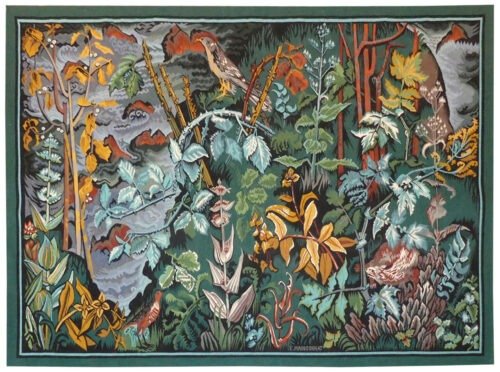
Le Faucon
Elie Maingonnat a dirigé l'Ecole Nationale des Arts Décoratifs d'Aubusson de 1930 à 1958, où il a succédé à Marius Martin (qui déjà préconisait la limitation des couleurs et l'emploi des hachures), dont il fut l'élève. En plus de ses responsabilités, Maingonnat s'adonne lui-même à la création de cartons : de denses motifs végétaux animés de quelques animaux, témoignage de la flore et de la faune limousine, revivifient le thème traditionnel des verdures des XVIIe-XVIIIe siècles. Notre carton est typique de l’oeuvre de Maingonnat : la faune et la flore locales, comme en symbiose, sont illustrées dans une gamme réduite de couleurs : notre tissage, posthume, a d'ailleurs fait évoluer la gamme chromatique d'origine, devenue plus vive. Bibliographie : Cat. Expo. Elie Maingonnat, Aubusson, Musée départemental de la Tapisserie, 1986-1987Tapisserie d’Aubusson tissée par l'atelier Legoueix. N°EA/2. 1947. -
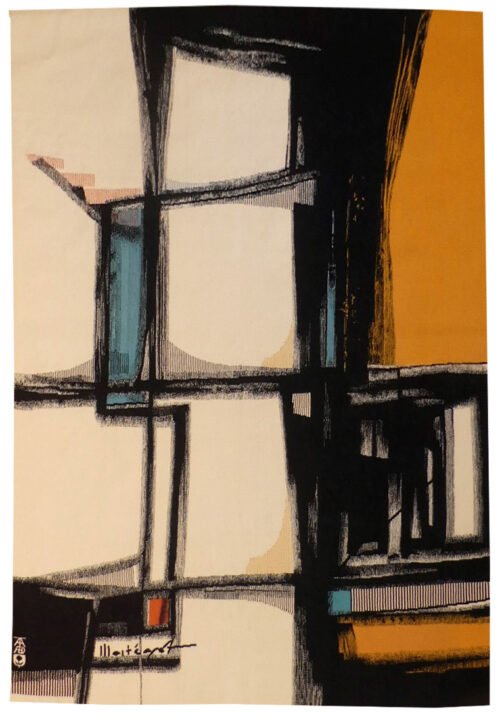
Composition
Tapisserie d’Aubusson tissée par l'atelier Picaud. N°1/6. Circa 1970.Maurice André a séjourné Aubusson pendant toute la guerre. Fondateur du groupe coopératif « Tapisserie de France », et membre de l’A.P.C.T. (Association des Peintres-Cartonniers de Tapisserie), il développe une esthétique personnelle, loin de Lurçat, fait de rigoureux aplats cubisants, dans une gamme chromatique souvent épurée, et reçoit d’ambitieuses commandes publiques, pour le Conseil de l’Europe à Strasbourg ( « L’Europe unie dans le Travail et la Paix »), ou le Pavillon Français pour l’Exposition de 1958 à Bruxelles (« La Technique moderne au service de l’Homme »). Tout naturellement (et commeWogensky, Prassinos,…), il évolue ensuite vers l’abstraction, d’abord plutôt lyrique puis dans un style de plus en plus géométrique, dans une trajectoire très proche de celle de Matégot. Dans l’ultime style d’André, la géométrie et ses aplats sont tempérés d’hachures, rayures et autres dégradés. -
2 blanches, 1 noire
Tapisserie d’Aubusson tissée par l’atelier Goubely. N°1/6. 1968. -
Giboulée
Après l’habituel passage par la décoration murales dans les années 30, Jullien vient à Aubusson en 1936, se lie à Picart le Doux en 1947 et devient membre de l’A.P.C.T. (Association des Peintres-Cartonniers de Tapisserie). Il se consacre alors à la tapisserie avec zèle et réalisera 167 cartons, d’abord figuratives, à la suite de Picart le Doux et de Saint-Saëns, puis sous l’influence des thèmes scientifiques abordés, il évolue vers l’abstraction. En 1981, deux ans avant sa mort, il fait don de son atelier au Musée départemental de la tapisserie à Aubusson. Il s’agit d’un carton de transition, pour Jullien, entre la figuration et l’abstraction. Y figurent déjà contrastes de tons, lignes verticales, …. que l’on retrouve ensuite dans « Espace poétique de l’industrie », ensemble de cartons sur le thème de la Technique et de l’Industrie qu'il développera dès la fin de l'année 1959 (cf. « Hélium », par exemple.). Bibliographie : Cat. Expo. Hommage à Louis-Marie Jullien, Aubusson, Musée départemental de la Tapisserie, 1983Tapisserie d’Aubusson tissée par l’atelier Legoueix pour la Coopérative Tapisseries de France. Avec son bolduc signé de l’artiste, avec la mention "ex.unique". 1959. -
Oiseaux
Le parcours de François Faureau est tout à fait singulier. Natif d’Aubusson, il suit les cours de l’ENAD, alors sous la direction de Marius Martin qui, déjà, promeut le gros tissage et les tons comptés que Lurçat reprendra à son compte. C’est ainsi qu’il participe au stand de l’ENAD à l’Exposition internationale des Arts décoratifs de 1925 en tant que peintre-cartonnier avec la tapisserie « Solitude, verdure » ou l’écran « Canards », qui oscillent entre un style classicisant, et l’influence du cubisme. Il aura par la suite son propre atelier, mais son oeuvre restera confidentielle, et éloignée des protagonistes de la « Renaissance de la Tapisserie ». De retour à Aubusson en 1962, après un long éloignement, Faureau consacre toute son énergie à la Tapisserie, en tant que cartonnier et lissier. Son esthétique est alors moins radicale que dans les années 20, et les thèmes traditionnels : on y ressent l’influence de Lurçat, comme de Perrot.Tapisserie d’Aubusson tissée par l'atelier Faureau. Circa 1950. -
Vol
L’Œuvre de Lurçat est immense : c’est toutefois son rôle dans la rénovation de l’art de la tapisserie qui lui vaut d’être passé à la postérité. Dès 1917, il commence par des œuvres au canevas, puis, dans les années 20 et 30, il travaillera avec Marie Cuttoli. Sa première collaboration avec les Gobelins date de 1937, alors qu’il découvre simultanément la tenture de l’Apocalypse d’Angers qui l’incite définitivement à se consacrer à la tapisserie. Il abordera les questions techniques d’abord avec François Tabard, puis à l’occasion de son installation à Aubusson pendant la guerre, il définira son système : gros point, tons comptés, cartons dessinés numérotés. Une production gigantesque commence alors (plus de 1000 cartons), amplifiée par la volonté d‘entraîner ses amis peintres, la création de l’A.P.C.T. (Association des Peintres-Cartonniers de Tapisserie) et la collaboration avec la galerie La Demeure et Denise Majorel, puis par son rôle d’inlassable propagateur du médium à travers le Monde. Son œuvre tissée témoigne d’un art d’imagier spécifiquement décoratif, dans une iconographie symbolique très personnelle, cosmogonique (soleil, planètes, zodiaque, 4 éléments…), végétale stylisée, animale (boucs, coqs, papillons, chimères…), se détachent sur un fond sans perspective (volontairement éloigné de la peinture), et destinée, dans ses cartons les plus ambitieux, à faire partager une vision à la fois poétique (il émaille d’ailleurs parfois ces tapisseries de citations) et philosophique (les grands thèmes sont abordés dès la guerre : la liberté, la résistance, la fraternité, la vérité… ) et dont le point culminant sera le « Chant du Monde » ( Musée Jean Lurçat, ancien hôpital Saint-Jean, Angers) , inachevé à sa mort. Son voyage au Brésil en 1954 sera une source d'inspiration déterminante pour Lurçat : la flore et la faune (notamment les papillons, thème récurrent) amazonienne(s) apparaissent alors de façon récurrente : "Ce qui m'intéresse dans le papillon, ..., c'est l'invention extraordinaire que constituent l'entrelacs des formes, le pétillement des coloris, ce côté gratuit de la coloration..." (Claude faux, Lurçat à haute voix, 1962, p.151). Les différences entre cartons sont parfois marginales, par exemple entre notre "Vol" tissé chez Tabard, et "Vera Cruz", un peu plus grand, tissé chez Simone André. Bibliographie : Tapisseries de Jean Lurçat 1939-1957, Pierre Vorms Editeur, 1957 Cat.Expo. Jean Lurçat, Nice, Musée des Ponchettes, 1968 Cat. Expo. Lurçat, 10 ans après, Musée d’Art moderne de la ville de Paris, 1976 Cat. Expo. Les domaines de Jean Lurçat, Angers, Musée Jean Lurçat et de la tapisserie contemporaine, 1986 Colloque Jean Lurçat et la renaissance de la tapisserie à Aubusson, Aubusson, Musée départemental de la Tapisserie, 1992 Cat. Expo. Dialogues avec Lurçat, Musées de Basse-Normandie, 1992 Cat. Expo. Jean Lurçat, Donation Simone Lurçat, Académie des Beaux-Arts, 2004 Gérard Denizeau, Denise Majorel, une vie pour la tapisserie, Aubusson, Musée départemental de la tapisserie Gérard Denizeau, Jean Lurçat, Liénart, 2013 Cat. Expo. Jean Lurçat, Meister der französischen Moderne, Halle, Kunsthalle, 2016 Cat. Expo. Jean Lurçat au seul bruit du soleil, Paris, galerie des Gobelins, 2016 Cat. Expo. Jean Lurçat, la terre, le feu, l’eau, l’air, Perpignan, Musée d’art Hyacinthe Rigaud, 2024Tapisserie d'Aubusson tissée par l'atelier Tabard. Avec son bolduc signé. Circa 1955. -
La lumière éclate
L’Œuvre de Lurçat est immense : c’est toutefois son rôle dans la rénovation de l’art de la tapisserie qui lui vaut d’être passé à la postérité. Dès 1917, il commence par des œuvres au canevas, puis, dans les années 20 et 30, il travaillera avec Marie Cuttoli. Sa première collaboration avec les Gobelins date de 1937, alors qu’il découvre simultanément la tenture de l’Apocalypse d’Angers qui l’incite définitivement à se consacrer à la tapisserie. Il abordera les questions techniques d’abord avec François Tabard, puis à l’occasion de son installation à Aubusson pendant la guerre, il définira son système : gros point, tons comptés, cartons dessinés numérotés. Une production gigantesque commence alors (plus de 1000 cartons), amplifiée par la volonté d‘entraîner ses amis peintres, la création de l’A.P.C.T. (Association des Peintres-Cartonniers de Tapisserie) et la collaboration avec la galerie La Demeure et Denise Majorel, puis par son rôle d’inlassable propagateur du médium à travers le Monde. Son œuvre tissée témoigne d’un art d’imagier spécifiquement décoratif, dans une iconographie symbolique très personnelle, cosmogonique (soleil, planètes, zodiaque, 4 éléments…), végétale stylisée, animale (boucs, coqs, papillons, chimères…), se détachent sur un fond sans perspective (volontairement éloigné de la peinture), et destinée, dans ses cartons les plus ambitieux, à faire partager une vision à la fois poétique (il émaille d’ailleurs parfois ces tapisseries de citations) et philosophique (les grands thèmes sont abordés dès la guerre : la liberté, la résistance, la fraternité, la vérité… ) et dont le point culminant sera le « Chant du Monde » ( Musée Jean Lurçat, ancien hôpital Saint-Jean, Angers) , inachevé à sa mort. Après ses séjours sud-américains, l’exotisme fourmillant est devenu un thème récurrent chez Lurçat : papillons, poisson, insectes s’ébattent dans une végétation luxuriante, émaillée de taches jaunes : « la lumière (qui) éclate ». Bibliographie : Tapisseries de Jean Lurçat 1939-1957, Pierre Vorms Editeur, 1957 Cat.Expo. Jean Lurçat, Nice, Musée des Ponchettes, 1968 Cat. Expo. Lurçat, 10 ans après, Musée d’Art moderne de la ville de Paris, 1976 Cat. Expo. Les domaines de Jean Lurçat, Angers, Musée Jean Lurçat et de la tapisserie contemporaine, 1986 Colloque Jean Lurçat et la renaissance de la tapisserie à Aubusson, Aubusson, Musée départemental de la Tapisserie, 1992 Cat. Expo. Dialogues avec Lurçat, Musées de Basse-Normandie, 1992 Cat. Expo. Drôles de trames, Tapisseries médiévales et contemporaines, Beaune, 2002-2003 Cat. Expo. Jean Lurçat, Donation Simone Lurçat, Académie des Beaux-Arts, 2004 Gérard Denizeau, Jean Lurçat, Liénart, 2013 Cat. Expo. Jean Lurçat, Meister der französischen Moderne, Halle, Kunsthalle, 2016 Cat. Expo. Jean Lurçat au seul bruit du soleil, Paris, galerie des Gobelins, 2016 Cat. Expo. Jean Lurçat, la terre, le feu, l’eau, l’air, Perpignan, Musée d’art Hyacinthe Rigaud, 2024Tapisserie d'Aubusson tissée par l'atelier Braquenié. Avec son bolduc. Circa 1955. -
L'oiseau bleu
Tapisserie d'Aubusson tissée par le mur du nomade. Avec son bolduc, n°EA. -
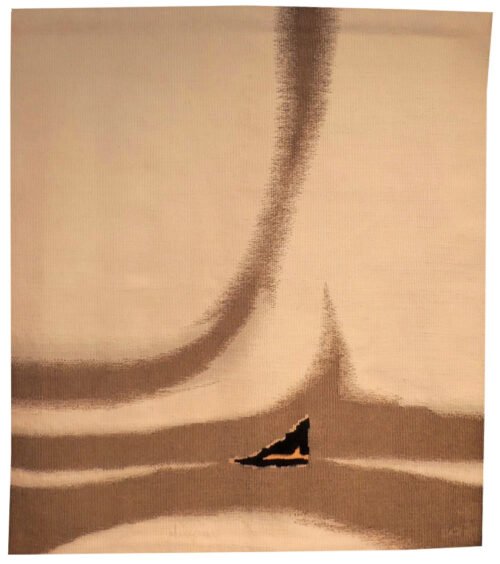
Composition
Proche de Matégot, Danielle Moser commença, à la suite de celui-ci, une collaboration avec la Manufacture de Tapisseries de Portalegre à partir de 1969. Ses cartons, dont les titres souvent renvoient à ses voyages, sont proches de ceux de Matégot au début des années 70, avec des harmonies chromatiques dépouillées (marrons, oranges, kakis…)mais elle n’ira, elle, jamais jusqu’à la géométrie.Tapisserie tissée par l'atelier Fino à Portalegre. Avec son bolduc de la galerie Suzy Langlois, n°1/6. Circa 1980. -
Luc Estang
L’Œuvre de Lurçat est immense : c’est toutefois son rôle dans la rénovation de l’art de la tapisserie qui lui vaut d’être passé à la postérité. Dès 1917, il commence par des œuvres au canevas, puis, dans les années 20 et 30, il travaillera avec Marie Cuttoli. Sa première collaboration avec les Gobelins date de 1937, alors qu’il découvre simultanément la tenture de l’Apocalypse d’Angers qui l’incite définitivement à se consacrer à la tapisserie. Il abordera les questions techniques d’abord avec François Tabard, puis à l’occasion de son installation à Aubusson pendant la guerre, il définira son système : gros point, tons comptés, cartons dessinés numérotés. Une production gigantesque commence alors (plus de 1000 cartons), amplifiée par la volonté d‘entraîner ses amis peintres, la création de l’A.P.C.T. (Association des Peintres-Cartonniers de Tapisserie) et la collaboration avec la galerie La Demeure et Denise Majorel, puis par son rôle d’inlassable propagateur du médium à travers le Monde. Son œuvre tissée témoigne d’un art d’imagier spécifiquement décoratif, dans une iconographie symbolique très personnelle, cosmogonique (soleil, planètes, zodiaque, 4 éléments…), végétale stylisée, animale (boucs, coqs, papillons, chimères…), se détachent sur un fond sans perspective (volontairement éloigné de la peinture), et destinée, dans ses cartons les plus ambitieux, à faire partager une vision à la fois poétique (il émaille d’ailleurs parfois ces tapisseries de citations) et philosophique (les grands thèmes sont abordés dès la guerre : la liberté, la résistance, la fraternité, la vérité… ) et dont le point culminant sera le « Chant du Monde » ( Musée Jean Lurçat, ancien hôpital Saint-Jean, Angers) , inachevé à sa mort. La proximité de Lurçat avec le monde littéraire est une évidence, en tant qu’illustrateur de livres, mais aussi dans ses tapisseries, où des vers d’Eluard, Aragon,…sont tissés, dans une communion d’inspiration souvent évoquée. Ces liens datent parfois de la Résistance et du maquis : c’est probablement le cas avec Luc Estang, qui participa également à la conception de vers figurant sur « le Vin » (Beaune, Musée du vin de Bourgogne), tapisserie contemporaine de la nôtre. Bibliographie : Tapisseries de Jean Lurçat 1939-1957, Pierre Vorms Editeur, 1957 Cat.Expo. Jean Lurçat, Nice, Musée des Ponchettes, 1968 Cat. Expo. Lurçat, 10 ans après, Musée d’Art moderne de la ville de Paris, 1976 Cat. Expo. Les domaines de Jean Lurçat, Angers, Musée Jean Lurçat et de la tapisserie contemporaine, 1986 Colloque Jean Lurçat et la renaissance de la tapisserie à Aubusson, Aubusson, Musée départemental de la Tapisserie, 1992 Cat. Expo. Dialogues avec Lurçat, Musées de Basse-Normandie, 1992 Cat. Expo. Drôles de trames, Tapisseries médiévales et contemporaines, Beaune, 2002-2003 Cat. Expo. Jean Lurçat, Donation Simone Lurçat, Académie des Beaux-Arts, 2004 Gérard Denizeau, Jean Lurçat, Liénart, 2013 Cat. Expo. Jean Lurçat, Meister der französischen Moderne, Halle, Kunsthalle, 2016 Cat. Expo. Jean Lurçat au seul bruit du soleil, Paris, galerie des Gobelins, 2016 Cat. Expo. Jean Lurçat, la terre, le feu, l’eau, l’air, Perpignan, Musée d’art Hyacinthe Rigaud, 2024Tapisserie d'Aubusson tissée par l'atelier Tabard. Avec son bolduc. Circa 1947. -
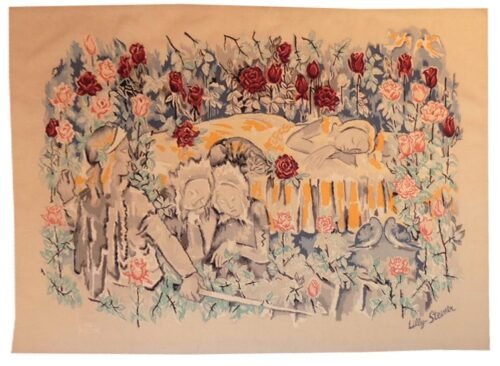
Composition
Tapisserie d'Aubusson. Circa 1950. Artiste d’origine autrichienne établie en France en 1927, Lilly Steiner est surtout connue pour ses portraits d’enfants. Elle a donné quelques rares cartons pour les manufactures d’Aubusson. -
Concerto
Tapisserie d'Aubusson tissée par l'atelier Berthaut. Avec son bolduc signé. 1957. -
Jour d'été
Tapisserie d'Aubusson tissée par la manufacture Four pour l'éditeur Jean Laurent. Avec son bolduc, n°EA. 1989.Edmond Dubrunfaut peut être considéré comme le grand rénovateur de la tapisserie belge au XXe siècle. Il fonde un atelier de tissage à Tournai dès 1942, puis crée en 1947 le Centre de Rénovation de la Tapisserie de Tournai . Il fournira pour différents ateliers belges (Chaudoir, de Wit,...) de nombreux cartons destinés notamment à orner les ambassades belges à travers le Monde. Par ailleurs, Dubrunfaut, de 1947 à 1978, enseigne l’art monumental à l’Académie des Beaux-Arts de Mons, puis, en 1979, participe à la création de la Fondation de la tapisserie, des arts du tissu et des arts muraux de Tournai, véritable conservatoire de la tapisserie en Wallonie. Son style, figuratif, usant de forts contrastes de couleurs souvent, est très inspiré par les animaux et la nature (comme Perrot par exemple, l'artiste a un fort tropisme pour l'ornithologie). A cet égard, ce carton, avec son format très horizontal, à hauteur d'oiseaux, mais représentés ici de façon très réaliste, est caractéristique de cette veine. Bibliographie : Cat. Expo. Dubrunfaut et la renaissance de la tapisserie, tableaux, dessins, peintures, Musée des Beaux-Arts de Mons, 1982-1983. -
Hommage à Vivaldi
Tapisserie d'Aubusson tissée par l'atelier Berthaut. Avec son bolduc signé. 1963. Jean Picart le Doux est l’un des grands animateurs du renouveau de la tapisserie. Ses débuts dans le domaine datent de 1943 : il réalise alors des cartons pour le paquebot « la Marseillaise ». Proche de Lurçat, dont il épouse les théories (tons limités, cartons numérotés,…), il est membre fondateur de l’A.P.C.T.(Association des Peintres-cartonniers de Tapisserie), et bientôt professeur à l’Ecole Nationale Supérieure des Arts Décoratifs. L’Etat lui commande de nombreux cartons tissés pour la plupart à Aubusson, pour certains aux Gobelins : les plus spectaculaires le seront pour l’Université de Caen, le Théâtre du Mans, le Paquebot France ou la Préfecture de la Creuse,…. Si les conceptions de Picart le Doux sont proches de celles de Lurçat, ses sources d’inspiration, ses thématiques, le sont aussi, mais dans un registre plus décoratif que symbolique, où se côtoient les astres (le soleil, la lune, les étoiles…), les éléments, la nature (le blé, la vigne, les poissons, les oiseaux…), l’homme, les textes,…. Le thème des saisons est un poncif de l'histoire de la tapisserie que se sont entendus à réactiver les cartonniers du XXe siècle, Lurçat au premier rang d'entre eux (cf. sa tenture des Saisons commandée par l'Etat dès 1939). Ici, Saisons, Zodiaque, Musique (le titre, seulement), cohabitent : l’oeuvre est une vaste synthèse de différentes sources d’inspirations de l’artiste. Gamme chromatique et attributs spécifiques (l’iconographie est traditionnelle) permettent de suivre le cycle annuel. Les saisons seront aussi tissées 2 par 2, à l’horizontale, dans un plus petit format (3 m²), et sans reference à Vivaldi. Bibliographie : Marthe Belle-Joufray, Jean Picart le Doux, Publications filmées d’art et d’histoire, 1966, n°19 Maurice Bruzeau, Jean Picart le Doux, Murs de soleil, Editions Cercle d’art, 1972, n°139 Cat. Exp. Jean Picart le Doux, tapisseries, Musée de Saint-Denis, 1976, reproduit Cat. Exp. Jean Picart le Doux, Boulogne sur Mer, Bibliothèque municipale, 1978 Cat. Exp. Jean Picart le Doux, Paris,Musée de la Poste, 1980, reproduit Cat. Exp. Jean Picart le Doux, Abbaye Saint Jean d’Orbestier, 1992, reproduit -
Visage
Chazaud, creusois d’origine, a exprimé en tapisseries toute son empathie pour la nature limousine qu’il a, comme Gaston Thiéry (et Maingonnat avant eux), abondamment représentée. La femme, néanmoins, est un autre thème d’inspiration pour Chazaud; avec ses femmes-fleurs, ses femmes-feuilles, il réintroduit les visages et les profils dans la tapisserie.Tapisserie probablement tissée dans l'atelier Picaud à Aubusson. Circa 1980. -
Le feuillage bleu
Tapisserie tissée par l'atelier Baudonnet. Avec son bolduc signé. 1965. Jean Picart le Doux est l’un des grands animateurs du renouveau de la tapisserie. Ses débuts dans le domaine datent de 1943 : il réalise alors des cartons pour le paquebot « la Marseillaise ». Proche de Lurçat, dont il épouse les théories (tons limités, cartons numérotés,…), il est membre fondateur de l’A.P.C.T.(Association des Peintres-cartonniers de Tapisserie), et bientôt professeur à l’Ecole Nationale Supérieure des Arts Décoratifs. L’Etat lui commande de nombreux cartons tissés pour la plupart à Aubusson, pour certains aux Gobelins : les plus spectaculaires le seront pour l’Université de Caen, le Théâtre du Mans, le Paquebot France ou la Préfecture de la Creuse,…. Si les conceptions de Picart le Doux sont proches de celles de Lurçat, ses sources d’inspiration, ses thématiques, le sont aussi, mais dans un registre plus décoratif que symbolique, où se côtoient les astres (le soleil, la lune, les étoiles…), les éléments, la nature (le blé, la vigne, les poissons, les oiseaux…), l’homme, les textes,…. “Rideau de feuilles” de 1962, plus grand, a inspiré notre carton; Bruzeau, le concernant, parle d’un “style rigide, austère, symétrique”, à l’”accent cistercien”. Bibliographie : Marthe Belle-Joufray, Jean Picart le Doux, Publications filmées d’art et d’histoire, 1966 Maurice Bruzeau, Jean Picart le Doux, Murs de soleil, Editions Cercle d’art, 1972, n°148 Cat. Exp. Jean Picart le Doux, tapisseries, Musée de Saint-Denis, 1976 Cat. Exp. Jean Picart le Doux, Boulogne sur Mer, Bibliothèque municipale, 1978 Cat. Exp. Jean Picart le Doux, Paris,Musée de la Poste, 1980 Cat. Exp. Jean Picart le Doux, Abbaye Saint Jean d’Orbestier, 1992 -
Jardin champêtre
Peintre-cartonnier, maître-lissier, directeur de la manufacture Hamot à Aubusson, ayant notamment tissé Sheila Hicks : la variété des talents d’Hecquet est indéniable. Son œuvre de peintre-cartonnier, débutée à la fin des années 60, reste néanmoins méconnue, comme celles de nombre de ses pairs de même génération.Tapisserie d’Aubusson tissée dans l'atelier Hamot. Avec un bolduc signé de l’artiste, n°3/6. 1980. -
Voleur de soleil
D'abord sculpteur, utilisant les matériaux les plus divers (acier, béton, céramique,...), Borderie se découvre une passion pour la tapisserie dans les années 50, faisant tisser son premier carton en 1957. Encouragé par Denise Majorel, il reçoit en 1962 le Grand Prix National de la Tapisserie. En 1974, il est nommé directeur de L'Ecole Nationale des Arts Décoratifs d'Aubusson, dont il démissionnera très rapidement. Il a réalisé près de 500 cartons peints, abstraits, aux formes simples, dégradées dans une gamme de couleurs réduite, avec des tissages à gros points. Abstraction dynamique, gamme chromatique entre orange et marron, mêmes préoccupations autour de la lumière (et de l’ombre) que dans « les armes de la lumière » (et que chez Matégot): un carton classique d’André Borderie. Bibliographie : Cat. Expo. André Borderie “pour l’homme simplement”, Angers, Musée Jean Lurçat et de la Tapisserie Contemporaine, 1998 Cat. Expo. André Borderie et la tapisserie d’Aubusson, Aubusson, Manufacture Saint-Jean, 2018Tapisserie d’Aubusson tissée par l’atelier Legoueix. Avec son bolduc signé de l'artiste, n°5/6. Circa 1970. -
Ciel de Sienne
Fumeron réalise ses premiers cartons (il en réalisera plus de 500) dès les années 40, en collaborant avec les ateliers Pinton, puis en recevant de nombreuses commandes de l'Etat, avant de participer à la décoration du paquebot "France". D'abord figuratif, et influencé par Lurçat, il évolue vers l'abstraction, avant de revenir vers une figuration colorée et réaliste à partir des années 80. Ce carton joue sur une jeu de mots : "terre" devient ciel de Sienne pour permettre à l'artiste, sur un fond dégradé ocre ("terre de Sienne"), de produire ses oiseaux et son soleil-cercle, dans sa veine décorative si caractéristique.Tapisserie d’Aubusson tissée par l'atelier Pinton. N°4/6. Circa 1960. -
Cortège d'Orphée
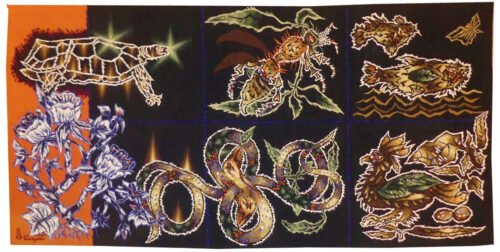
Tapisserie d'Aubusson tissée par l'atelier Berthaut. 1961. Jean Picart le Doux est l’un des grands animateurs du renouveau de la tapisserie. Ses débuts dans le domaine datent de 1943 : il réalise alors des cartons pour le paquebot « la Marseillaise ». Proche de Lurçat, dont il épouse les théories (tons limités, cartons numérotés,…), il est membre fondateur de l’A.P.C.T.(Association des Peintres-cartonniers de Tapisserie), et bientôt professeur à l’Ecole Nationale Supérieure des Arts Décoratifs. L’Etat lui commande de nombreux cartons tissés pour la plupart à Aubusson, pour certains aux Gobelins : les plus spectaculaires le seront pour l’Université de Caen, le Théâtre du Mans, le Paquebot France ou la Préfecture de la Creuse,…. Si les conceptions de Picart le Doux sont proches de celles de Lurçat, ses sources d’inspiration, ses thématiques, le sont aussi, mais dans un registre plus décoratif que symbolique, où se côtoient les astres (le soleil, la lune, les étoiles…), les éléments, la nature (le blé, la vigne, les poissons, les oiseaux…), l’homme, les textes,…. « Le bestiaire ou le cortège d’Orphée » est un recueil de poèmes d’Apollinaire qu’illustrera Picart le Doux de lithographies en 1962 (après Raoul Dufy, dans l’édition originale). Il conçoit simultanément un carton de tapisserie, sous la forme du damier chère à Lurçat, où, dans les cases, figurent écrevisse, chèvre ou lion,…., en différents aspects, variés, du règne animal. Bibliographie : Marthe Belle-Joufray, Jean Picart le Doux, Publications filmées d’art et d’histoire, 1966, n°13 Maurice Bruzeau, Jean Picart le Doux, Murs de soleil, Editions Cercle d’art, 1972, n°108 Cat. Exp. Jean Picart le Doux, tapisseries, Musée de Saint-Denis, 1976 Cat. Exp. Jean Picart le Doux, Boulogne sur Mer, Bibliothèque municipale, 1978 Cat. Exp. Jean Picart le Doux, Paris,Musée de la Poste, 1980 Cat. Exp. Jean Picart le Doux, Abbaye Saint Jean d’Orbestier, 1992 -
La lyre aux papillons
Tapisserie d'Aubusson tissée par l'atelier Berthaut. Avec son bolduc signé. Circa 1963. Jean Picart le Doux est l’un des grands animateurs du renouveau de la tapisserie. Ses débuts dans le domaine datent de 1943 : il réalise alors des cartons pour le paquebot « la Marseillaise ». Proche de Lurçat, dont il épouse les théories (tons limités, cartons numérotés,…), il est membre fondateur de l’A.P.C.T.(Association des Peintres-cartonniers de Tapisserie), et bientôt professeur à l’Ecole Nationale Supérieure des Arts Décoratifs. L’Etat lui commande de nombreux cartons tissés pour la plupart à Aubusson, pour certains aux Gobelins : les plus spectaculaires le seront pour l’Université de Caen, le Théâtre du Mans, le Paquebot France ou la Préfecture de la Creuse,…. Si les conceptions de Picart le Doux sont proches de celles de Lurçat, ses sources d’inspiration, ses thématiques, le sont aussi, mais dans un registre plus décoratif que symbolique, où se côtoient les astres (le soleil, la lune, les étoiles…), les éléments, la nature (le blé, la vigne, les poissons, les oiseaux…), l’homme, les textes,…. Les instruments de musique “naturels” (faits de branches d’arbres épanouies) sont récurrents chez Picart le Doux à partir de 1953 (cf.”la harpe des forêts”); “la harpe aux papillons”, verticale et à fond rouge reprend ce thème en 1963. Bibliographie : Marthe Belle-Joufray, Jean Picart le Doux, Publications filmées d’art et d’histoire, 1966 Maurice Bruzeau, Jean Picart le Doux, Murs de soleil, Editions Cercle d’art, 1972 Cat. Exp. Jean Picart le Doux, tapisseries, Musée de Saint-Denis, 1976 Cat. Exp. Jean Picart le Doux, Musée de la Poste, 1980 -
Les enfants du soleil
Toffoli s'est beaucoup consacré à la tapisserie avec la manufacture Robert Four, à partir de 1976, réalisant des centaines de cartons. On y retrouve les transparences post-cubistes propres au peintre, ainsi que ses sujets. En effet, la tapisserie de Toffoli ne se démarque pas de sa peinture : peintre-voyageur, il illustre dans notre carton des scènes observées lors de séjours en Amérique du Sud.Tapisserie d'Aubusson tissée par l’atelier Four. Avec son bolduc , n°EA2. Circa 1980. -
Les musiciennes 2 (détail)
S’il est surtout connu comme l’un des principaux représentants, aux conceptions théoriques radicales, du mouvement moderne en architecture, Le Corbusier a également pratiqué (comme Picasso par exemple) à peu près tous les arts plastiques et décoratifs. Ainsi s’est-il intéressé à la tapisserie, notamment en regard de ses théories architecturales. Il envisage la tapisserie comme « le Mural des temps modernes », d’où un néologisme de sa création, « Muralnomad » : la tapisserie devient le mur de laine que ses contemporains emportent avec eux au gré de leurs déplacements, et constitue, non pas un simple élément de décor, mais participe de l’agencement spatial des intérieurs, tout en contribuant à leurs harmonies visuelles (et acoustiques). Ces réflexions théoriques se matérialisent par la conception, notamment avec le concours de Pierre Baudouin (qui, dans un rôle de directeur technique sert d’interface avec les lissiers), d’une trentaine de cartons, de 1948 à sa mort (après un premier carton dès 1936, pour Marie Cuttoli) : s’ils reprennent certains motifs de ses peintures (figures féminines, objets venus du Purisme, thèmes mythologiques,…), ces cartons s’en veulent distincts, et spécifiquement conçus pour la tapisserie : netteté du trait, noir, aplats de couleurs pures, …. « Les Musiciennes » est un carton de 1953, de grandes dimensions, tissé en 2 versions distinctes. Notre tapisserie reprend un détail des « Musiciennes » 2e version, et témoigne du désir de l’architecte, en 1964, de collaborer avec l’atelier Fino de Portalegre, au Portugal (où étaient aussi tissés Lurçat, Matégot, Julio Pomar…) ; ce fut finalement leur seule collaboration, Le Corbusier décédant en 1965. Le détail choisi insiste sur les visages et les mains (motif récurrent, qui donne d’ailleurs son titre à un carton de 1951), dans une sorte de dialogue imaginaire entre 2 personnages affrontés. Bibliographie : Cat. Expo. Les Tapisseries de le Corbusier, Paris, Musée des Arts Décoratifs, 1975 Cat. Expo. Le Corbusier œuvre tissé, Aubusson, Musée départemental de la Tapisserie, 1987 Cat. Expo. Tapisseries du Portugal, Bordeaux, Musée des Arts Décoratifs, 1994, reproduite p.39Tapisserie tissée par l'atelier Fino à Portalegre. Avec son bolduc. 1953-1964. -
Les 12 mois
L’Œuvre de Lurçat est immense : c’est toutefois son rôle dans la rénovation de l’art de la tapisserie qui lui vaut d’être passé à la postérité. Dès 1917, il commence par des œuvres au canevas, puis, dans les années 20 et 30, il travaillera avec Marie Cuttoli. Sa première collaboration avec les Gobelins date de 1937, alors qu’il découvre simultanément la tenture de l’Apocalypse d’Angers qui l’incite définitivement à se consacrer à la tapisserie. Il abordera les questions techniques d’abord avec François Tabard, puis à l’occasion de son installation à Aubusson pendant la guerre, il définira son système : gros point, tons comptés, cartons dessinés numérotés. Une production gigantesque commence alors (plus de 1000 cartons), amplifiée par la volonté d‘entraîner ses amis peintres, la création de l’A.P.C.T. (Association des Peintres-Cartonniers de Tapisserie) et la collaboration avec la galerie La Demeure et Denise Majorel, puis par son rôle d’inlassable propagateur du médium à travers le Monde. Son œuvre tissée témoigne d’un art d’imagier spécifiquement décoratif, dans une iconographie symbolique très personnelle, cosmogonique (soleil, planètes, zodiaque, 4 éléments…), végétale stylisée, animale (boucs, coqs, papillons, chimères…), se détachent sur un fond sans perspective (volontairement éloigné de la peinture), et destinée, dans ses cartons les plus ambitieux, à faire partager une vision à la fois poétique (il émaille d’ailleurs parfois ces tapisseries de citations) et philosophique (les grands thèmes sont abordés dès la guerre : la liberté, la résistance, la fraternité, la vérité… ) et dont le point culminant sera le « Chant du Monde » ( Musée Jean Lurçat, ancien hôpital Saint-Jean, Angers) , inachevé à sa mort. « C’est une version très originale que donne Lurçat, du thème des mois illustré par la tapisserie depuis de nombreux siècles. Chacun des mois est symbolisé par une bulle d’où naissent des éléments de végétation ou encore des rayons de soleil. Conçue dans le même esprit que le « De Natura solari rerum », cette pièce préfigure « Es la verdad », dans laquelle on retrouve, un peu à la façon d’une bordure, placés en fridse, les douze mois de l’année » (Martine Mathias in Cat. Expo. Jean Lurçat, le combat et la victoire, centenaire, Aubusson, Musée départemental de la Tapisserie, 1992, p.43) Bibliographie : Tapisseries de Jean Lurçat 1939-1957, Pierre Vorms Editeur, 1957 Cat. Expo. Lurçat, 10 ans après, Musée d'Art moderne de la ville de Paris, 1976 Cat. Expo. Les domaines de Jean Lurçat, Angers, Musée Jean Lurçat et de la tapisserie contemporaine, 1986 Cat. Expo. Jean Lurçat, le combat et la victoire, centenaire, Aubusson, Musée départemental de la Tapisserie, 1992, ill. p.43 Colloque Jean Lurçat et la renaissance de la tapisserie à Aubusson, Aubusson, Musée départemental de la Tapisserie, 1992 Cat. Expo. Dialogues avec Lurçat, Musées de Basse-Normandie, 1992 Cat. Expo. Jean Lurçat, Donation Simone Lurçat, Académie des Beaux-Arts, 2004 Gérard Denizeau, Jean Lurçat, Liénart, 2013 Cat. Expo. Jean Lurçat au seul bruit du soleil, Paris, galerie des Gobelins, 2016Tapisserie d'Aubusson tissée par l'atelier Goubely. Circa 1940. -
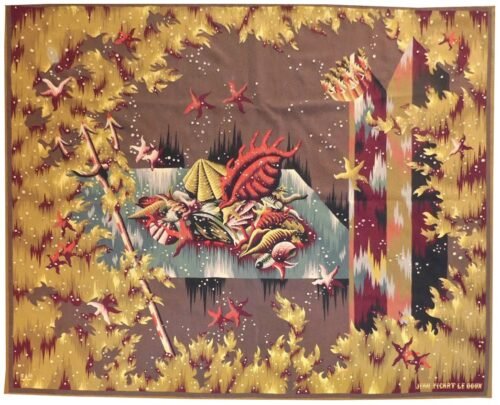
Le trident de Neptune
Tapisserie d'Aubusson tissée par l'atelier Berthaut. 1946. Jean Picart le Doux est l’un des grands animateurs du renouveau de la tapisserie. Ses débuts dans le domaine datent de 1943 : il réalise alors des cartons pour le paquebot « la Marseillaise ». Proche de Lurçat, dont il épouse les théories (tons limités, cartons numérotés,…), il est membre fondateur de l’A.P.C.T.(Association des Peintres-cartonniers de Tapisserie), et bientôt professeur à l’Ecole Nationale Supérieure des Arts Décoratifs. L’Etat lui commande de nombreux cartons tissés pour la plupart à Aubusson, pour certains aux Gobelins : les plus spectaculaires le seront pour l’Université de Caen, le Théâtre du Mans, le Paquebot France ou la Préfecture de la Creuse,…. Si les conceptions de Picart le Doux sont proches de celles de Lurçat, ses sources d’inspiration, ses thématiques, le sont aussi, mais dans un registre plus décoratif que symbolique, où se côtoient les astres (le soleil, la lune, les étoiles…), les éléments, la nature (le blé, la vigne, les poissons, les oiseaux…), l’homme, les textes,…. Notre carton, l’un des premiers de l’artiste, témoigne de ses références allégoriques et mythologiques (cf. “le trésor d’Amphitrite” de 1949) pour traiter la Mer. Une tapisserie proche, “les algues”, se veut elle plus littérale. Bibliographie : Marthe Belle-Joufray, Jean Picart le Doux, Publications filmées d’art et d’histoire, 1966 Maurice Bruzeau, Jean Picart le Doux, Murs de soleil, Editions Cercle d’art, 1972, n°6 Cat. Exp. Jean Picart le Doux, tapisseries, Musée de Saint-Denis, 1976 Cat. Exp. Jean Picart le Doux, Boulogne sur Mer, Bibliothèque municipale, 1978 Cat. Exp. Jean Picart le Doux, Paris,Musée de la Poste, 1980 Cat. Exp. Jean Picart le Doux, Abbaye Saint Jean d’Orbestier, 1992 -
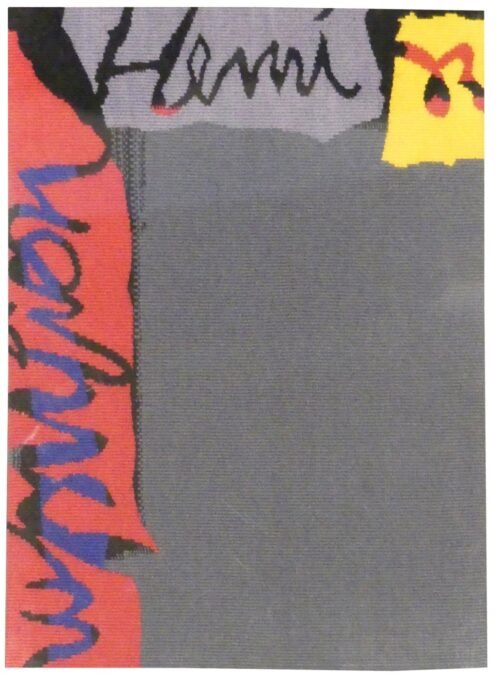
Henri, détail de "carton 28"
Dans les années 80, la tapisserie d’Aubusson est en perte de vitesse. Les pouvoirs publics élaborent alors un plan de relance de la Tapisserie, dont Daniel Riberzani sera l’un des bénéficiaires, en étant le premier boursier du Centre national des arts plastiques pour la tapisserie : à Aubusson, à l’ENAD, il découvre le médium, adopte, à ses débuts, le carton numéroté, noue des liens dans les ateliers… ; il recevra ensuite des commandes publiques, pour les Gobelins, pour l’espace Carpeaux de Courbevoie (« la Musique et la Danse », tapisserie de 160 m2 !),… Des séries thématiques, à l’aune de son oeuvre picturale, se succèdent : « paysages-évènements », « peintures intimes », « écritures », « cartons peints », …. Ces derniers, papiers collés et peints en 1993-1994, ont été conçus pour une éventuelle traduction textile (en tapisseries, en tapis, c’est selon) ; « Carton 28 », de 1993, est constitué de mots épinglés colorés, faisant office de bordure à un fond gris neutre central et, s’il n’y eut pas de « Tapis ou Tapisserie 28», l’artiste en fit tisser des détails, où "Henri" côtoie, fragmentaires, « éruption » et « soufre » : une tapisserie des marges. Bibliographie : Cat. Expo. Histoire d’une tapisserie ou la rencontre du cannibale et des carnassiers, Aubusson, Musée départemental de la Tapisserie, 1984 Cat. Expo. Tapisseries – Cartons peints, Riberzani avec Bezard, Brandon, Four, Gachon, Scioria, Avallon, Collégiale Saint-Lazare, 1995 Gérard Denizeau, Riberzani peintures intimes 1989-1999, Inard Editions, 1999, repro. n°3, p.159 Daniel Riberzani Œuvres, 2014Tapisserie tissée à Aubusson par l’atelier Legoueix. Avec son bolduc signé de l'artiste, n°1/6. 1993-1996. -
Linda
Tapisserie d'Aubusson tissée par l’atelier Four. Avec son bolduc, n°EA2. Circa 1980.Toffoli s'est beaucoup consacré à la tapisserie avec la manufacture Robert Four, à partir de 1976, réalisant des centaines de cartons. On y retrouve les transparences post-cubistes propres au peintre, ainsi que ses sujets. En effet, la tapisserie de Toffoli ne se démarque pas de sa peinture : le thème de la maternité, exotique ou non, reste un leitmotiv toffolien, quelle que soit la technique. La tapisserie est reproduite dans le classeur "Tapisserie d'Aubusson" édité par la Chambre de commerce et d'Industrie de Guéret au début des années 80 pour illustrer le savoir-faire des ateliers d'Aubusson. -
Marchands
Toffoli s'est beaucoup consacré à la tapisserie avec la manufacture Robert Four, à partir de 1976, réalisant des centaines de cartons. On y retrouve les transparences post-cubistes propres au peintre, ainsi que ses sujets. En effet, la tapisserie de Toffoli ne se démarque pas de sa peinture : peintre-voyageur, il illustre dans notre carton des scènes observées lors de séjours en Amérique du Sud.Tapisserie d'Aubusson tissée par l’atelier Four. Avec son bolduc signé, n°EA2/2. Circa 1980. -
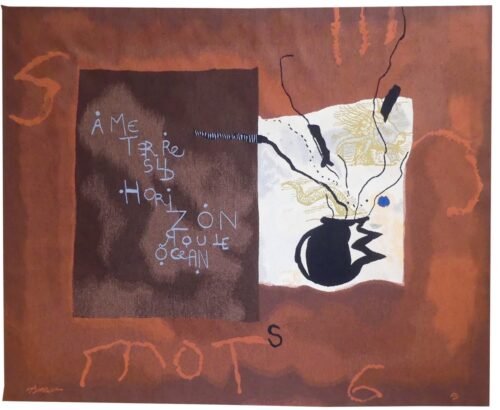
Les 6 mots du secret
En 1987, Texier reçoit la commande de la tenture des Droits de l’Homme, pour le bicentenaire de la Révolution. Le choix est inattendu, l’artiste, encore jeune, n’ayant jamais alors donné de cartons de tapisserie. Elle permet alors de fédérer les ateliers aubussonnais encore en activité, les 7 tapisseries de la tenture totalisant plus de 130 m² tissés de citations littérales (les tables de la déclaration sont reproduites à l’identique la gravure de l’époque révolutionnaire) , objets oscillants, signes, textes…. Par la suite, Texier continuera à fournir des cartons, tant pour les Manufactures Nationales (une suite de 3 tapisseries, un tapis) que pour Aubusson. Notre carton reprend les signes plastiques, les textes épars, les traces propres à l’univers graphique et plastique de l’artiste, qui constituent, pour le citer « des cartes où [il] introdui[t] des éléments de pilotage », afin que le « secret » éponyme nous soit révélé. Bibliographie : La Suite des Droits de l’Homme, Niort, 1989Tapisserie d’Aubusson tissée par l’atelier Pinton. Avec son bolduc signé, n°1/1. 2001. -
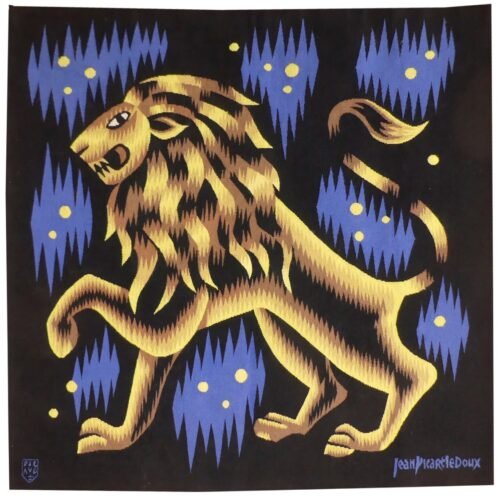
Le lion
Tapisserie d'Aubusson tissée par l'atelier Picaud. Avec son bolduc signé de la veuve de l'artiste, n°2/6. Circa 1980. Jean Picart le Doux est l’un des grands animateurs du renouveau de la tapisserie. Ses débuts dans le domaine datent de 1943 : il réalise alors des cartons pour le paquebot « la Marseillaise ». Proche de Lurçat, dont il épouse les théories (tons limités, cartons numérotés,…), il est membre fondateur de l’A.P.C.T.(Association des Peintres-cartonniers de Tapisserie), et bientôt professeur à l’Ecole Nationale Supérieure des Arts Décoratifs. L’Etat lui commande de nombreux cartons tissés pour la plupart à Aubusson, pour certains aux Gobelins : les plus spectaculaires le seront pour l’Université de Caen, le Théâtre du Mans, le Paquebot France ou la Préfecture de la Creuse,…. Si les conceptions de Picart le Doux sont proches de celles de Lurçat, ses sources d’inspiration, ses thématiques, le sont aussi, mais dans un registre plus décoratif que symbolique, où se côtoient les astres (le soleil, la lune, les étoiles…), les éléments, la nature (le blé, la vigne, les poissons, les oiseaux…), l’homme, les textes,…. “Le lion” reprend, en petit format, une des figures, comme héraldique, du “Cortège d’Orphée” de 1961. Bibliographie : Marthe Belle-Joufray, Jean Picart le Doux, Publications filmées d’art et d’histoire, 1966 Maurice Bruzeau, Jean Picart le Doux, Murs de soleil, Editions Cercle d’art, 1972 Cat. Exp. Jean Picart le Doux, tapisseries, Musée de Saint-Denis, 1976 Cat. Exp. Jean Picart le Doux, Boulogne sur Mer, Bibliothèque municipale, 1978 Cat. Exp. Jean Picart le Doux, Paris,Musée de la Poste, 1980 Cat. Exp. Jean Picart le Doux, Abbaye Saint Jean d’Orbestier, 1992 -
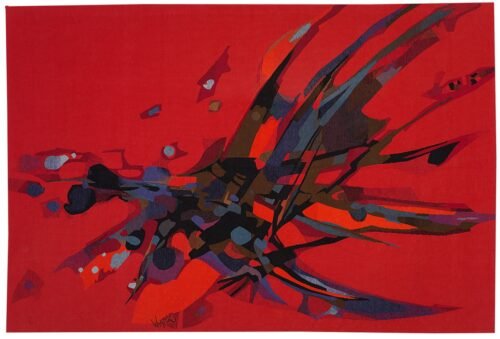
Oiseaux de Midi
Wogensky rencontre Lurçat dès 1939, mais il ne travaillera avec lui qu'après-guerre, réalisant son premier carton en 1945 (qui s'intitulait déjà "les oiseaux"), et adhérant bientôt à l'A.P.C.T. (Association des Peintres-Cartonniers de Tapisserie). Professeur d'art mural à l'Ecole Nationale Supérieure des Arts Appliqués de Paris, Wogensky réalisera 159 cartons jusque dans les années 80, la plupart tissés par Legoueix. "La laine a le sang chaud comme l'homme. Elle nous met en confiance et nous rassure. Un mur de laine, c'est un mur plus humain, plus vivant" (propos recueillis dans Robert Guinot, "la Tapisserie d'Aubusson et de Felletin", Lucien Souny, 2009). C'est ce credo qui innervera la création de Wogensky, dans des envolées (au sens propre puisque l'oiseau, souvent stylisé, est un de ses sujets de prédilection) lyriques (certains cartons , de la fin des années 70 notamment, sont résolument abstraits), dans ses cartons d'"Histoire Naturelle" (titre que porte l'une de ses tapisseries, en 1961), ou" cosmiques", à sujets de constellations ou d'éléments naturels. "J'ai toujours eu plaisir à travailler les grands formats" confiera-t-il encore à Robert Guinot. Si notre carton apparaît modeste relativement à certaines commandes officielles de Wogensky (Université de Strasbourg, salle de Conférence du Sénat,...), son sujet permet une dilatation spatiale, un élan de ces motifs elliptiques d'oiseaux, vivifiés par l'énergie chromatique de l'aplat rouge vif des fonds. Bibliographie : Cat. Expo. 25 ans de tapisserie française 1944, Paris, manufacture des Gobelins, 1969, n°33 Cat. Expo. La Tapisserie et l’Espace, Châteauroux, couvent des Cordeliers, 1978, n°21 Cat. Expo. Robert Wogensky, l'oeuvre tissé, Aubusson, Musée départemental de la tapisserie, 1989, ill. p.34 Cat. Expo. Robert Wogensky, Angers, Musée Jean Lurçat et de la Tapisserie Contemporaine, 1989, ill. p.20Tapisserie d’Aubusson tissée par l’atelier Legoueix. Avec son bolduc signé, n°EA. 1969. -
Bouquet papillon
Tapisserie tissée à Aubusson par l’atelier Legoueix. Avec son bolduc signé de l'artiste, n°4/6. Circa 1980.De l’illustration à la tapisserie, il n’y a qu’un (grand) pas à franchir, rappelons-nous que dom Robert était enlumineur ! C’est justement celui-ci, ainsi que Madeleine David, l’une des co-directrices de la galerie la Demeure, dont elle était proche, qui incitèrent Jacqueline Duhême à se pencher sur le médium : précédée de sa réputation d’ « imagière » (cf. bibliographie), illustrant Prévert, Eluard ou Druon, elle se consacre à la tapisserie de 1967 (elle suit alors les cours de Tourlière à l’ENAD d’Aubusson, et devient une adepte du carton numéroté) à 1981, La Demeure lui consacrant même une exposition monographique en 1976. Son univers, venu des mille-fleurs médiévales, n’est pas sans rappeler dom Robert, mais un dom Robert sous amphétamines, où la Nature est foisonnante, exotique, exubérante (cf. « Safari », « l’oiseau de Paradis »). A plus petite échelle, plus policé aussi, notre carton témoigne de la vitalité colorée de l’inspiration de Duhême. Bibliographie : Cat. Expo. Jacqueline Duhême l’imagière, bibliothèque Forney, 2019 -
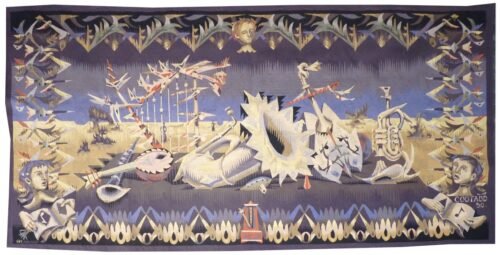
Instruments de musique lunaire
Peintre et graveur, Lucien Coutaud travaille aussi pour le théâtre avec Dullin, Barrault : il réalise alors de nombreux décors et costumes. Mais c’est la rencontre avec Marie Cuttoli en 1933 qui l’amènera à la tapisserie : celle-ci lui commande alors surtout des cartons de sièges . La plupart des tapisseries suivantes seront tissés chez Pinton pour la Compagnie des Arts Français, qui vise à intégrer la Tapisserie dans le décor intérieur. Les 3 dernières tapisseries de l’artiste en 1960 témoignent de sa renommée puisque « Jardins exotiques » ornent le salon de Première Classe du "France ". Les qualités de scénographe influencé par le surréalisme se reflètent dans l’œuvre tissée de Coutaud : son univers est figuratif, mais stylisé (les formes sont aiguës, hachées), résolument onirique, avec d’insolites bordures très souvent. Le carton « instruments de musique lunaire » (Coutaud dessinait lui-même ses cartons gouachés, sans avoir recours aux cartons numérotés) date de 1950 : c’est une des rares tapisseries de l’artiste (avec justement « harpe marine », et « violon printanier », autres témoignages du goût pour ces natures mortes musicales chez l’artiste) où la figure humaine se fasse rare. Le centre de la composition (de la scène) est occupé par les instruments, tandis que 2 têtes (souffleurs, musiciens dans la fosse) ornent les coins inférieurs, le tout dans un paysage austère, nocturne (lunaire justement), illustration des mondes oniriques chers à l’artiste. Le théâtre de la ville de Göteborg conserve un exemplaire de cette tapisserie. Bibliographie : J. Cassou, M. Damain, R. Moutard-Uldry, la tapisserie française et les peintres cartonniers, Tel, 1957, ill. p.86 Cat. Exp. Lucien Coutaud, œuvre tissé, Aubusson, Musée Départemental de la Tapisserie, 1988-1989, illustrée p.42-43 Cat. Expo. Le théâtre en tapisserie, Cavaillès, Lurçat, Matisse, Sorèze, Abbaye-école Musée dom Robert, 2017, ill. n°8Tapisserie d’Aubusson tissée par l’atelier Pinton. 1950. -
Le conscrit des 100 villages
L’Œuvre de Lurçat est immense : c’est toutefois son rôle dans la rénovation de l’art de la tapisserie qui lui vaut d’être passé à la postérité. Dès 1917, il commence par des œuvres au canevas, puis, dans les années 20 et 30, il travaillera avec Marie Cuttoli. Sa première collaboration avec les Gobelins date de 1937, alors qu’il découvre simultanément la tenture de l’Apocalypse d’Angers qui l’incite définitivement à se consacrer à la tapisserie. Il abordera les questions techniques d’abord avec François Tabard, puis à l’occasion de son installation à Aubusson pendant la guerre, il définira son système : gros point, tons comptés, cartons dessinés numérotés. Une production gigantesque commence alors (plus de 1000 cartons), amplifiée par la volonté d‘entraîner ses amis peintres, la création de l’A.P.C.T. (Association des Peintres-Cartonniers de Tapisserie) et la collaboration avec la galerie La Demeure et Denise Majorel, puis par son rôle d’inlassable propagateur du médium à travers le Monde. Son œuvre tissée témoigne d’un art d’imagier spécifiquement décoratif, dans une iconographie symbolique très personnelle, cosmogonique (soleil, planètes, zodiaque, 4 éléments…), végétale stylisée, animale (boucs, coqs, papillons, chimères…), se détachent sur un fond sans perspective (volontairement éloigné de la peinture), et destinée, dans ses cartons les plus ambitieux, à faire partager une vision à la fois poétique (il émaille d’ailleurs parfois ces tapisseries de citations) et philosophique (les grands thèmes sont abordés dès la guerre : la liberté, la résistance, la fraternité, la vérité… ) et dont le point culminant sera le « Chant du Monde » ( Musée Jean Lurçat, ancien hôpital Saint-Jean, Angers) , inachevé à sa mort. Œuvre emblématique et synthétique de l’inspiration de Lurçat : tapisserie de guerre (si elle date de 1947, elle constitue une forme de monument aux morts symbolique, à l’échelle de la France, elle-même illustrée, et ornée d’une feuille tricolore), tapisserie-poésie (un poème de Résistance de surcroît), tapisserie à armoire (un leitmotiv). 5 exemplaires ont été tissés, dont 3 sont dans des collections publiques, à Aubusson, Québec et Moscou. Bibliographie : Tapisseries de Jean Lurçat 1939-1957, Pierre Vorms Editeur, 1957 Cat. Expo. Lurçat, 10 ans après, Musée d'Art moderne de la ville de Paris, 1976 Cat. Expo. Les domaines de Jean Lurçat, Angers, Musée Jean Lurçat et de la tapisserie contemporaine, 1986 Colloque Jean Lurçat et la renaissance de la tapisserie à Aubusson, Aubusson, Musée départemental de la Tapisserie, 1992 Cat. Expo. Jean Lurçat, le combat et la victoire, centenaire, Aubusson, Musée départemental de la Tapisserie, 1992, ill. p.57 Cat. Expo. Dialogues avec Lurçat, Musées de Basse-Normandie, 1992 R. Guinot, la tapisserie, Aubusson et Felletin, éditions Dessagne, 1992, ill.p.20-21 Cat. Expo. Jean Lurçat, Donation Simone Lurçat, Académie des Beaux-Arts, 2004 R. Guinot, la tapisserie d’Aubusson et de Felletin, Lucien Souny, 2009, ill. p.92 G. Denizeau, Jean Lurçat, Liénart, 2013, ill. fig.114 p.111 M. Mathias, Lurçat-Aragon, poésie partagée, Mémoires de la Société des sciences naturelles, historiques et archéologiques de la Creuse, tome 60, 2014-2015, p.439-444 Cat. Expo. Jean Lurçat au seul bruit du soleil, Paris, galerie des Gobelins, 2016, ill. fig.6 p.172Tapisserie d'Aubusson tissée par l'atelier Tabard. 1947.
Galerieadmin78002026-03-03T16:12:10+01:00